

In the world of “Dorohedoro,” the boundaries between good and evil are utterly dissolved. Here, characters are dismembered, transmuted into mushrooms, giant three-meter cockroaches become baseball opponents, and a zombie apocalypse is just another festive occasion. Violence has become an everyday occurrence, yet behind the chaos, brutality, and grotesque imagery lies one of the most vibrant and profoundly human anime of recent years. With the second season having premiered on April 1st, it’s the perfect time to revisit ‘The Hole’ and unravel what makes “Dorohedoro” so uniquely captivating.
Where Filth Meets Filth
“Dorohedoro” is the animated adaptation of Q Hayashida’s manga of the same name, which she meticulously crafted from 2000 to 2018. Studio MAPPA, well-versed in handling gritty, dark, and visually aggressive material – as evidenced by their extensive portfolio including “Attack on Titan,” “Chainsaw Man,” and “Jujutsu Kaisen” – took on the adaptation.
Despite its prestigious studio, “Dorohedoro” remains a cult phenomenon. It’s too raw, too bizarre, and too chaotic to achieve widespread mainstream appeal. Initially, it might seem like its sole purpose is to shock viewers with a blend of ugliness, violence, and absurdity. However, this impression is deceptive. “Dorohedoro” merely masquerades as chaos. Beneath its aggressive exterior, it tells a compelling story of individuals striving to maintain their sense of self in a world where cruelty has long been woven into the fabric of daily life.
This deliberate grittiness is largely attributed to Q Hayashida herself. Little is known about the mangaka; she intentionally stays out of the limelight, works under a pseudonym, and even before “Dorohedoro,” she had adapted the slasher game Maken X Another. Later, Hayashida contributed to the boss designs in Shadows of the Damned. Thus, “Dorohedoro,” with its strong affinity for visceral textures, grotesque art, and dark humor, often feels like something that could have emerged from the depths of a studio like Grasshopper Manufacture.
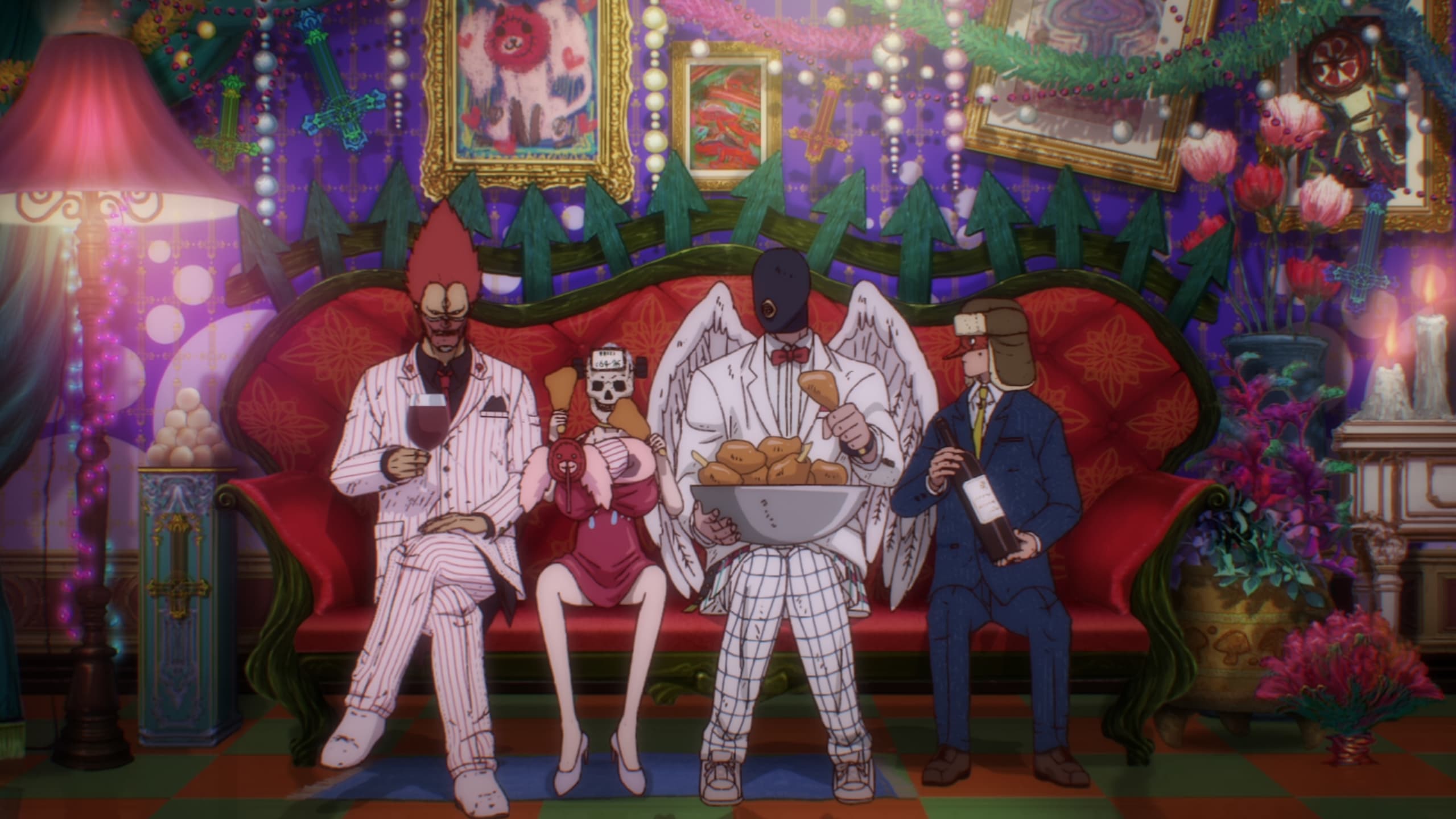
From Hayashida’s rare interviews, it’s known that she is less interested in “beautiful” forms and more in roughness, physicality, and imperfection – elements that can almost be physically felt through her intricate drawings. The title itself is illustrative: “Dorohedoro” is often interpreted as “filth mixed with filth.” This isn’t just a clever metaphor but an accurate description of a world where everything is indistinguishably blended: ugliness and comfort, cruelty and domesticity, chaos and intricate structure.
Hayashida created “Dorohedoro” without assistants, meticulously structuring chapters, developing the plot, allocating scenes, and refining dialogues even before the final artwork. For her, it was crucial that the story resonated not through direct explanations but through the reader’s lived experience and emotional engagement.
Consequently, “Dorohedoro” doesn’t explicitly state its meanings but compels the viewer and reader to piece together the world from fragments, intricate details, and character interactions. Almost no elements here are accidental. Even a minor detail that initially seems merely strange or funny might later reveal a character’s depth, shift the focus of a scene, or illustrate the true workings of this brutal world.
A World Where Violence is the Backdrop
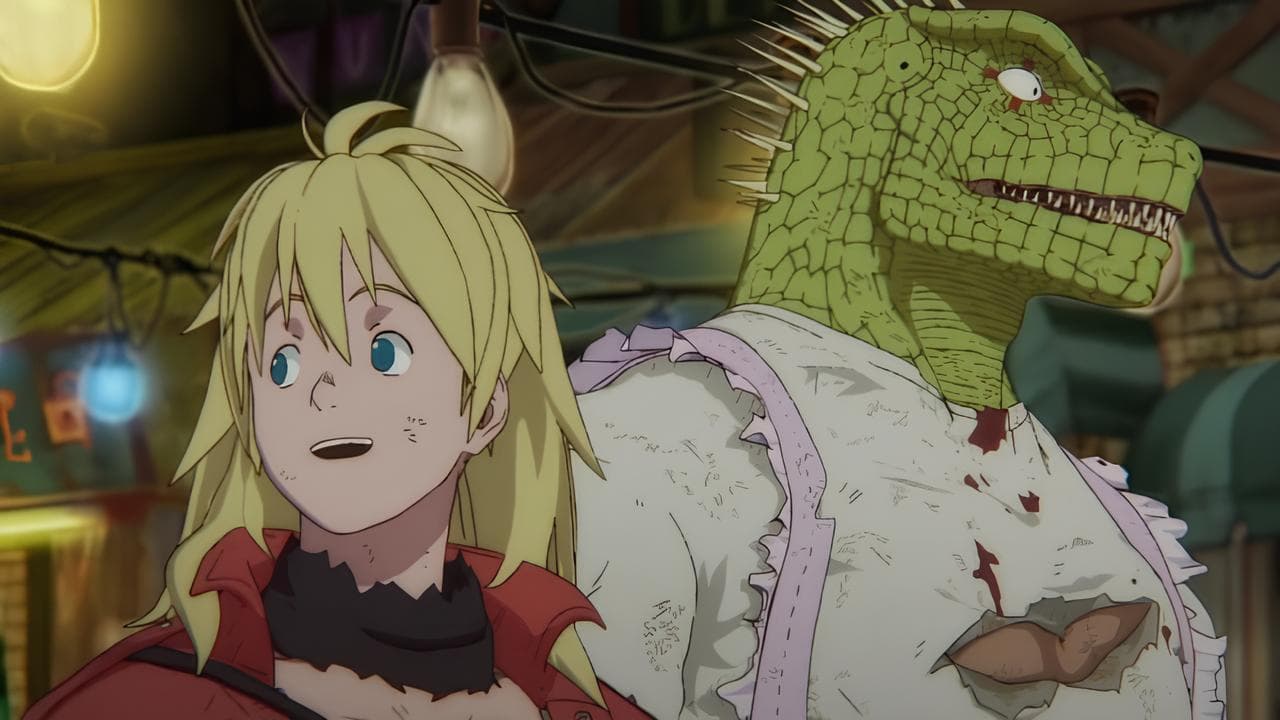
“Dorohedoro” tells the story of a two-meter-tall brute named Caiman, who awakens one day in a filthy alley, wrapped in a body bag. This is, however, far from his biggest problem.
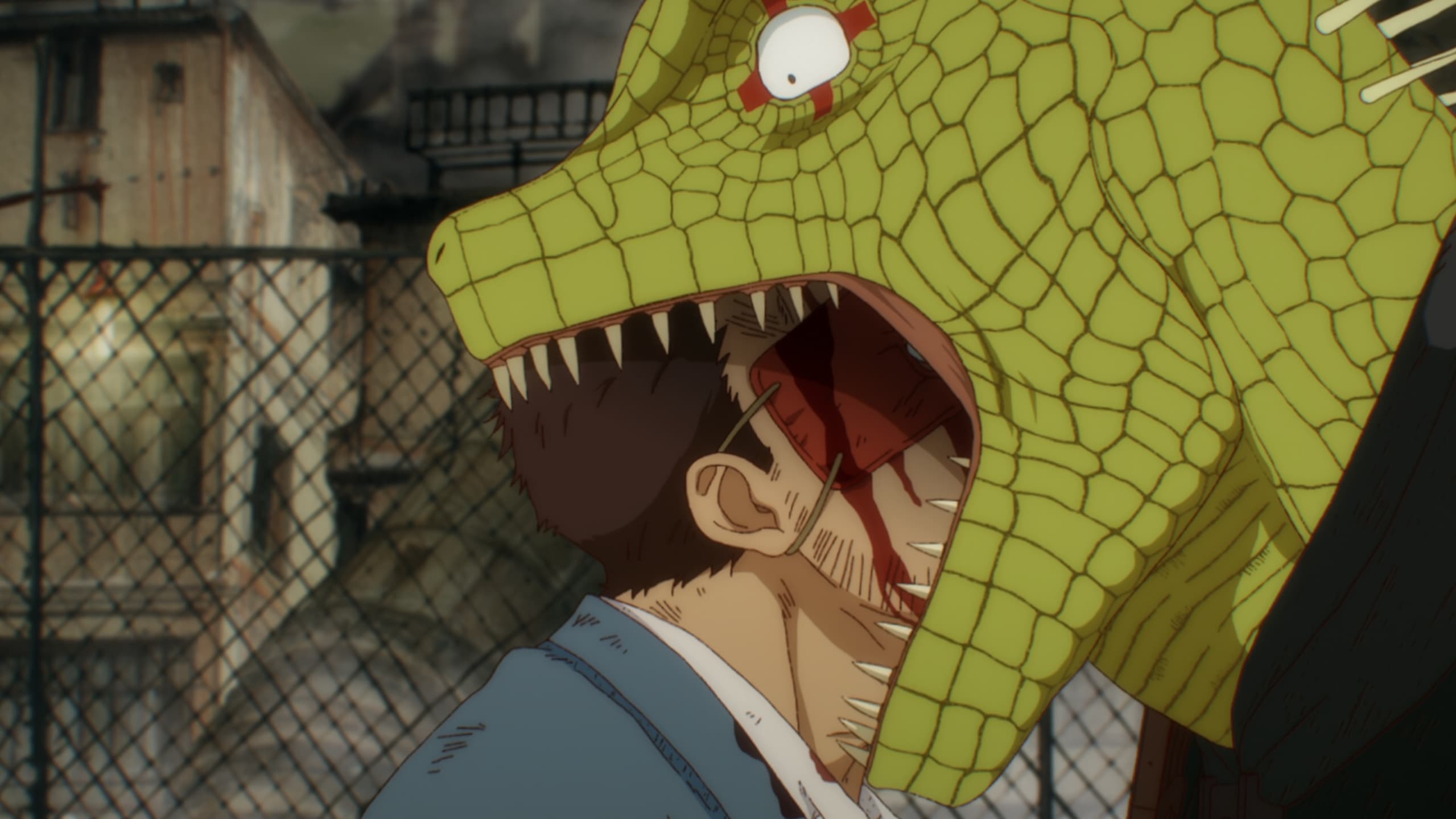
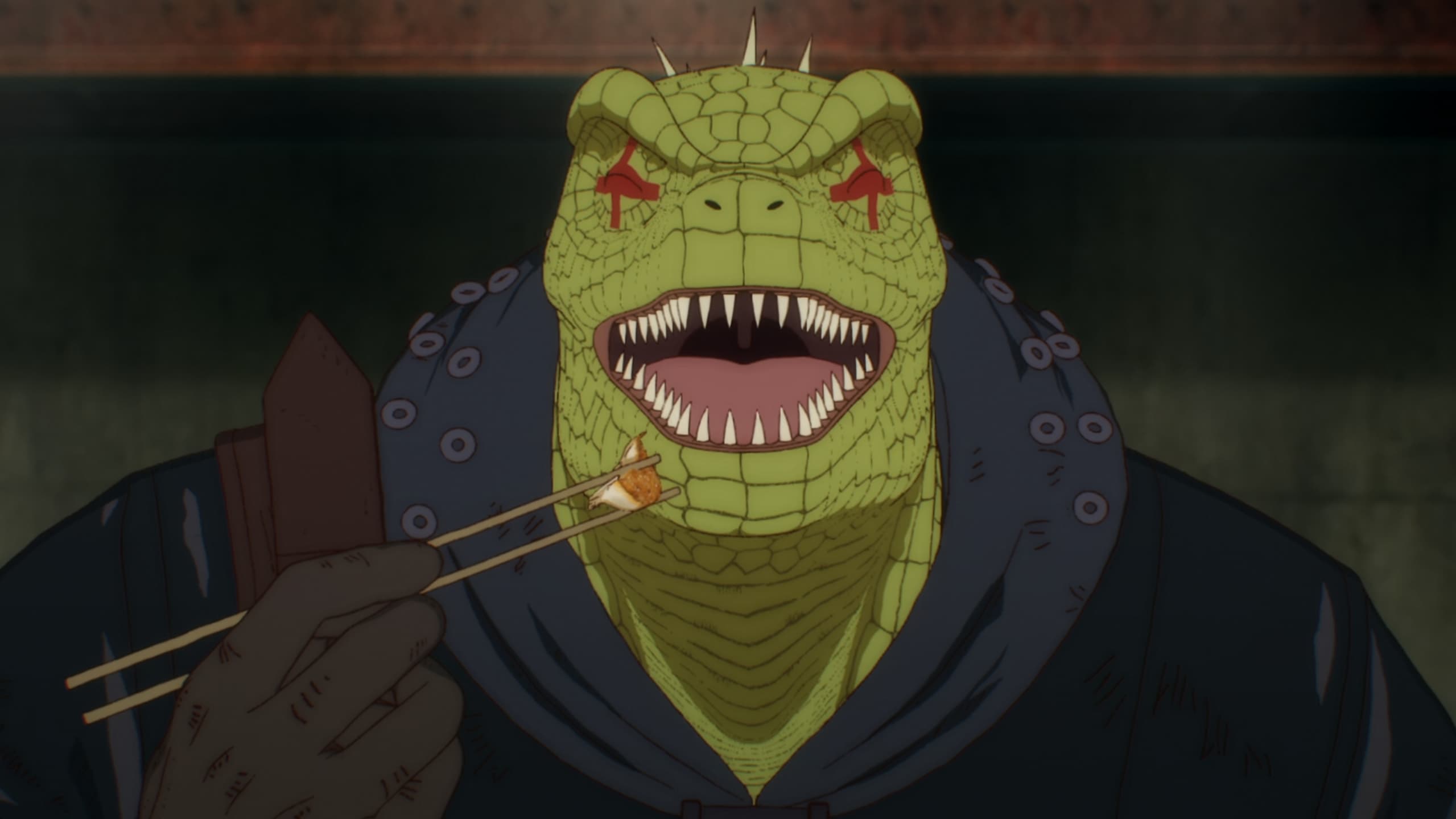
Far worse, instead of a human head, he now has a reptile’s snout. Additionally, Caiman has lost his memory and cannot recall who he once was. His sole objective is to find the sorcerer who cursed him, eliminate them, and reclaim his former appearance and life.
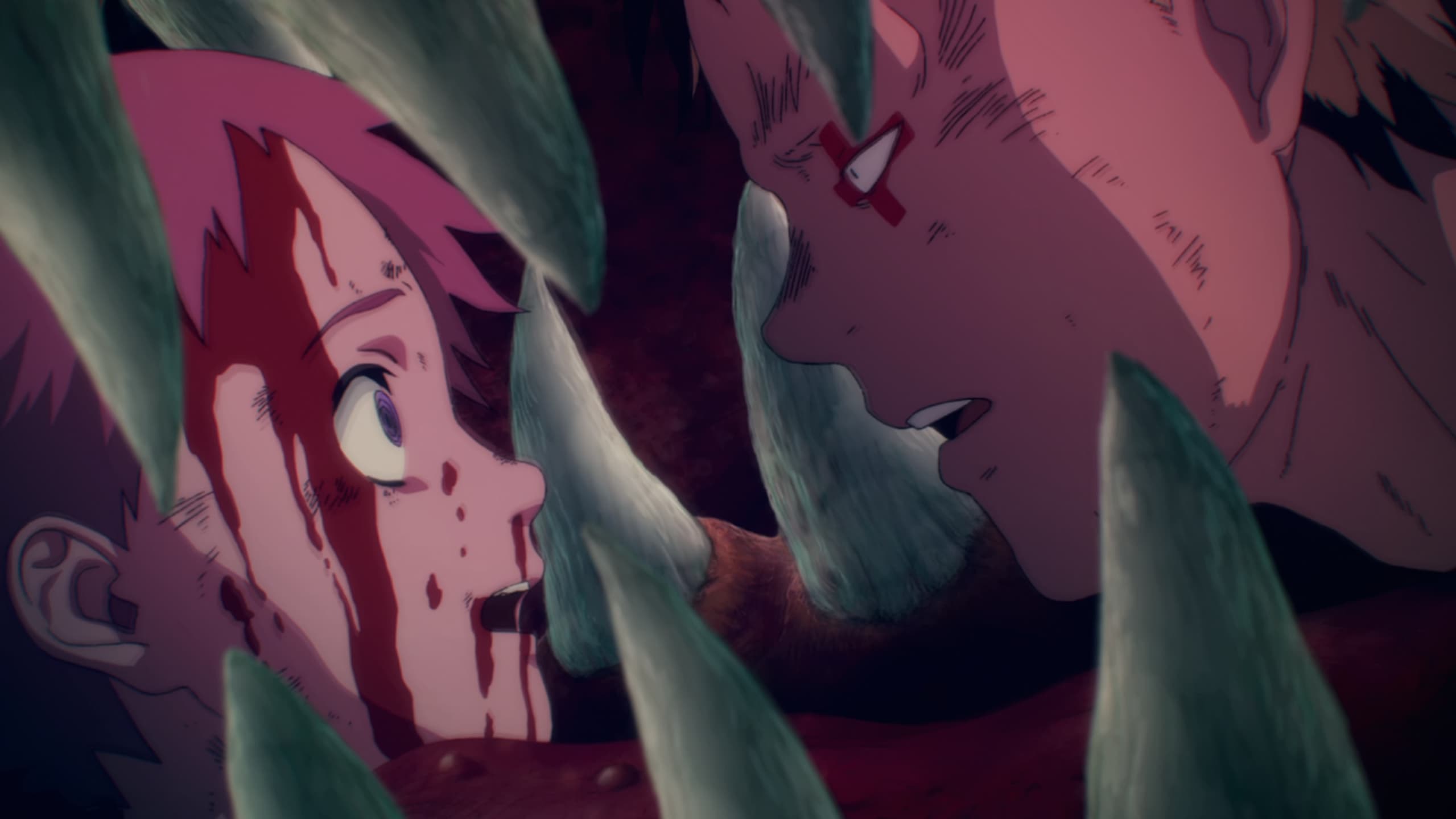
The curse not only disfigured Caiman but also made him unique: he is completely immune to magic. He can shove sorcerers’ heads into his mouth, after which a strange man with crosses around his eyes emerges from Caiman’s throat to deliver a verdict: is this the sorcerer who transformed Caiman, or must the search continue?
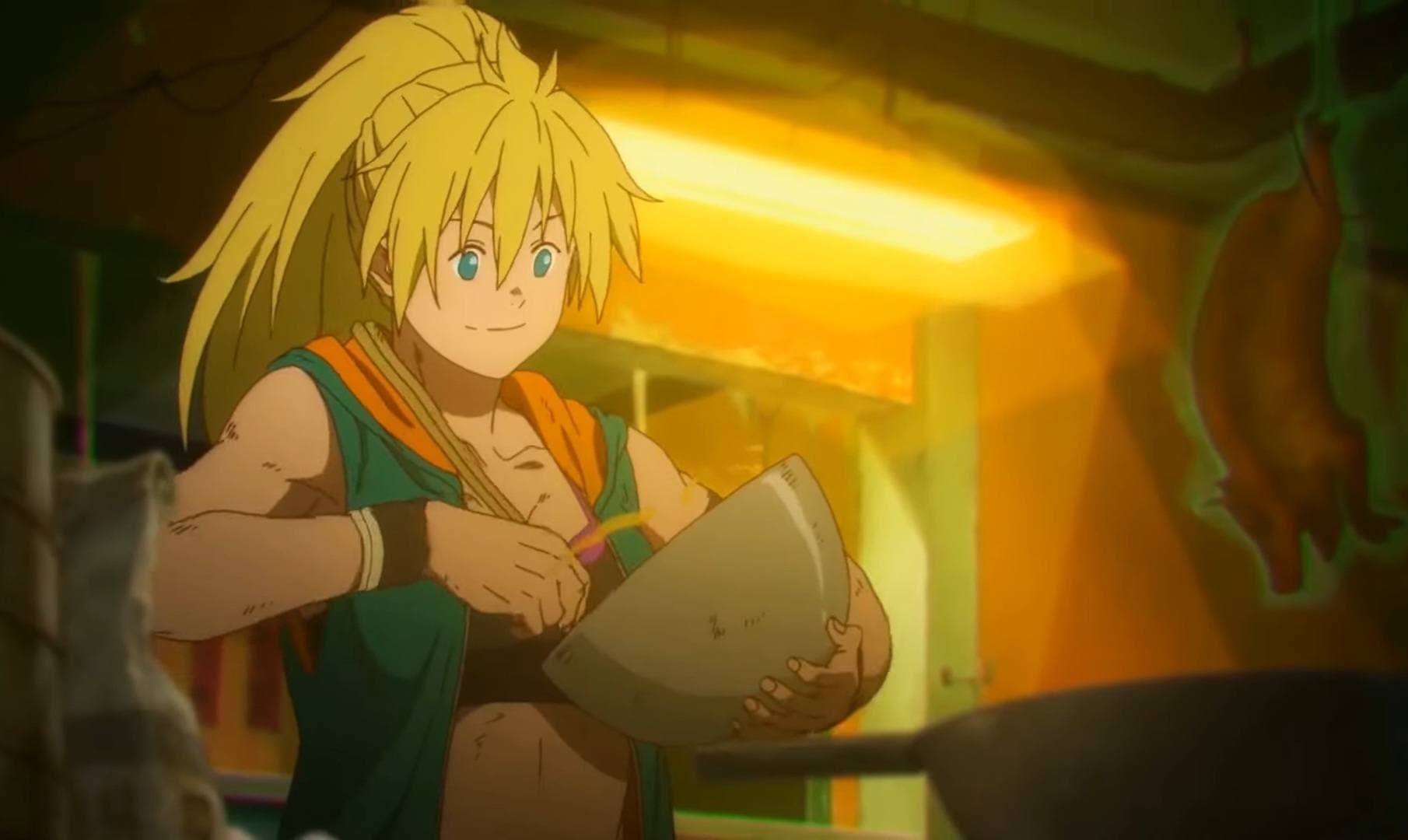
It’s an unconventional and brutal method, but Caiman has no other. Time and again, he hunts down sorcerers, aided by Nikaido, the feisty owner of the “Hungry Bug” diner, renowned for its pan-fried gyoza, without which Caiman cannot go a day.
But don’t be fooled into thinking this is merely another generic revenge story. Everything is far more intricate, as the world of “Dorohedoro” is profoundly split between two distinct realities.
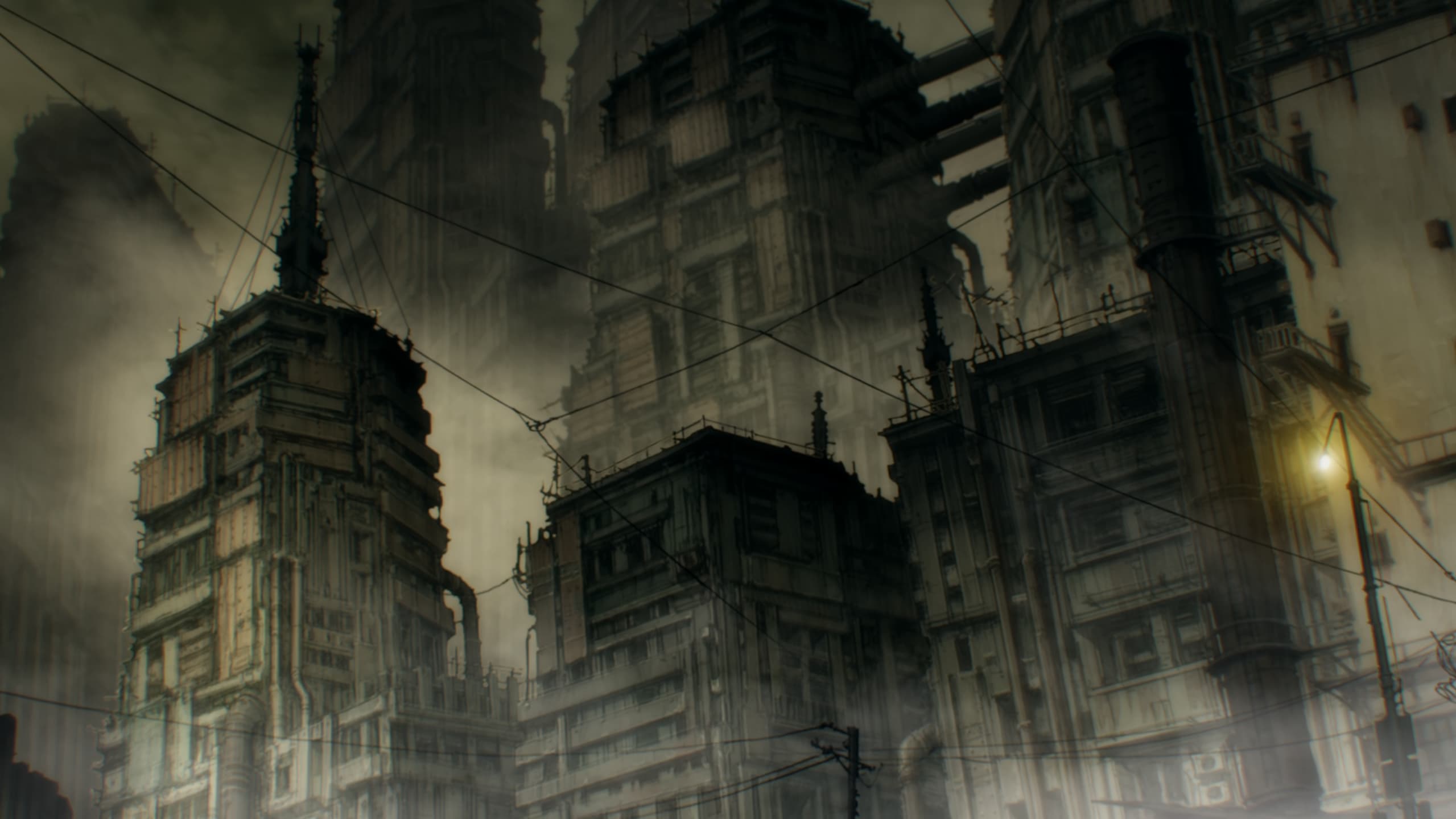
The first is ‘The Hole.’ Its very name unequivocally suggests that nothing good awaits within. And indeed, it is an industrial ghetto with grimy streets, dilapidated buildings, and people struggling to make ends meet. There’s no police, no authority, not even a hint of order.
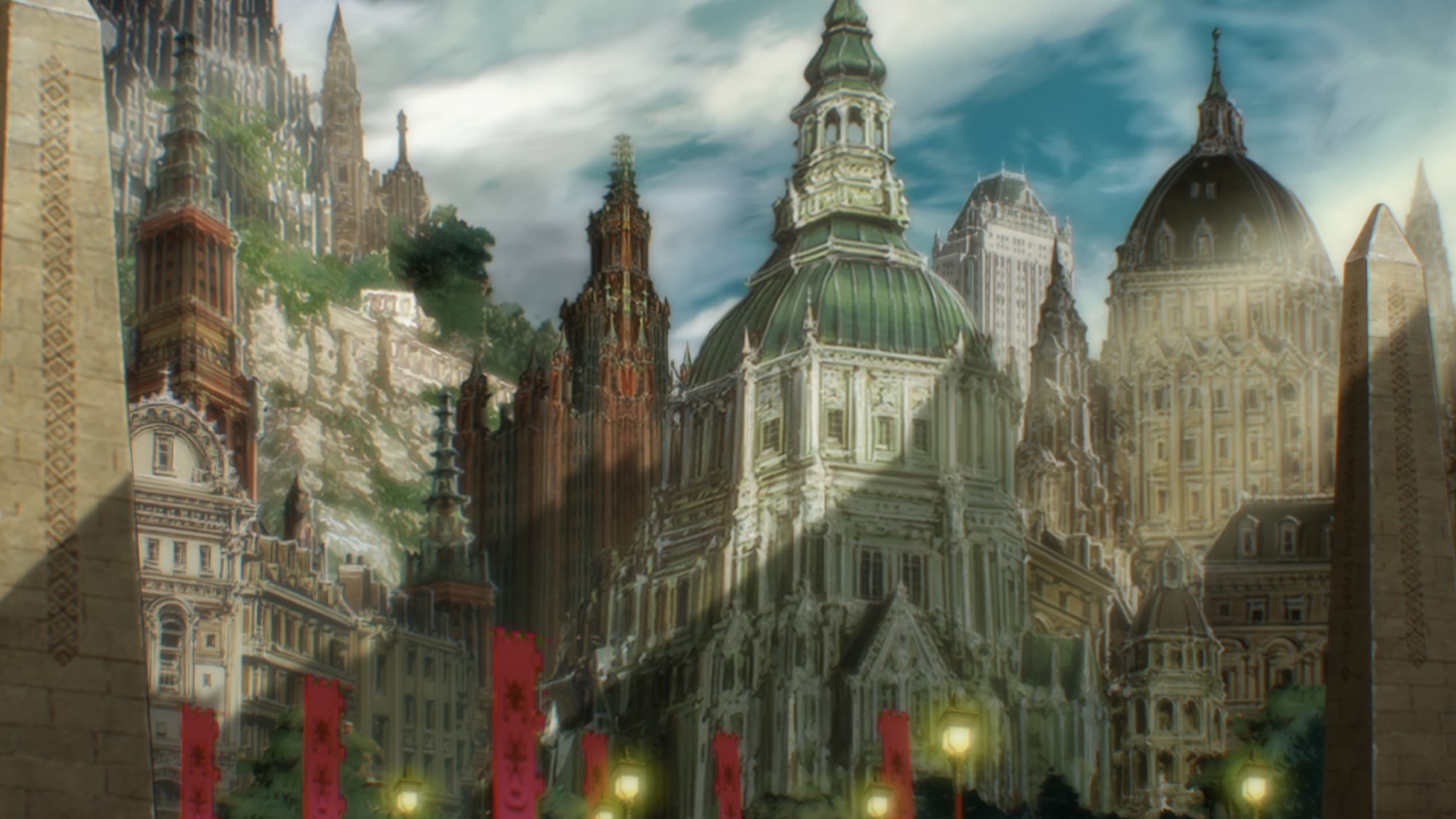
The second reality is the sorcerers’ world. More ornate, almost theatrical, and noticeably more prosperous. Problems exist there too, but life is undeniably better. At least no one invades from another dimension to experiment on the locals. Sorcerers, however, freely pass through portals into ‘The Hole,’ maiming and killing people, treating them as disposable material.
Furthermore, the local magic bears no resemblance to fantastical enchantment. Here, it takes the form of thick black smoke. This is an ironic inversion of Arthur C. Clarke’s famous adage, where magic resembles a toxic technology, polluting the environment and grotesquely disfiguring human bodies.
Once, the people of ‘The Hole’ tried to resist, but the forces were too unequal. Gradually, most simply resigned themselves to their fate. Sorcerers exploit this, knowing that in ‘The Hole,’ almost no one can stop them. Thus, violence here feels not like an exception but an intrinsic part of the environment itself.
Such an exposition seems to push for a simple division: the oppressed and the oppressors, the victims and the perpetrators. But very quickly, it becomes clear that “Dorohedoro” has no intention of neatly categorizing everyone into convenient boxes.
No Clear Heroes or Villains
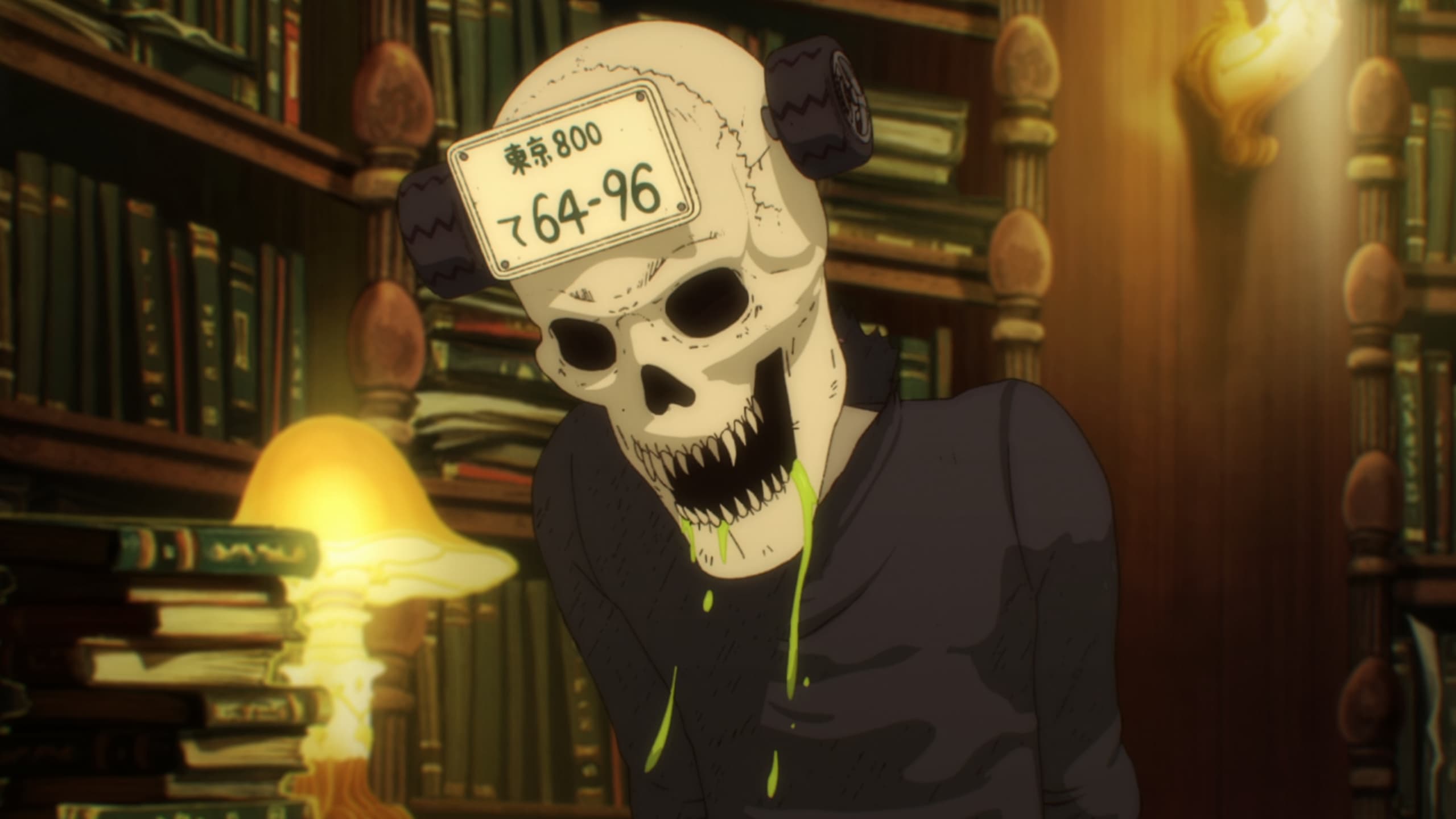
Initially, we observe Caiman methodically terrorizing sorcerers in ‘The Hole’ as he seeks the one who stole his memory. But then the anime skillfully shifts perspective, showing events through the eyes of the sorcerers themselves. For them, Caiman is not a sympathetic avenger but a monstrous figure with a crocodile head who invades their lives, kills, and leaves behind mutilated bodies.
Therefore, “Dorohedoro” lacks a single protagonist in the traditional sense. We view this distorted world from various angles of the conflict, gradually understanding the motivations, fears, and internal logic of almost all the characters. It quickly becomes evident that in a world where old norms have been shattered and new ones haven’t emerged, individuals can rarely afford to be entirely themselves. Their behavior is determined less by moral principles than by prevailing circumstances and the brutal balance of power.
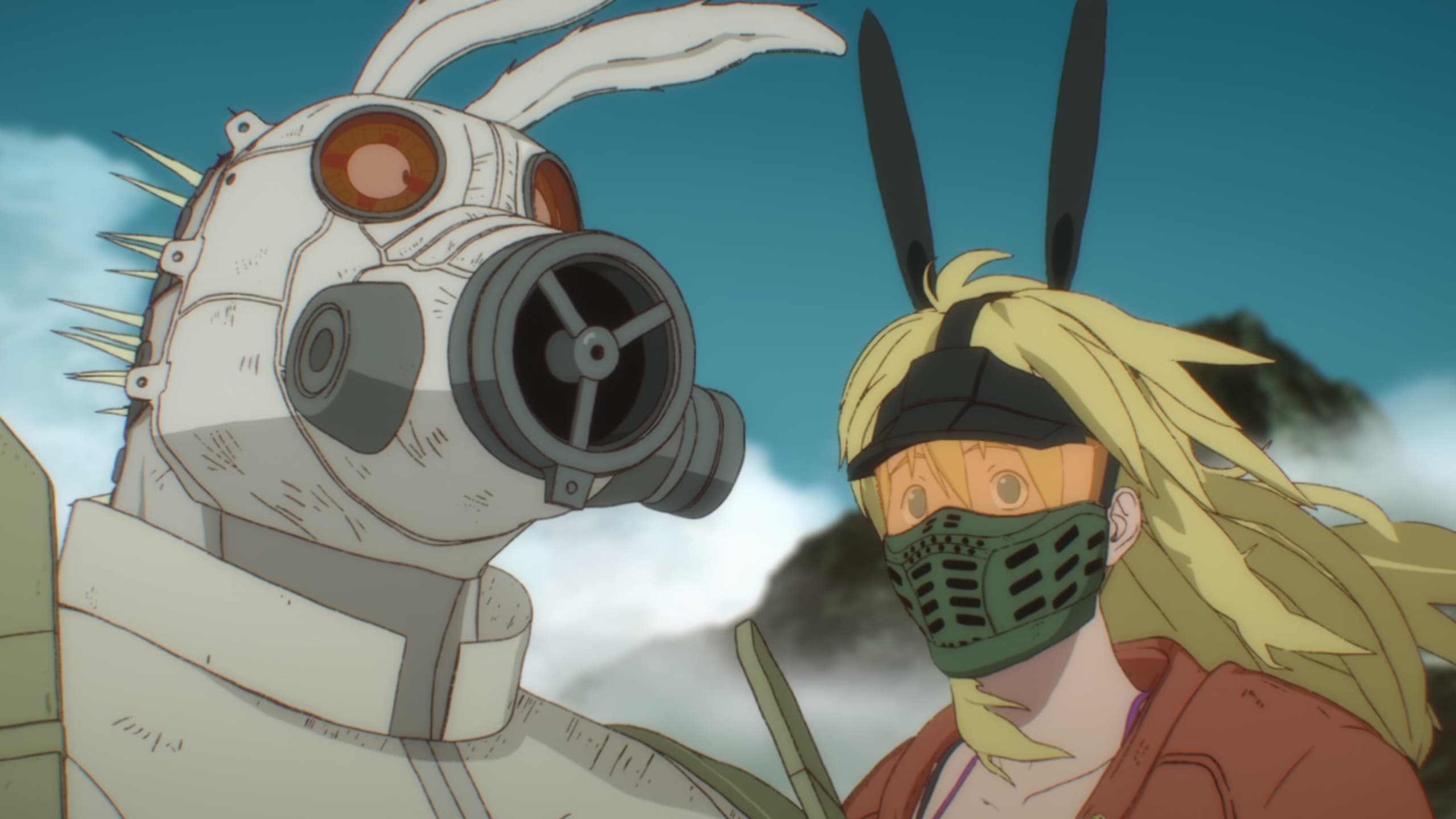
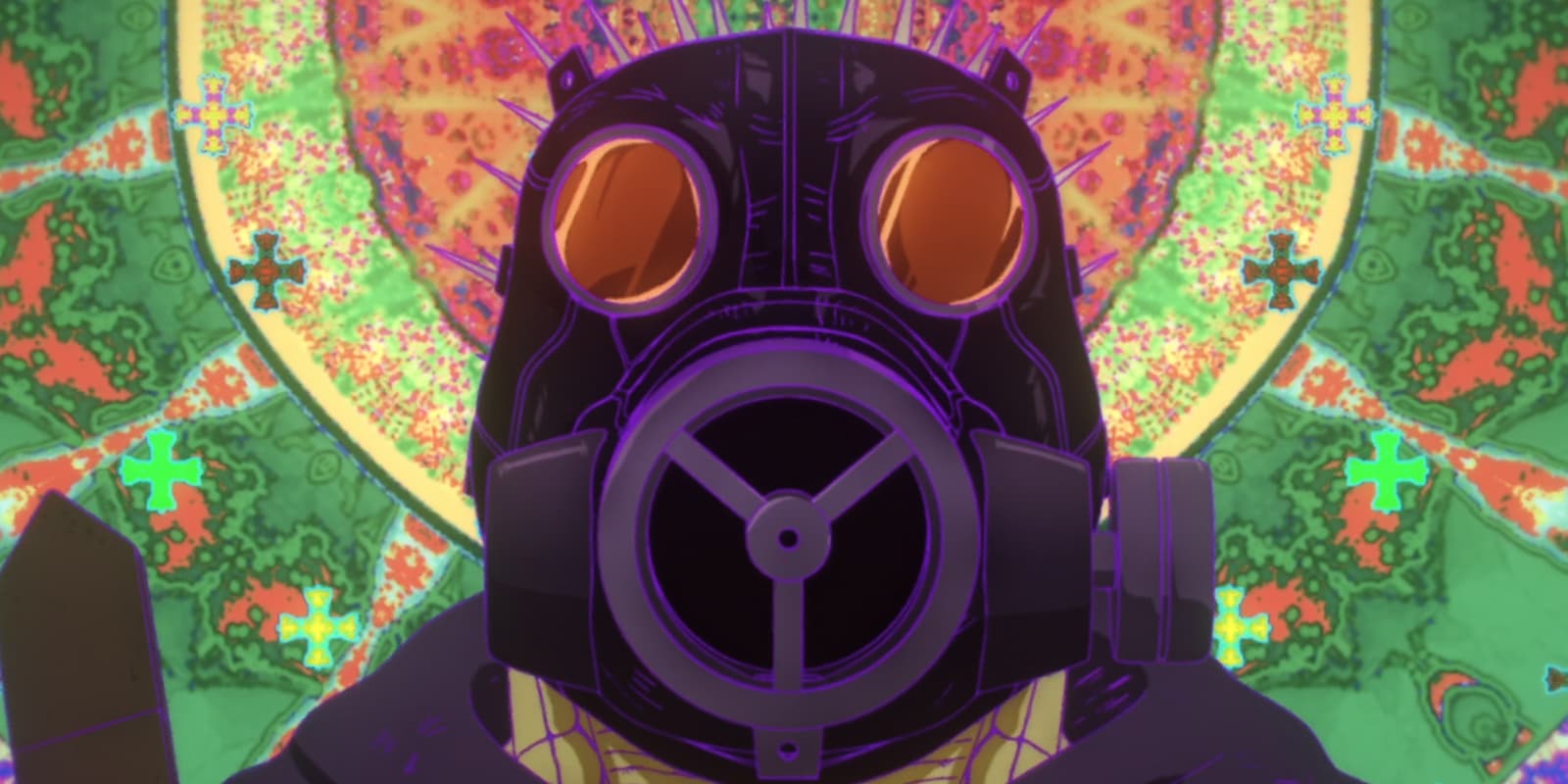
To preserve themselves, many characters hide behind a function, a role, a mask. Almost everyone wears masks here – especially when committing acts of violence. They conceal faces, erase expressions, and seem to liberate the person from the need to feel. The personal dissolves into the functional. In such a state, violence is committed not by a specific individual but by the detached role they embody. The banality of evil is on full display.
This is why moments when a mask is removed, literally or metaphorically, are so crucial. It then becomes apparent that in the world of “Dorohedoro,” there are almost no unambiguously good or entirely evil characters. Behind the most gruesome exterior, one almost always discovers a person with their fears, habits, attachments, and complex motives.
First, you begin to understand them, then you find yourself empathizing and caring for them. Because these individuals not only perpetuate a system of violence but are themselves, to a great extent, scarred and shaped by it.
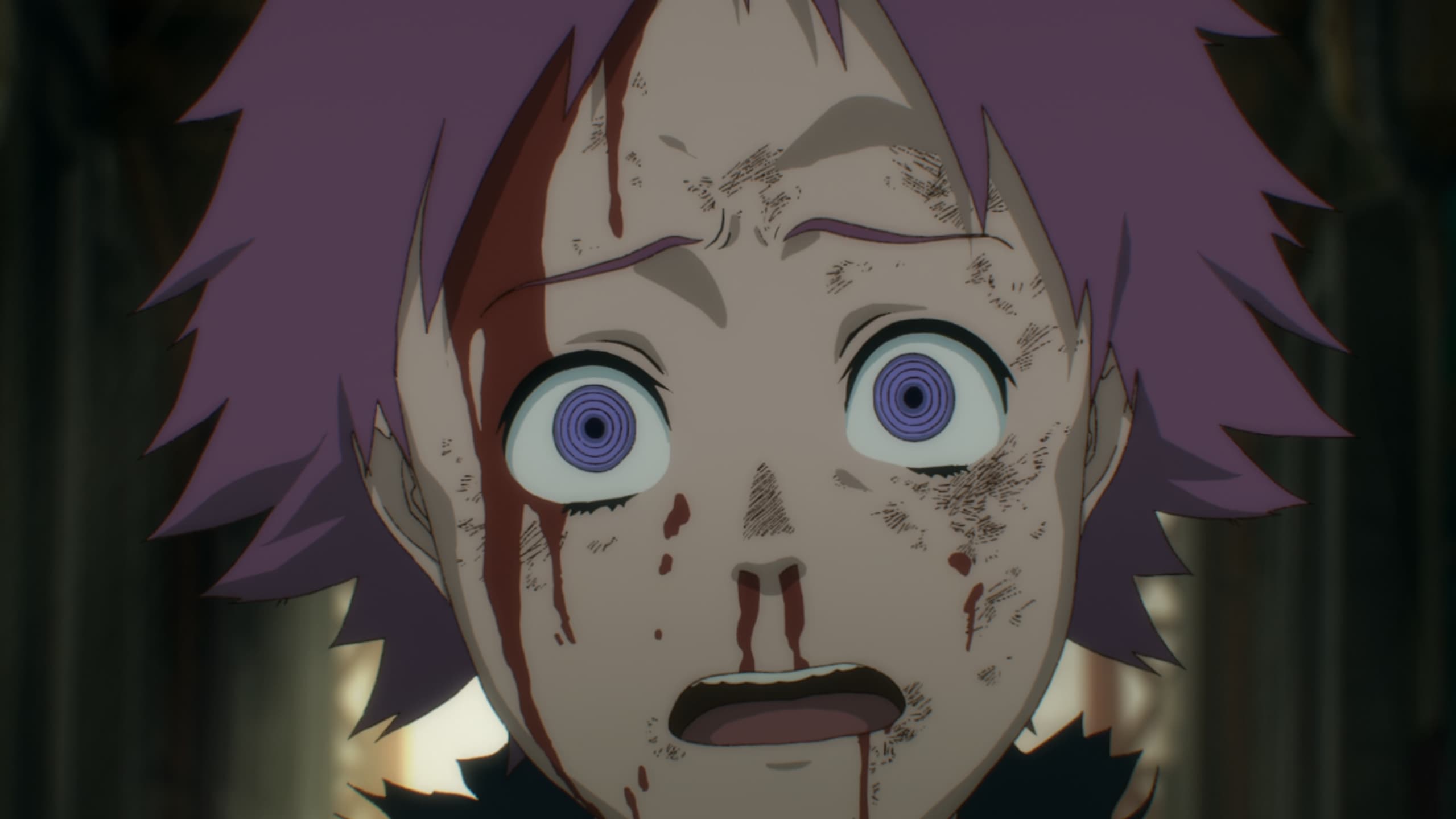
This is best illustrated by characters who, by genre conventions, should have remained mere impressive secondary villains. Take Shin and Noi, En’s cleaners, a powerful crime boss and one of the most formidable sorcerers in this world. Formally, they are killers for whom violence has become routine work. But Shin’s story isn’t that of a villain in the usual sense. It’s the tale of a man who was first broken, then taught to survive in the only way available to him.
Yet, Shin doesn’t entirely dissolve into the role of an assassin. He adheres to his own principles. He doesn’t use magic against those who don’t possess it themselves. Even on the brink of death, he tries to avoid it. And beneath his heart-shaped mask, a living heart truly hides, one that remembers not only the harm done to him but also acts of kindness. And he is capable of reciprocating that kindness, even towards a formal enemy. These principles help him not to lose himself completely in a world of total chaos.
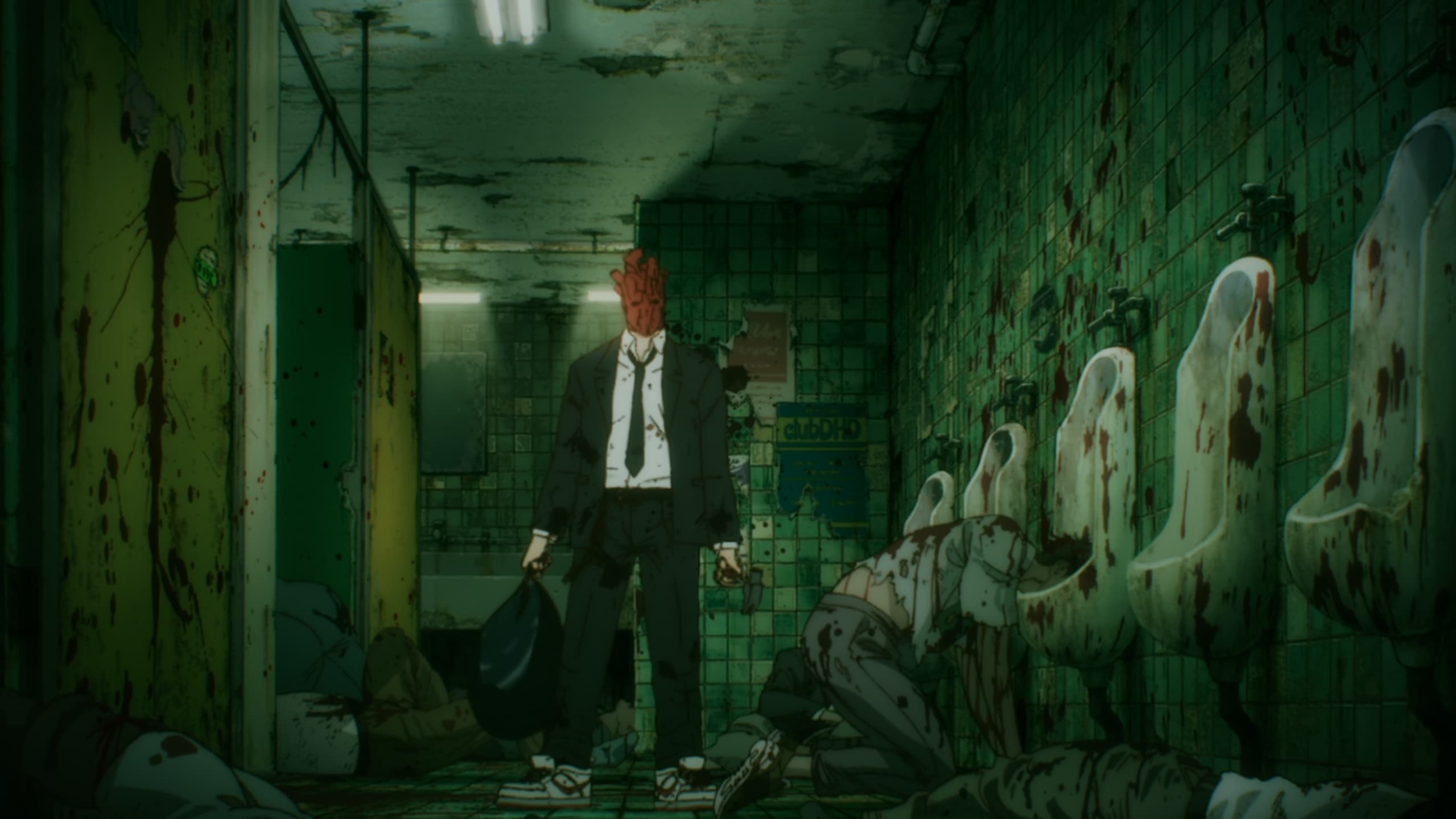
With Noi, things are even more intriguing. She possesses healing magic – a power that, in any other story, would automatically brand her as a force for good. But “Dorohedoro” rejects such simplistic frameworks. Noi can literally reassemble a person limb by limb, bring them back from the brink of death, and undo the horrific consequences of another’s cruelty. Yet, therein lies the paradox. She can save a specific individual, but she cannot rectify the fundamental logic of an environment that immediately turns that salvation into a continuation of brutality.
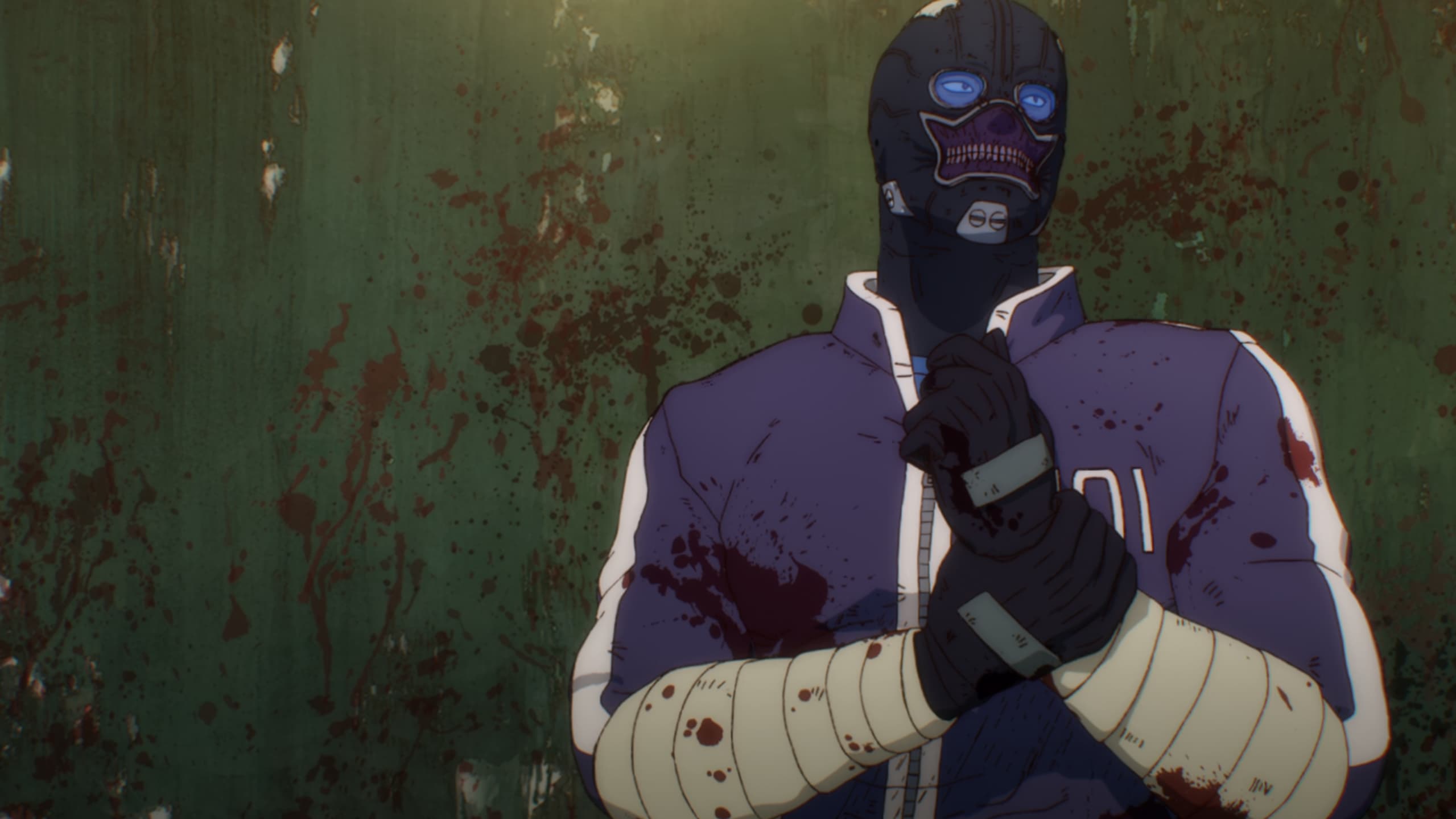
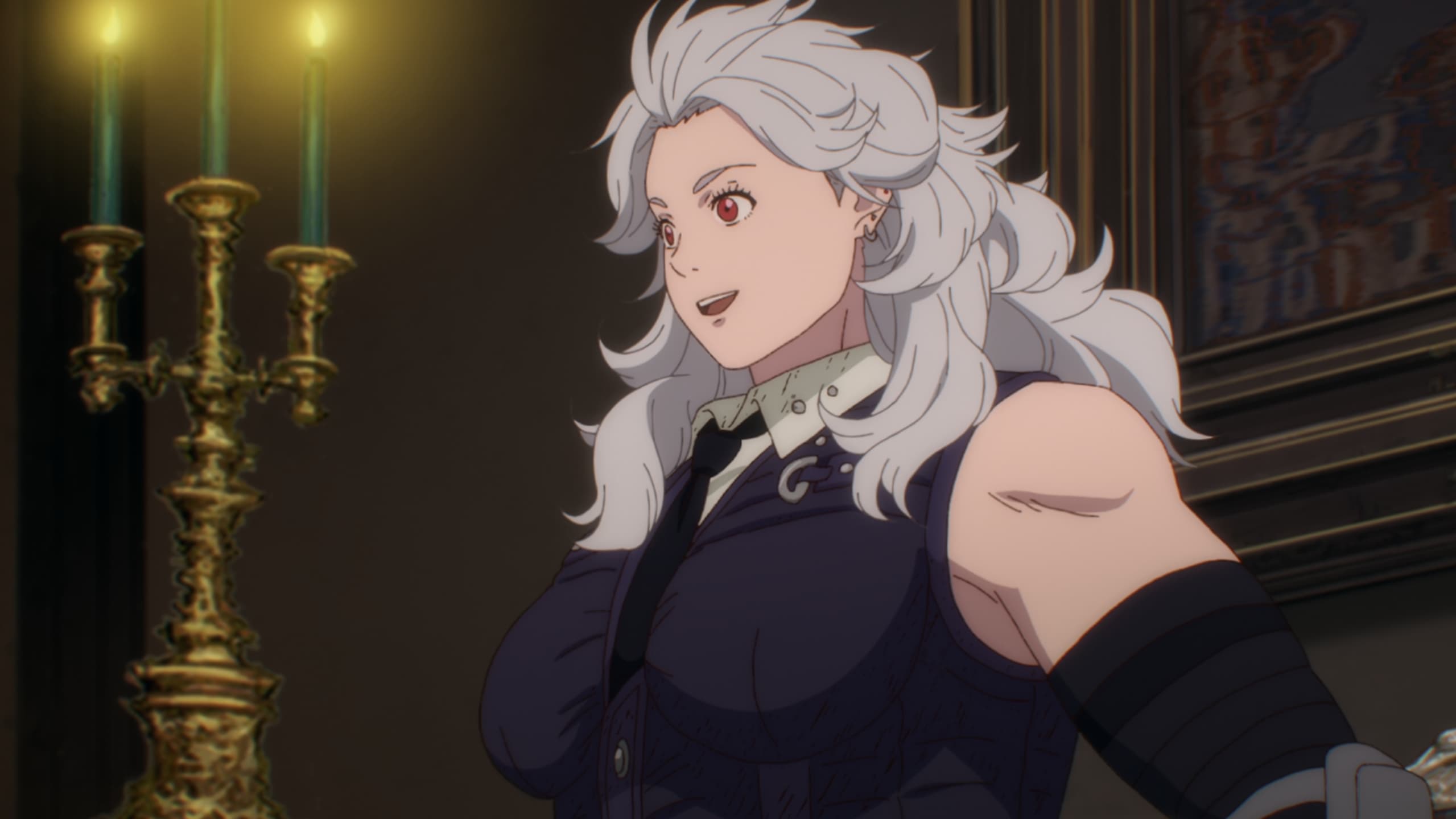
En, whom it would be easiest to cast as the main antagonist, can also be viewed through this complex lens. He builds a criminal empire, ruthlessly eliminates rivals, and transmutes offenders into mushrooms without hesitation. Yet, he gathers a kind of family around him and genuinely cares for his people. Moreover, his empire itself largely grew as a response to the exploitation of sorcerers. Because of this, his cruelty appears not as abstract evil but as another harsh means to impose order in a world where the very concept of order has all but vanished.
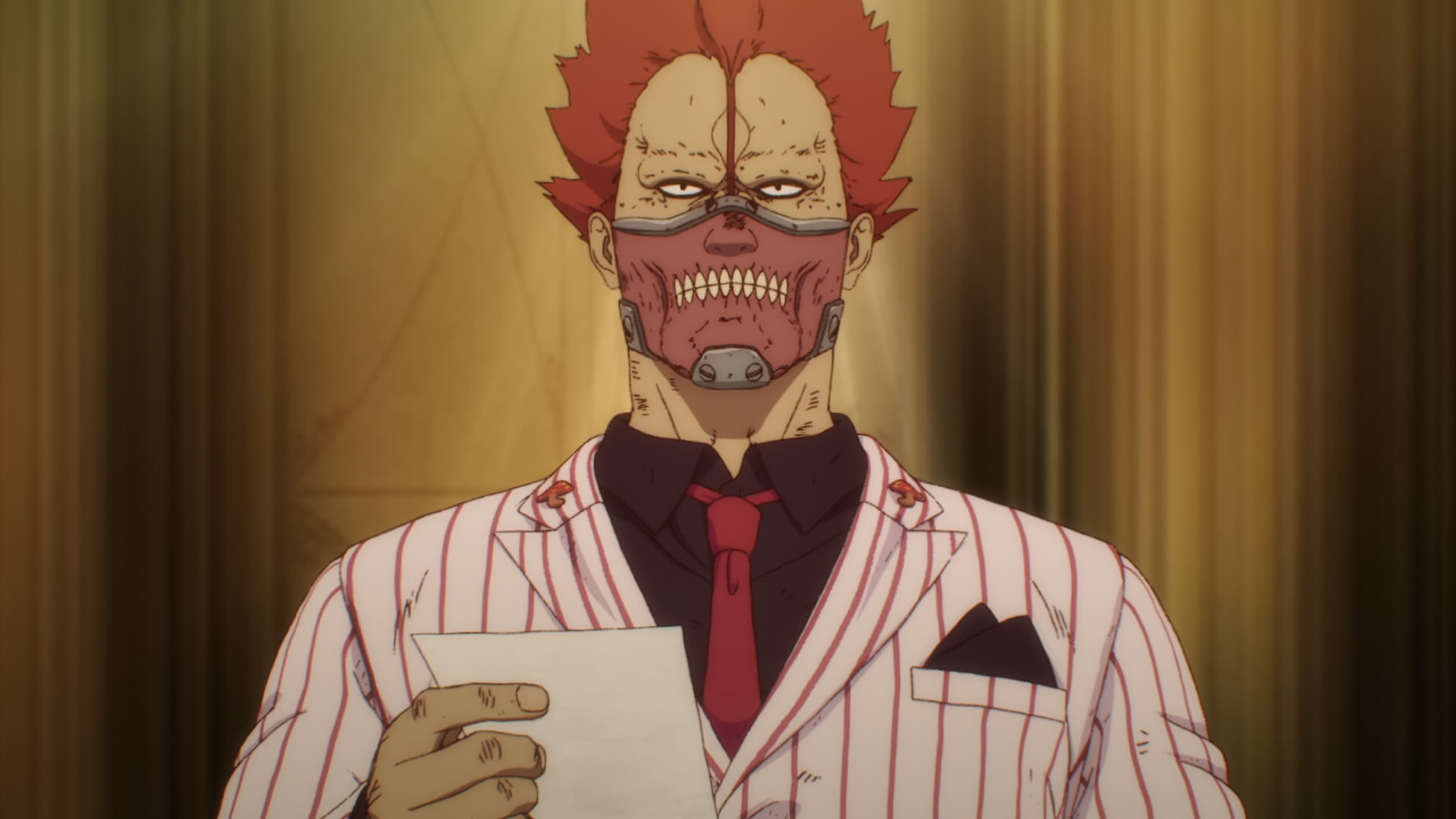
It would be easy to slip into clichés like “we’re not bad, life just made us this way,” but “Dorohedoro” pushes this idea to its extreme. Typically, such stories feature one tragically broken villain whose difficult past is carefully provided. Here, it’s different. This is how literally the entire world lives. Everyone is deformed by their environment, everyone has learned to survive through violence, and everyone is stained with blood in one way or another.
Thus, violence in “Dorohedoro” functions not as an exceptional event or a dramatic climax. It doesn’t halt the narrative but is deeply woven into the very fabric of daily life. Characters might orchestrate a bloody massacre, then a minute later calmly eat, argue, joke, or discuss evening plans. For them, there’s no inherent contradiction, because the world has long operated by such brutal rules.
Humanity Within Chaos
The same transformation gradually occurs with the viewer. At first, “Dorohedoro” shocks with its casual, everyday brutality. Not just the sheer quantity of gore, but the unsettling ease and naturalness with which the most horrific acts are committed. But the longer you watch, the more your perception shifts.
Violence doesn’t disappear or become any less terrible. But it ceases to be the sole thing you notice. And then, other profound elements begin to emerge in the frame: a friendly dinner, a silly joke, recurring rituals, and promises that suddenly mean more than any grand pronouncements.
The essence here isn’t abstract morality or a set of politically correct slogans. In the world of “Dorohedoro,” the formula “I don’t kill anyone, therefore I’m good” simply doesn’t work. Something living is preserved in other aspects: in how people exist alongside each other, in mutual care, in attachment, in the very act of returning to one another. In the rituals that maintain a fragile sense of normalcy.
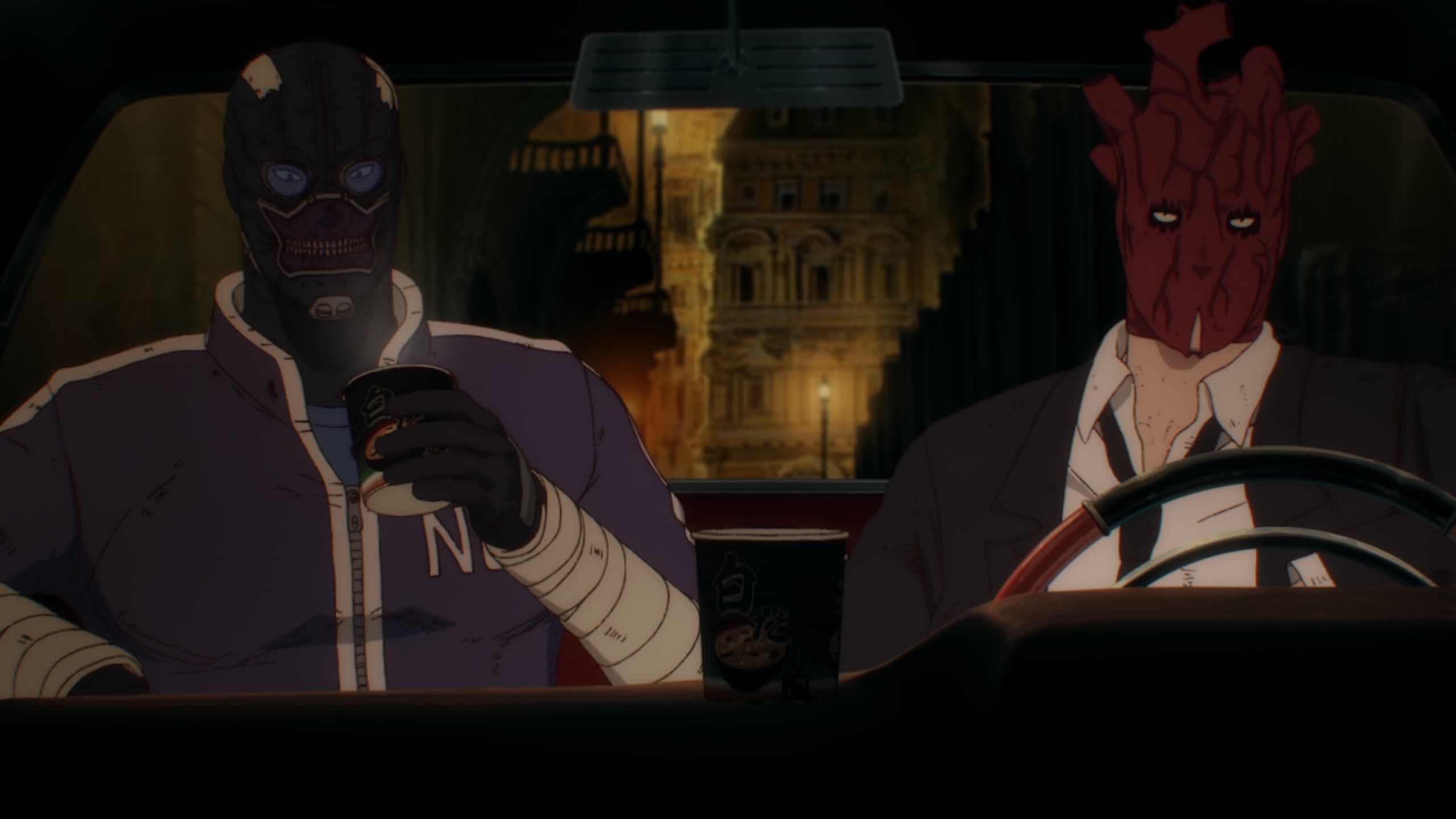
It’s no coincidence that during anxious times, people often rewatch familiar films and series. The recognizable provides comfort. Repetition creates an illusion of control. Something similar happens to the characters in “Dorohedoro.”
Shin and Noi repeatedly return to the same diner. They eat bets, joke, and tease each other. They are fascinating to watch. You start to care about them, even feeling a touch of awkwardness when their relationship hovers between familial closeness and suppressed romance. All of this demonstrates that they haven’t completely dissolved into violence. They have an ordinary life beyond killing. And as long as these small habits are reproduced, a fragile illusion, at least, is maintained that the world hasn’t entirely fallen apart.
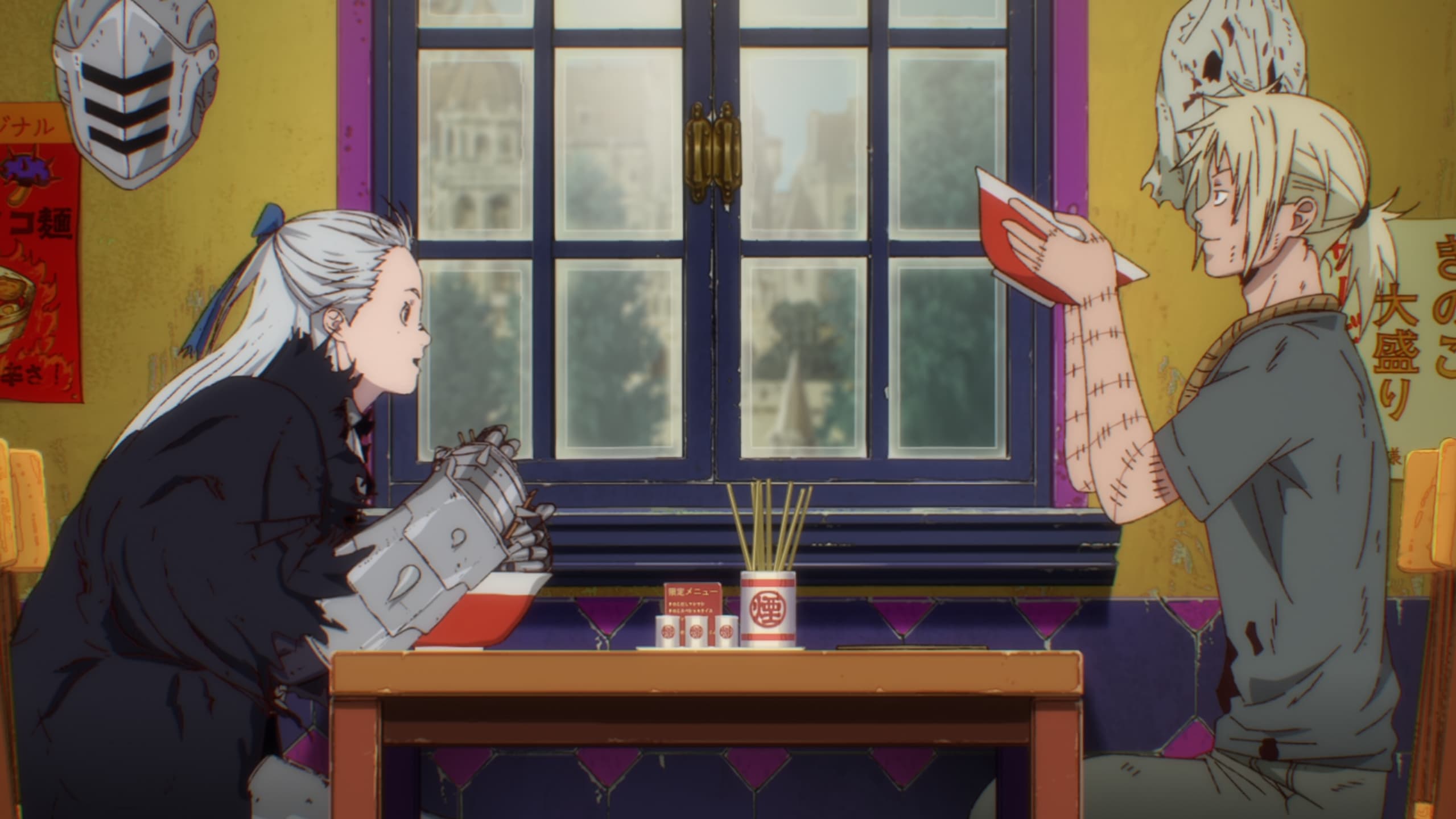
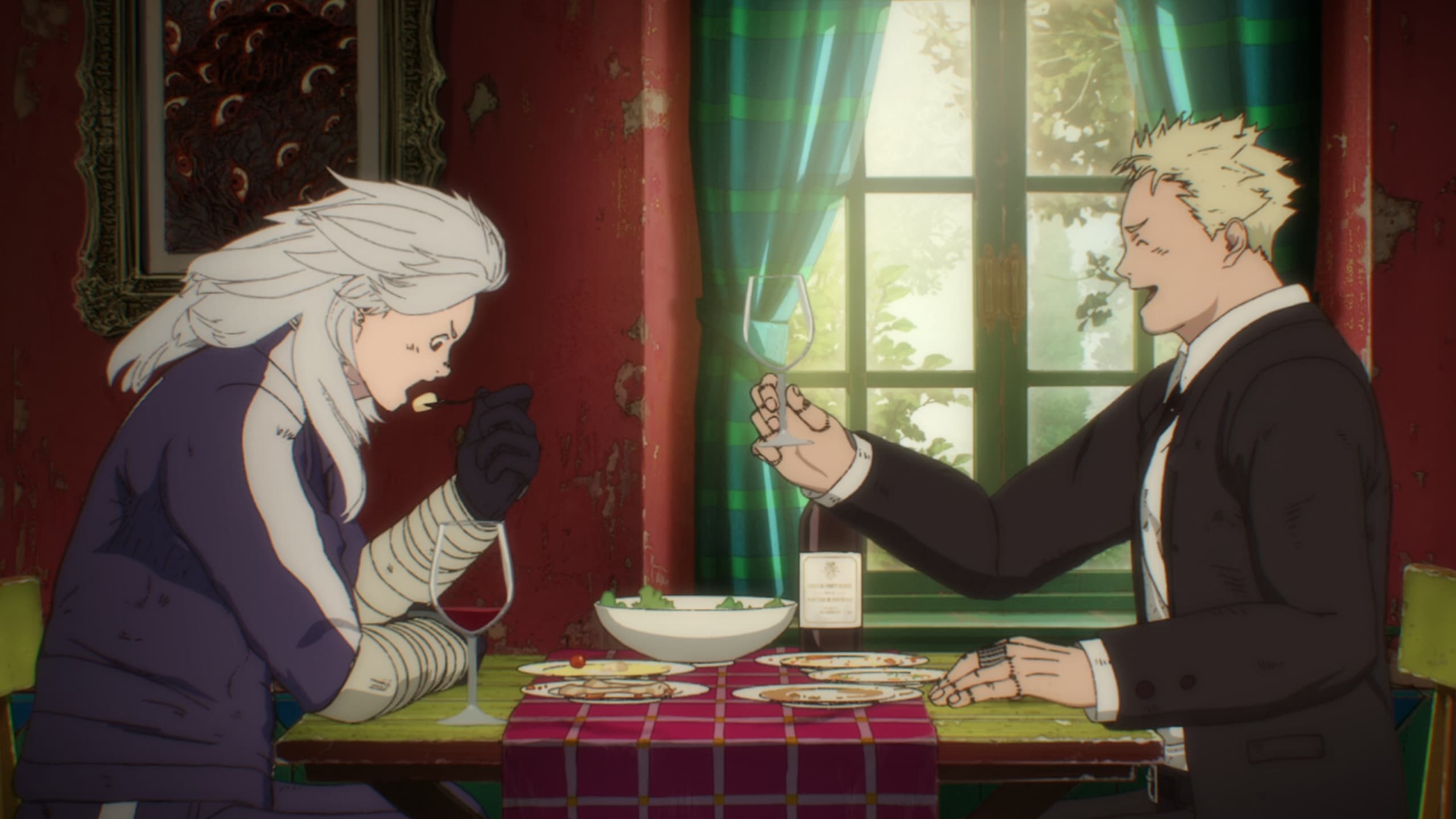
The same applies to Caiman and Nikaido. A genuine, unshakeable bond forms between them, built on the simplest everyday things. Nikaido provides him not only sustenance but also an anchor in a world where he has no past, no normal body, not even his own name. And he returns to her repeatedly, not just because he loves gyoza. Next to her, he finds some semblance of a normal, stable life.
And it’s in this absurd everydayness that something truly alive emerges. The world might be falling apart, intestines might spill out. But Caiman, who just had his head chopped off, first thinks about bringing Nikaido the meat grinder they fought for on the Day of the Dead. This is one of the strongest moments of the first season. Because friends keep their word. And because now gyoza can be prepared faster.
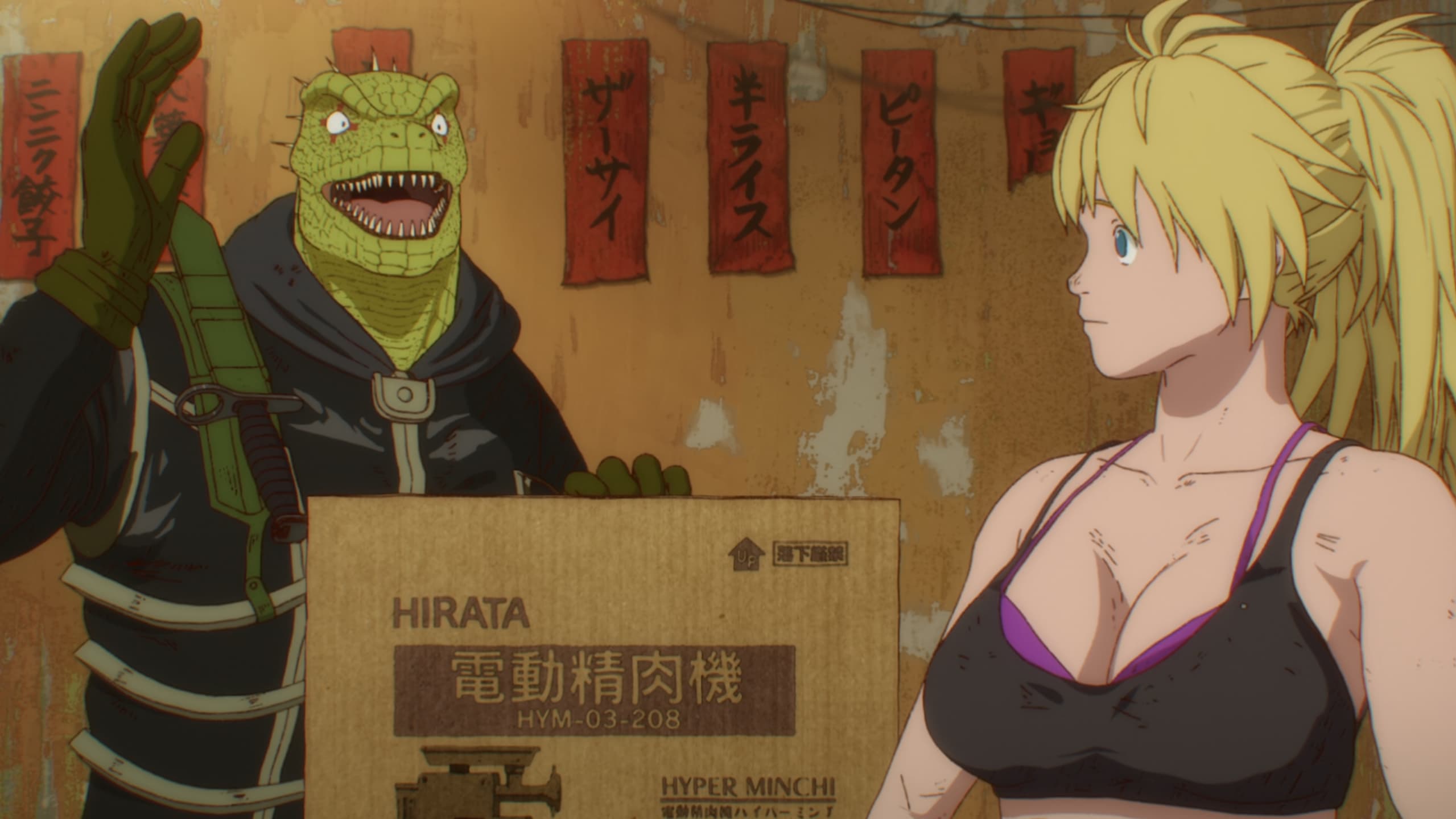
Sometimes “Dorohedoro” even starts to resemble a cooking anime. And this isn’t just a funny contrast, like “here’s some dismemberment, and here are some delicious dumplings.” Food here serves a very specific and symbolic function. It also restores a crucial sense of normalcy to the world. Everyone eats, after all. It’s a simple, primary, almost animalistic act of survival and comfort.
That’s why Nikaido’s gyoza mean much more than just Caiman’s favorite dish. They are something beautiful and right in a world where almost everything else is distorted and destroyed. They are a profound marker of attachment and life itself. A person eats – therefore, they live. A person cooks for another – therefore, they care. A person returns to the same place for the same dish – therefore, they are trying to hold onto something stable and comforting in a chaotic world. And the more broken the world itself, the more these simple things truly mean.
The same goes for humor. Despite all its grimness, “Dorohedoro” constantly injects jokes. And not *over* the horror, but right *within* it. The harshest, most intense scenes here can easily end with some absurd, mundane detail. Shin’s bloody backstory of murders and dismemberment abruptly cuts off with him simply sneezing loudly. A trivial moment, but it works brilliantly. It doesn’t entirely relieve the tension but makes it even more textured and vividly real.
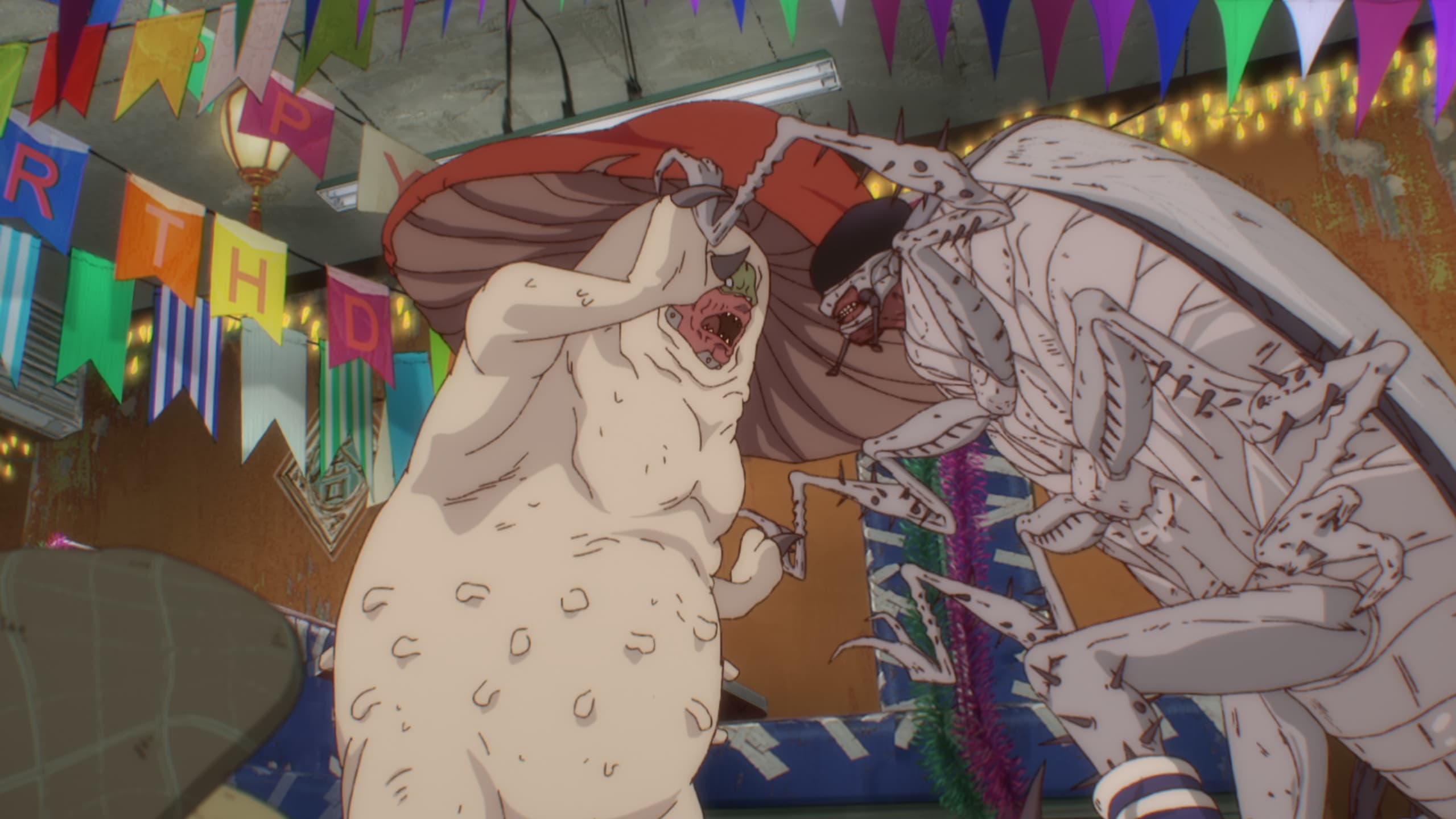
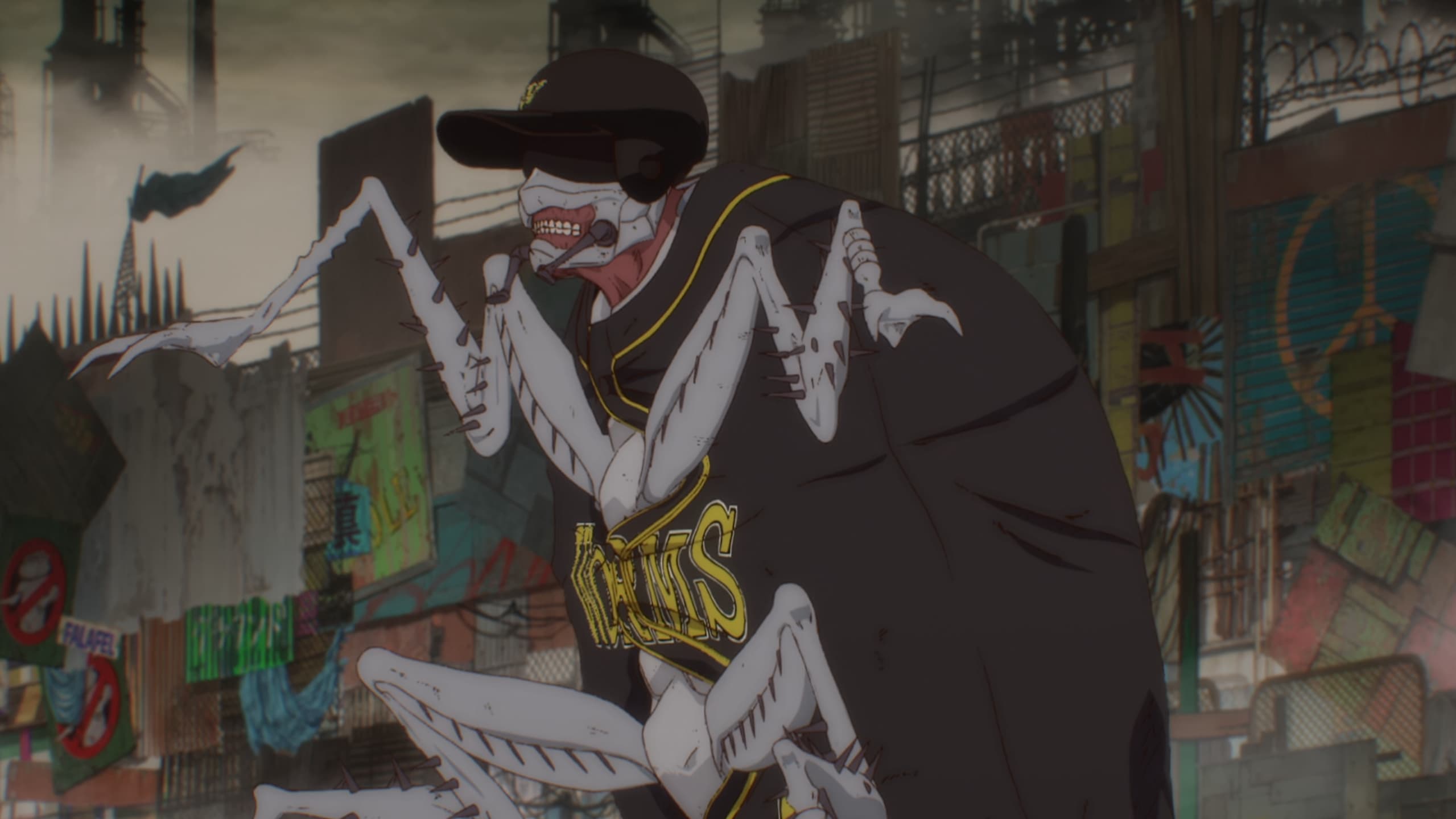
The world doesn’t freeze in one continuous tragedy. It continues to breathe, chew, joke, argue, eat, curse, play baseball with the dead and a three-meter cockroach. That’s why it feels not like a cardboard nightmare but like a living, physical environment in which someone truly lives and struggles.
This stark contrast makes everything genuinely important. In a conventionally normal world, friendship, food, care, and silly habits are often perceived as mere background elements. But here, against a backdrop of constant grime, cruelty, and absurdity, they surge to the forefront and prevent the characters from completely losing their essential humanity.
Verdict
“Dorohedoro” merely feigns chaos. On the surface, it’s a torrent of grime, blood, and absurdity, where many events seem almost random. But this anime is constructed with far greater precision and purpose than it initially appears. Food, masks, domestic scenes, the potent contrast between the grotesque and the cozy – everything here serves a single, overarching task: to depict a world where humanity doesn’t necessarily conquer violence, but stubbornly refuses to be erased.
Therefore, “Dorohedoro” is not just a straightforward story about Caiman and his quest for identity. It’s a fully realized, immersive world where the entire ensemble of characters and the harsh environment they strive to survive in are equally crucial. Interest is sustained not only by mysteries and revelations but also by compelling characters, unforgettable imagery, and the very raw sense of life that perseveres through massacres and mundane routines.
Ultimately, this world begins to speak not only about itself but also about us. Yes, our reality isn’t ‘The Hole,’ and three-meter cockroaches with demons aren’t yet roaming our streets. But we, too, live in a world where cruelty too easily becomes background noise, dry statistics, and headlines that flash before our eyes and immediately disappear into the next news cycle.
However, this doesn’t mean humanity is doomed. It resides in the same place as it does for the characters of “Dorohedoro”: in the profound ability to maintain connections, in small, comforting rituals, in the capacity to find joy, to care deeply, to laugh, and to establish internal rules for oneself even when external chaos reigns supreme.
This is why “Dorohedoro” simultaneously feels like one of the most repulsive and most comforting anime of recent years. It might initially deter with its brutal design, raw crudeness, and abundance of gore, but if you stick with it a little longer, you quickly realize that all this wildness isn’t just for cheap shock value. Through the grime, cruelty, and absurdity, a rare anime of astonishing precision and profound tone about people emerges. That’s why one wants to return to ‘The Hole,’ and the release of the second season is an excellent reason to finally dive in, as this world has become even crazier, bloodier, and more vibrantly alive.