How to Transform Crimson Desert from an Offline MMO into an Engaging Adventure – A Step-by-Step Guide
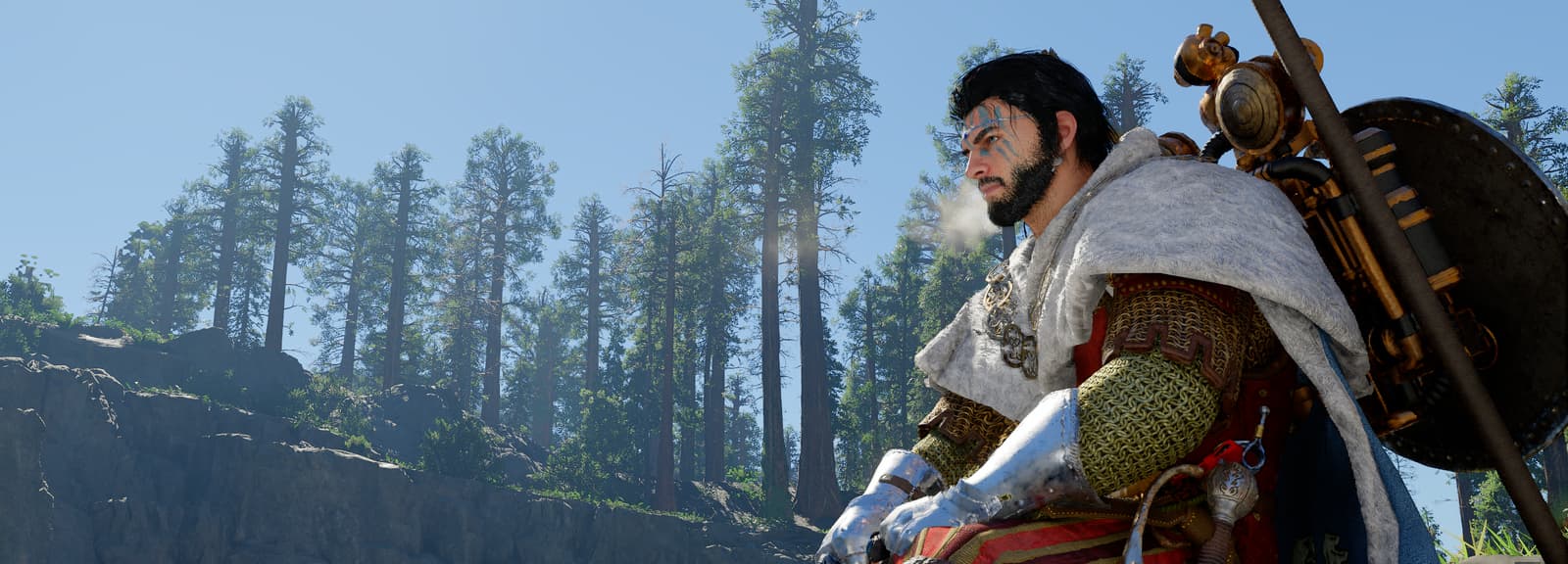
Crimson Desert features numerous restrictive and repetitive mechanics typical of MMORPGs, which many players find unappealing. But what if you could ignore half the game and still have a blast? Or even 'steal' from yourself and come out ahead? It sounds absurd, but this approach helped me fall in love with Crimson Desert. Today, I'll share how to transform this offline-MMO into a focused adventure without getting bogged down.
Expectation vs. Reality
When I first launched Crimson Desert, I anticipated a solo fantasy adventure set in a vast and stunning open world. Instead, what I encountered was... a dream job for grind enthusiasts. In the initial hours, quests felt disjointed, controls were cumbersome, and to top it off, the game overwhelmed me with dozens of mechanics commonly found in MMORPGs. These weren't optional features; they were mandatory elements of the core gameplay loop.
Virtually after every chapter, I hit a 'grind wall,' where the game literally demanded I go mine ore, chop trees, or hunt animals. It offered no viable alternatives; you were forced to comply, otherwise, defeating the next boss would be impossible.
To elaborate, the developers swiftly addressed criticism from reviews and initial player feedback. They streamlined movement, made bosses slightly easier, increased the health restored by food, and fixed numerous other minor annoyances. However, I must clarify that I played and evaluated the pre-release version. At that time, not everything functioned as the developers likely intended (a point I’ll return to). While 'surviving' became easier post-release, the underlying MMO-like routine persisted and continued to bother me.
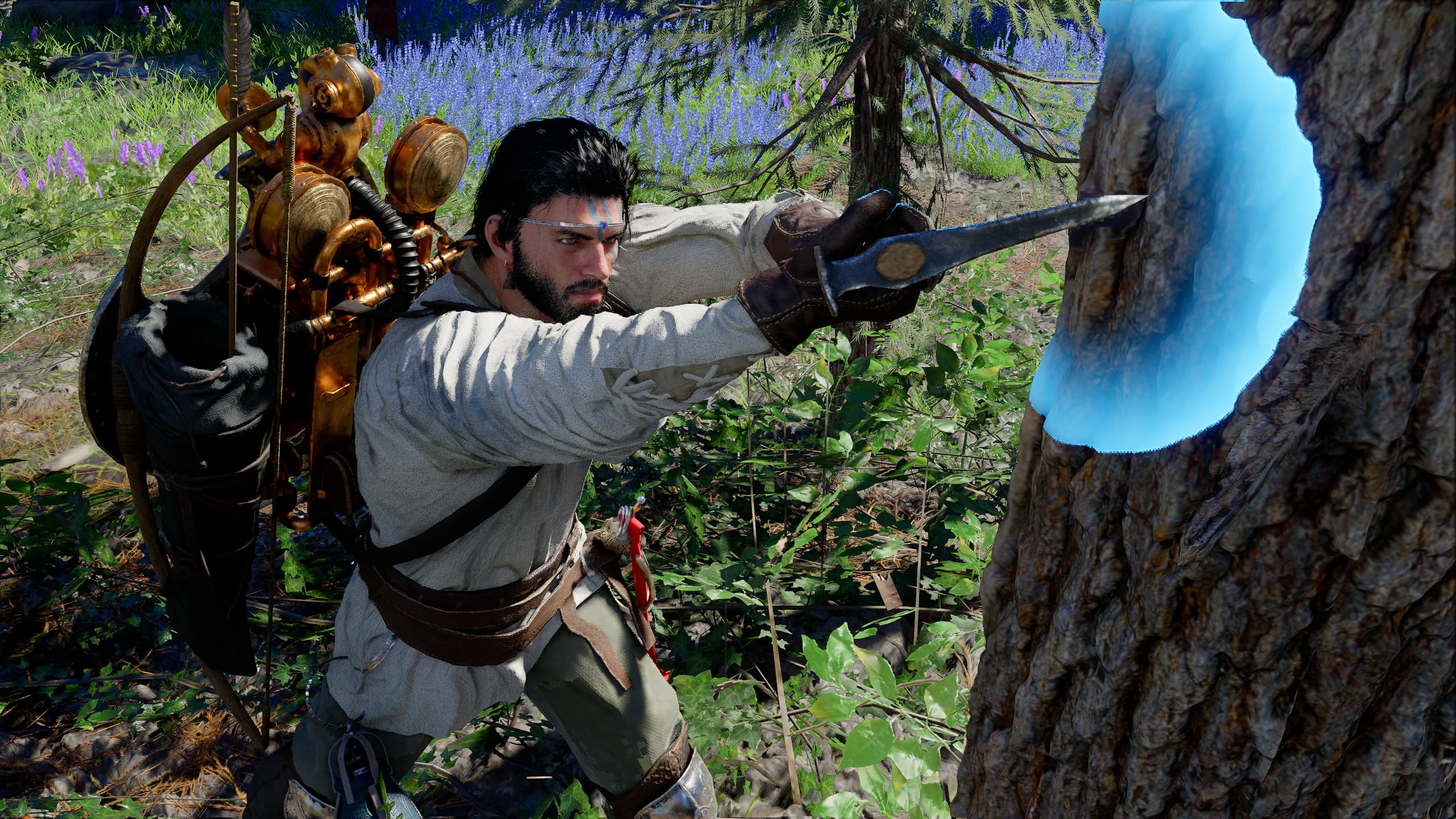
It bothered me because... I actually enjoy MMORPGs. I've spent roughly half my gaming life immersed in multiplayer fantasy worlds: leveling up, raiding, and participating in castle sieges. But about ten years ago, I stopped playing PC MMOs, and then spent several more years on mobile MMOs, like Black Desert Mobile. Those allowed for AFK progression through auto-combat, while still offering engaging content to tackle manually. Ultimately, though, I quit those too.
Why? My priorities shifted. I had less time, and my expectations for leisure quality grew higher. I realized that the 'return on investment' for my gaming time in MMOs was significantly lower compared to a good single-player game. Simply put, I gained more emotions and memorable experiences per hour spent in single-player titles.
Therefore, upon launching Crimson Desert and discovering what was essentially a single-player game operating under MMO rules, I experienced an unsettling déjà vu. It demanded from me exactly what I had consciously moved away from: a pointless expenditure of time on monotony. Furthermore, many of these mechanics felt imperfectly implemented. Some were overly complex and clunky, while others were, paradoxically, oversimplified compared to the original (and even mobile) Black Desert. I felt no balance, and the question kept circling in my mind: why does a solo adventure need all this elaborate resource grinding and management?
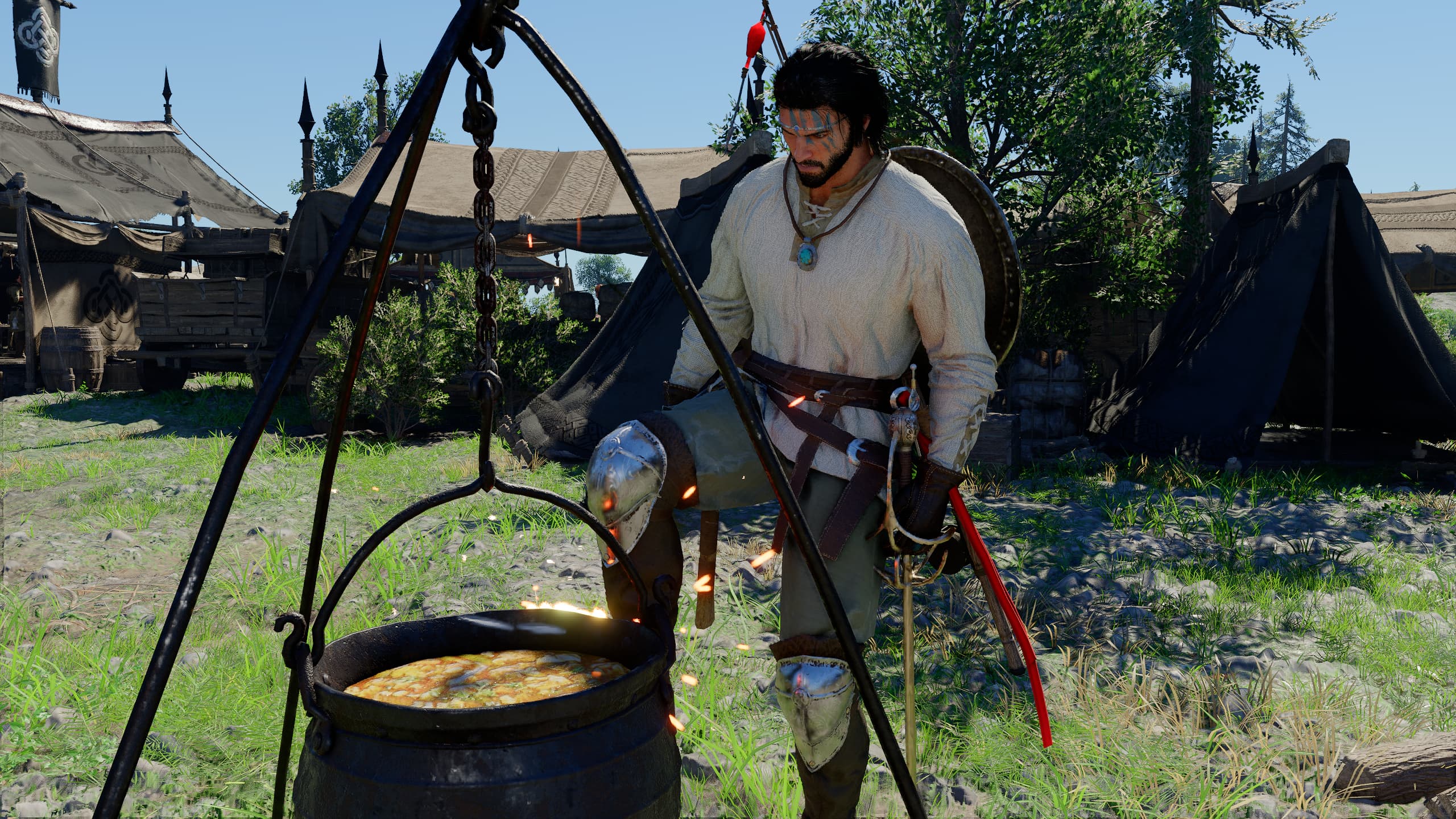
The Main Mistake – Trying to 'Beat' Crimson Desert
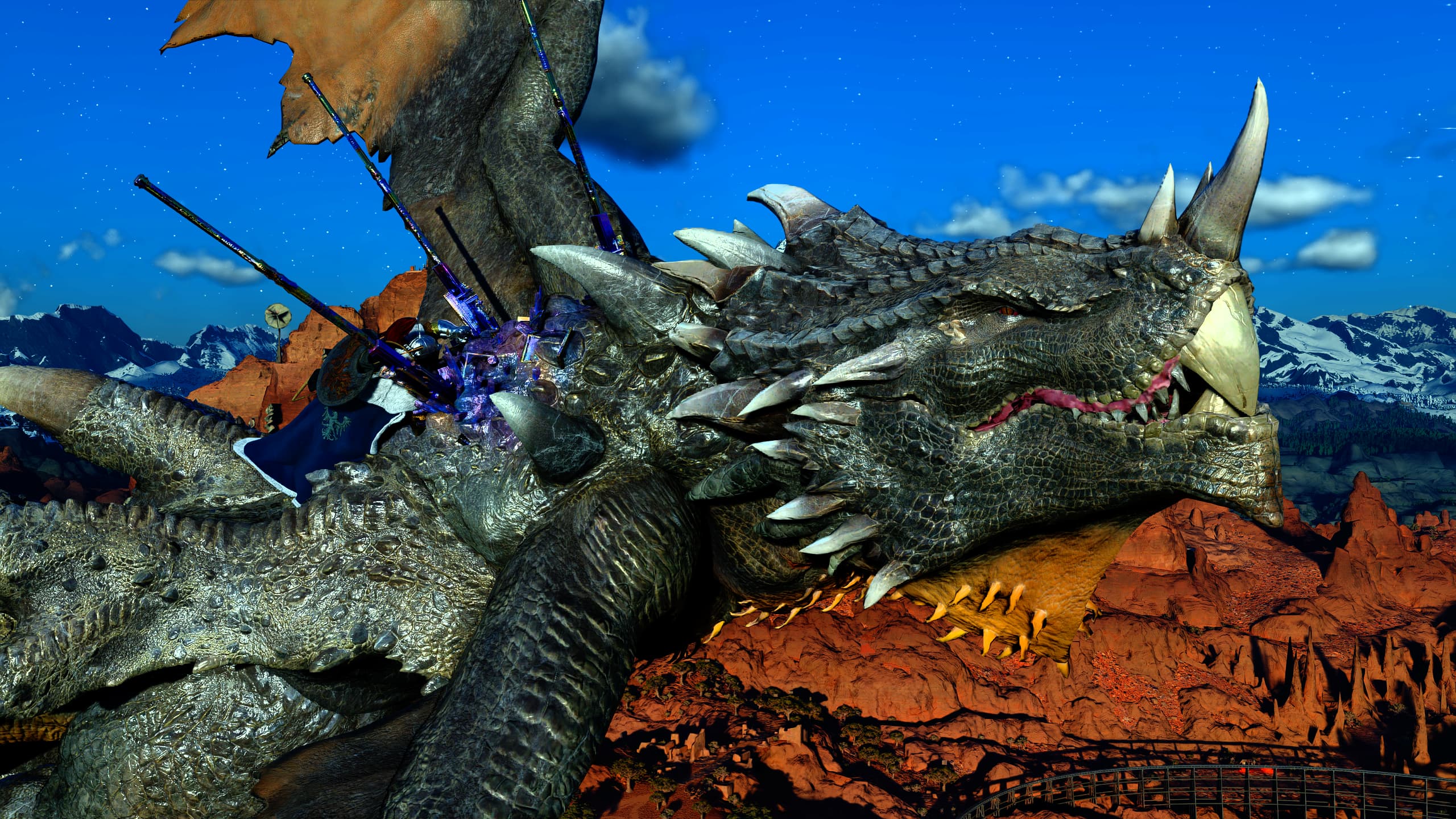
The turning point arrived on release day. By then, I had already submitted my review, but I felt a stubborn urge to reach the end—at least to see how it all unfolded and eventually fly a dragon. It was then I wondered: maybe the problem isn't the game, but my approach?
I was trying to 'beat' Crimson Desert.
I treated it like a typical story-driven adventure: rush through missions, complete activities, gather loot, upgrade gear, and strive for the finale, clearing as much content as possible along the way. And that, precisely, is the trap. Crimson Desert isn't meant to be 100% completed. In fact, you shouldn't think about 'completion' in the traditional sense at all. The game is vast, cyclical, and not designed for total clear-outs. By trying to squeeze everything out of it, I ultimately exhausted myself.
I made a decision: no more playing by its systems' rules. I would play how *I* wanted to. Simply put, I stopped doing anything I found uninteresting, even if the game deemed it important. And guess what? The world didn't collapse. On the contrary, I could breathe easier.
Once I abandoned the idea of 'beating' Crimson Desert in the conventional sense, the game began to transform. What's more frustrating is that this transformation could have happened much sooner, but the quality of the pre-release version hindered it.
After the release, I discovered my camp had suddenly become significantly more developed. A ranch and a garden appeared, along with additional functionalities—all without any effort from my side. The day-one patch had done its work. As I started exploring these 'new features,' something clicked. I realized how to 'conquer' Crimson Desert and found a simple way to turn this offline-MMO into a proper open-world adventure.
The preceding paragraphs were just an introduction. Below is a step-by-step guide on how you can follow my path and come to love Crimson Desert.
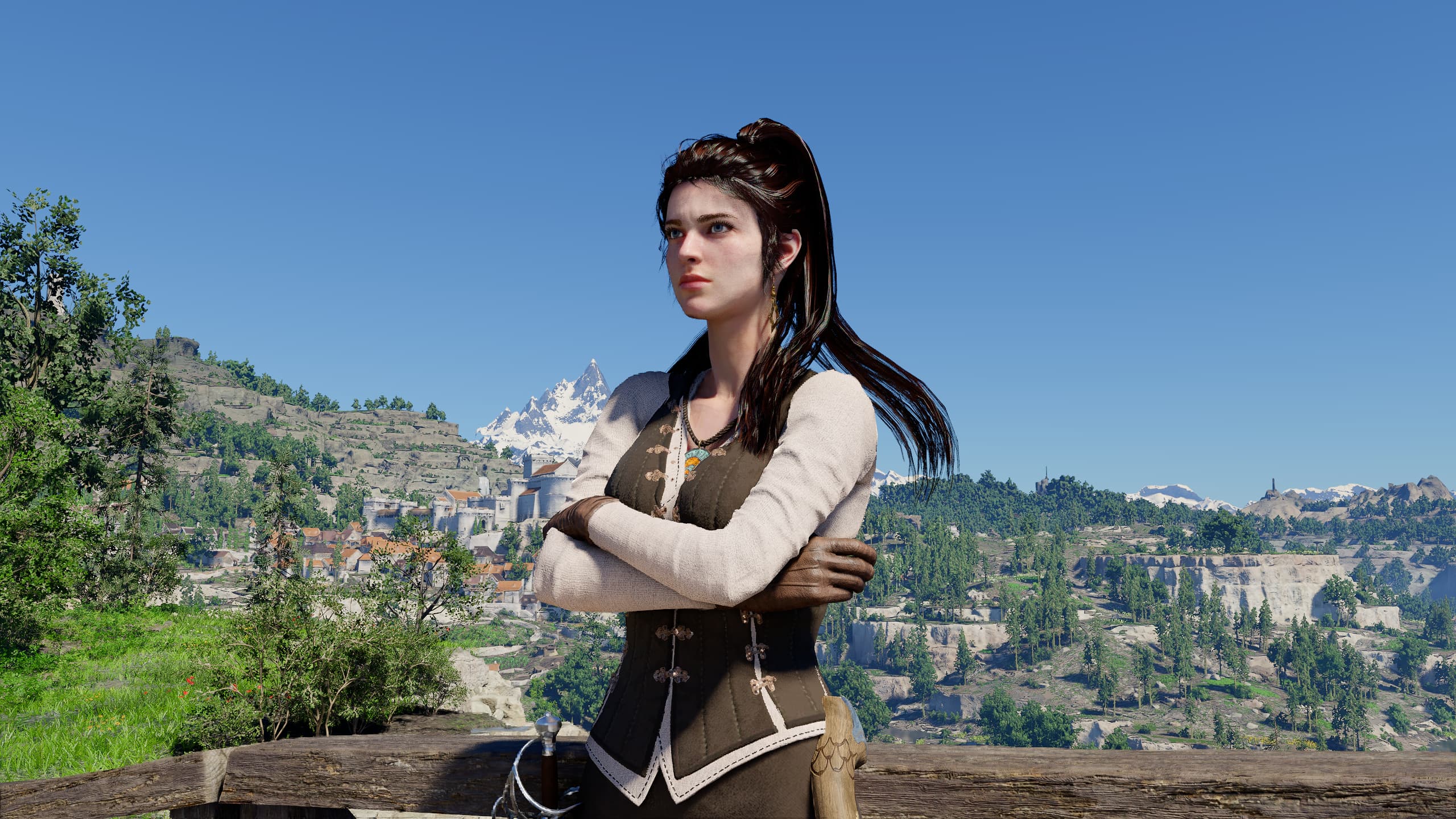
My Camp – My Rules
Step One: Build up your initial capital.
This will ensure you comfortably navigate the early chapters with ample resources. To do this, use a simple money-making trick right at the start of the game. Head northwest from the initial town of Ernand towards The Witchwoods. Right near the Witch's House and in the surrounding area, you'll find flowers called 'Red Croton.' In just 10 minutes of gathering, you can collect several hundred of these flowers. Every 50 will fetch 7 silver—a very substantial amount early on.
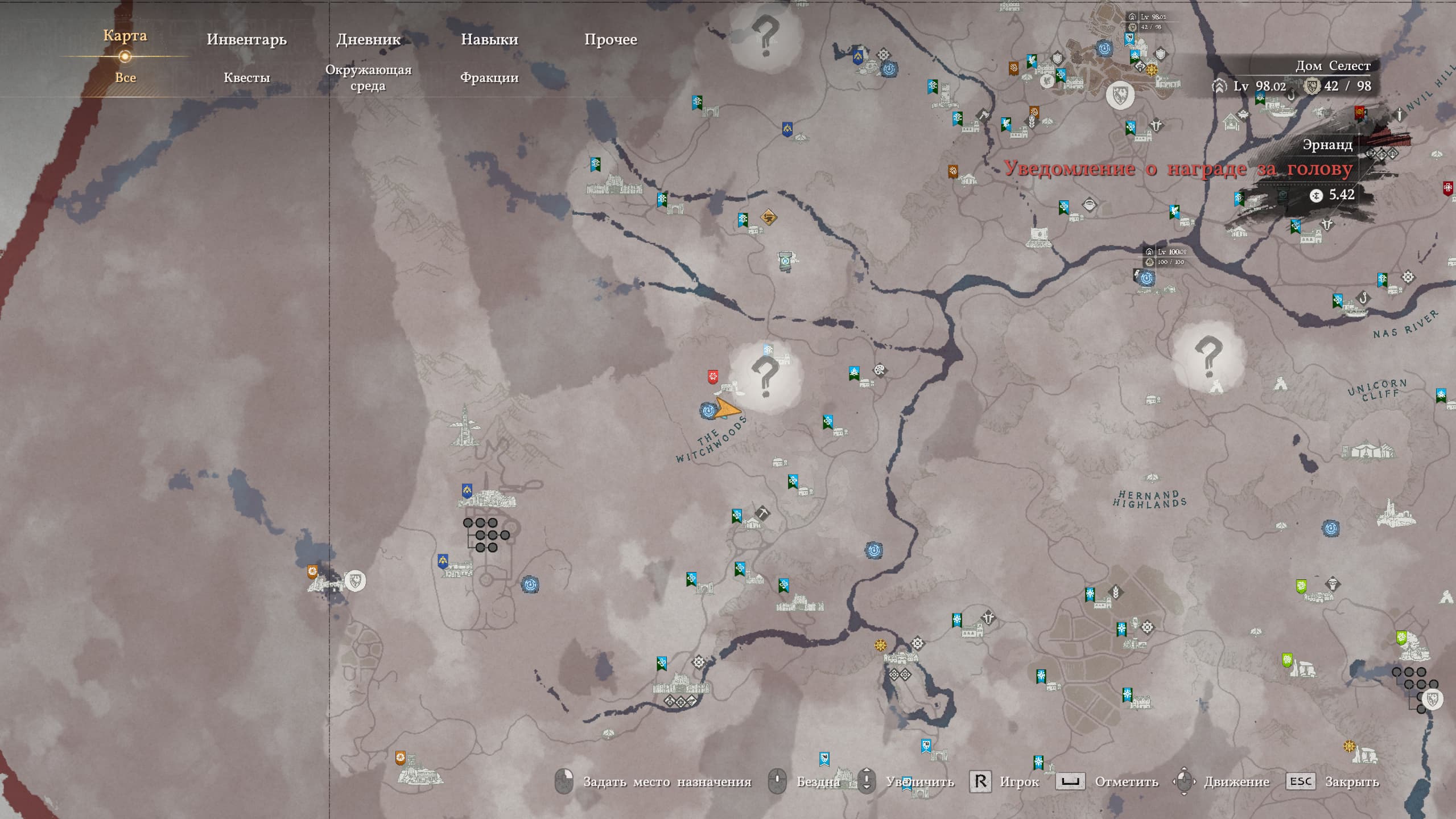
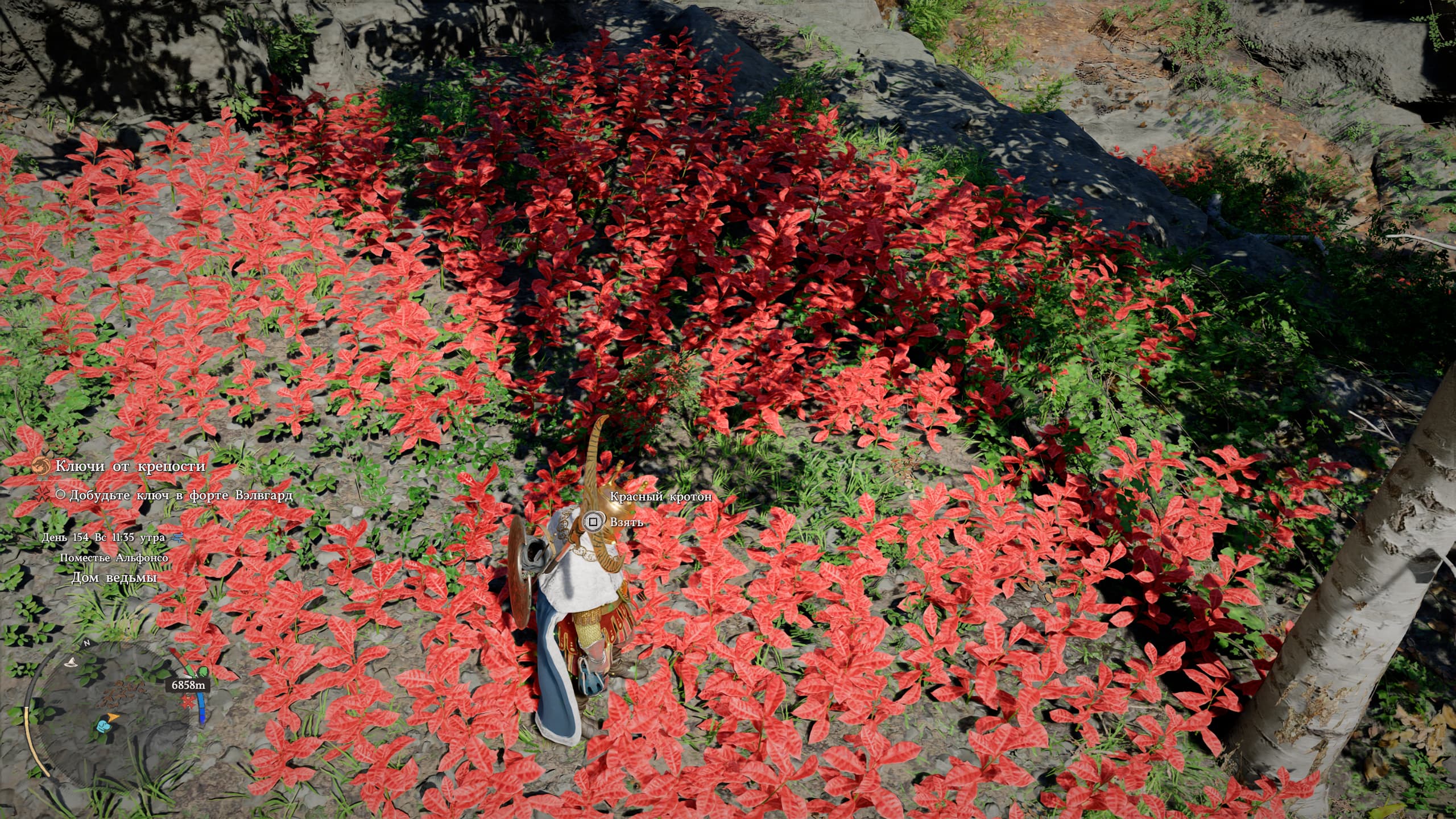
You can replenish your wallet this way every in-game week, but over time, the following steps will provide a steady income stream:
- Progress the story until Chapter Three, which unlocks your camp.
- Focus on the Graymanes faction quests. Temporarily set aside the main story and complete every available quest. Do everything they ask, even the most tedious tasks. These quests will grant you new mercenaries, unlock the ranch, garden, and merchants, expand your inventory, and thoroughly teach you almost all game mechanics, including the less obvious ones. Upon completion, you'll have a fully functional base and a clear understanding of how to use it.
- Set up a mercenary task cycle. Send your workers to gather provisions—meat, fish, vegetables—and always maintain a few guard missions. These missions bring money into your camp's treasury, and you'll need a lot of funds. Initially, only tasks like gathering parsley or cabbage might be available, but send them on those to stock up on plant-based food. More valuable missions, such as acquiring fatty meat at the Swineholt Ranch, will unlock later once you visit that area.
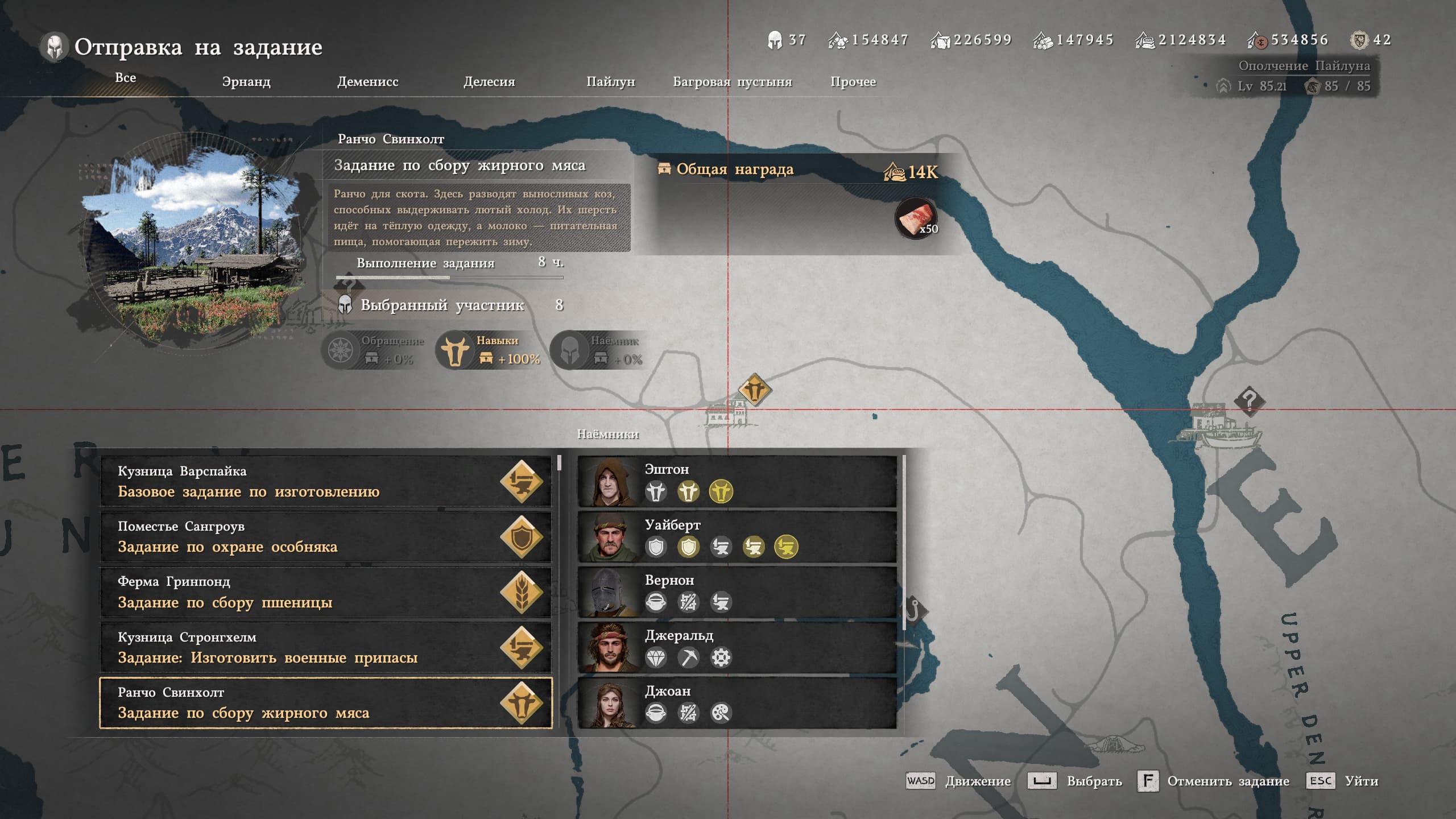
Step Two: Handle your base operations.
- Engage in farming (optional). Plant vegetables and fruits on your farm. Seeds can be bought from the nearest merchant or in towns. However, in my experience, the 'output' doesn't justify the time spent on manual harvesting.
- Start animal husbandry. As soon as the ranch is unlocked, locate sheep nearby and bring at least one ram (a horned male) and one ewe (a hornless female) to your camp—a pair is needed for breeding. A suitable spot can be found, for instance, on the way to the Golden Leaf Guild House, near Wolf's Hill.
- Feed and breed animals. Animals at your ranch will begin to reproduce, but hungry lambs will remain small and useless. Note: there's a feeding trough in the center of the pen. Place wheat, cabbage, or any other plant-based feed that your mercenaries gather into it. Well-fed sheep will level up and provide more resources, and offspring will grow into adults, continuing the breeding cycle. Excess animals can be sold via the ranch management interface (money goes to the camp treasury) or butchered, which is more profitable. Ultimately, you'll secure a steady supply of meat, hides, wool, horns, and other livestock resources. If desired, you can also acquire chickens or goats for eggs and milk.
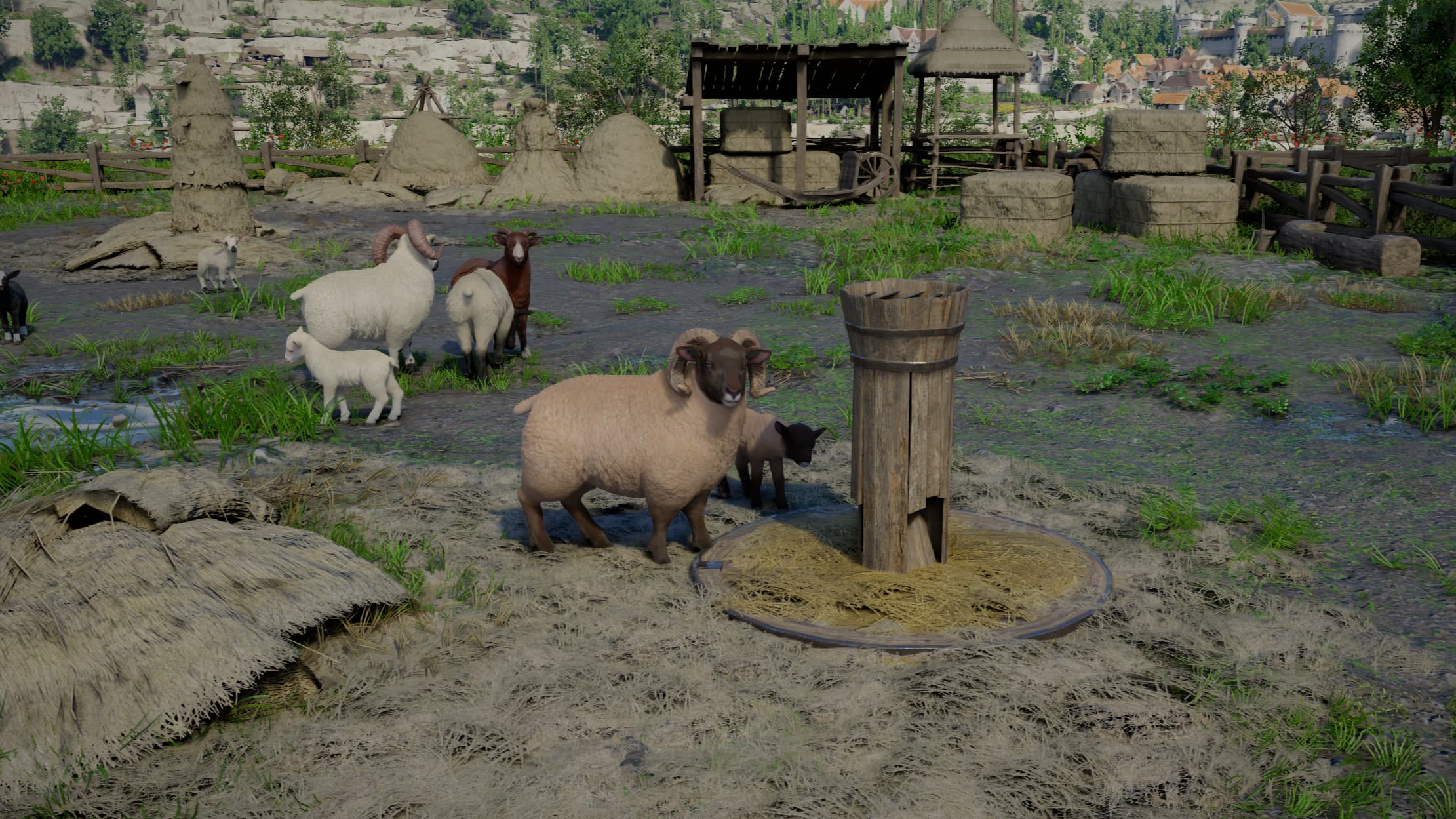
Step Three: Streamline your camp operations.
- Keep the game running in the background. This is a crucial step if you want to eliminate manual grinding and develop your character without leaving the camp. Mercenary tasks, crop growth, and livestock development occur in real-time, so all processes halt when you exit the game. For example, a fatty meat gathering task takes 18 in-game hours—roughly an hour and a half of real time. In a standard three-hour session, you'll get about 100 pieces of meat; if you leave the game running for 24 hours, you'll accumulate around 800 pieces from just one task. This is a compelling reason to keep Crimson Desert running in the background to collect resources. To reduce PC load, switch the game to windowed mode, minimize graphics settings, and if necessary, lower the screen refresh rate and enable V-Sync.
- Utilize manual acceleration. You can speed up processes even further. If possible, periodically (once an hour) open the game and use the 'Wait' function at a campfire or bed to quickly fast-forward 12 hours. This will complete tasks more frequently, yielding significantly more resources in the same amount of real time.
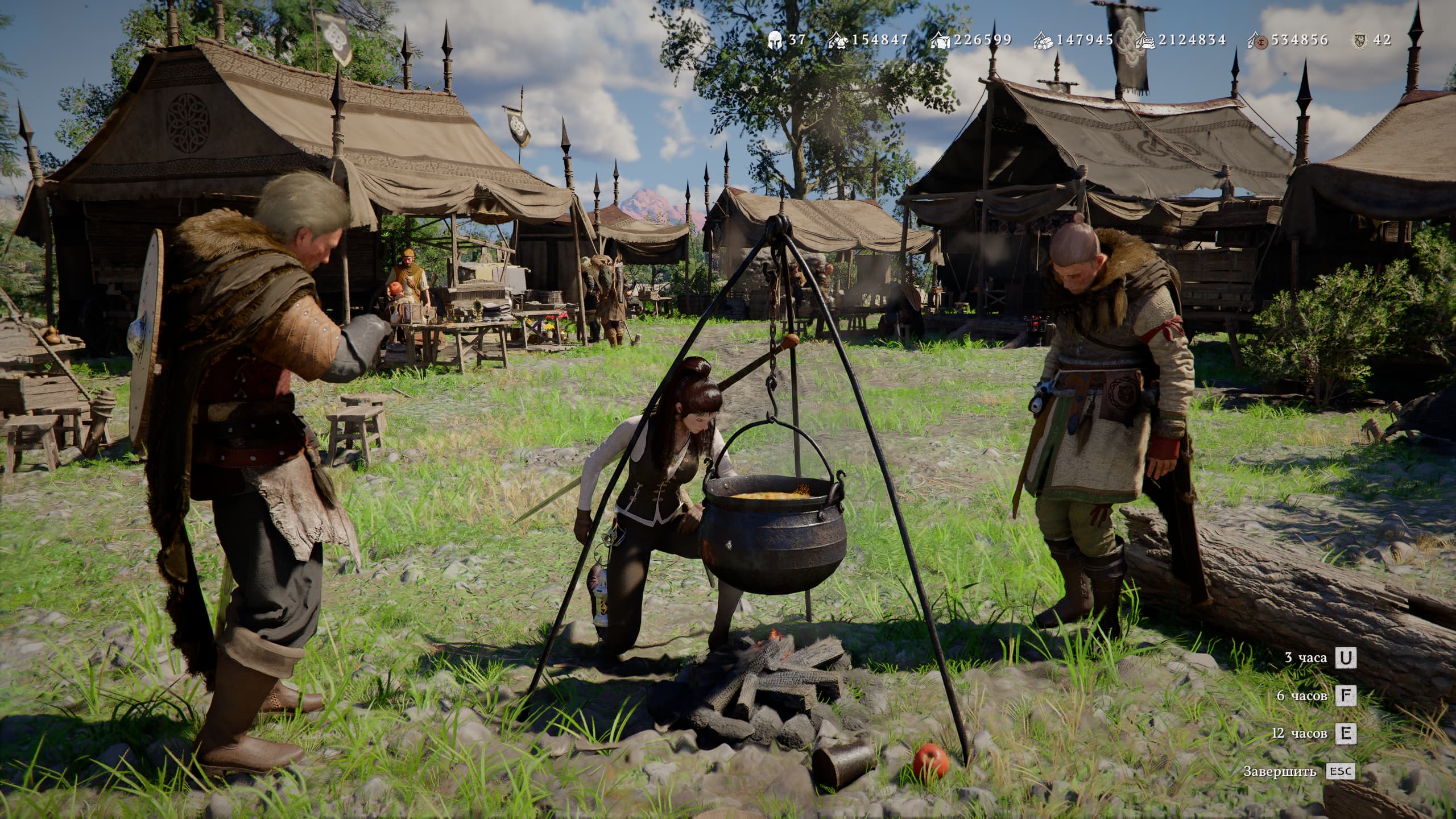
Plunder your own camp. In every tent and building at your base, you'll find items: food, materials, and utensils. You can freely collect them into your inventory and immediately sell them to a merchant. For example, near the blacksmith, you can pick up crates with 90 arrows; in the ranch stables, there's meat; and next to your personal chest, you'll find grain. After some time, all these items, down to the plates, respawn in their places, and the process can be repeated. Essentially, you gain an endless source of small income and supplies.
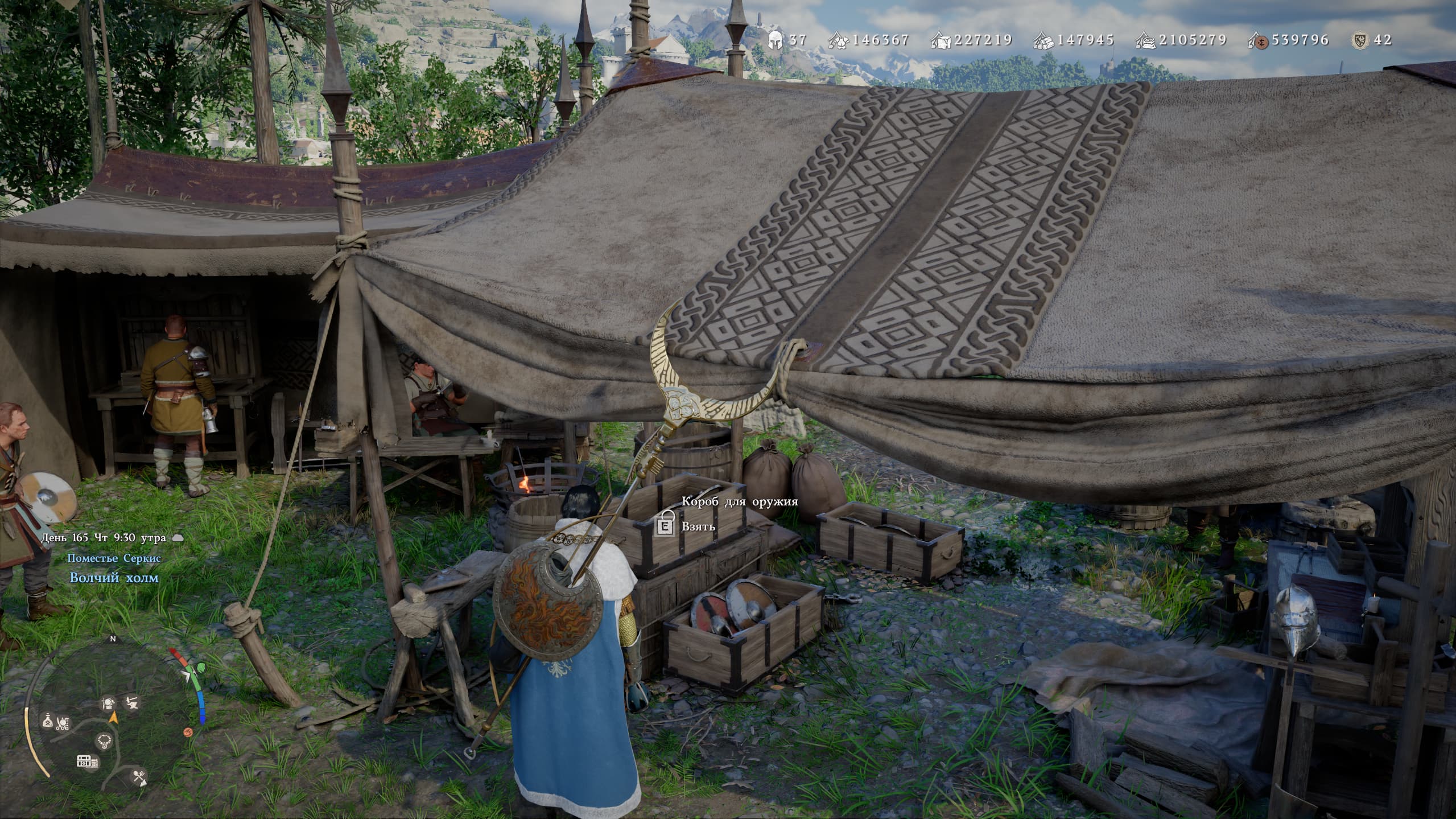
Here are a couple more tricks I discovered through my own experience:
- Economize meat consumption (optional). When you first accumulate supplies, it's tempting to cook 'generous portions of grilled meat,' which restore 280 health. However, in most situations, it's more efficient to stock up on regular 'grilled meat,' which restores 140 health. Simple math: 100 pieces of meat turn into 100 portions of 140 HP—that's 14,000 healing units. 'Generous' portions, made with 10 pieces each, would yield only 2,800 HP. The difference is clear.
- Eliminate manual grinding. Strive to meet your hero's needs through your camp and sell surplus resources. For instance, you'll have so much wool from your flock that there's nowhere to use it for crafting—feel free to sell the excess to merchants. Use the proceeds to buy ore and other materials for gear upgrades. If your camp's inventory is depleted, head to a city—goods refresh daily at midnight, so there won't be a shortage.
- Embark on an adventure! Your goal now is not to fear missing anything. You can confidently ignore tedious side quests, complex puzzles, and repetitive activities. None of this is mandatory anymore. Focus on what truly interests you: the main story, side narratives, exploring locations, and boss battles. Your hero will be well-supplied with food, armor, and weapons, so you won't need to spend hours preparing. Transform the game into a series of engaging events and concentrate on the main experience. Let the camp handle the routine, and you handle the adventure.
Who Is All This For, Anyway?
These tips aren't about playing less, but about removing prolonged and boring elements to intensify the adventure itself. Because endlessly mining ore or hunting harmless deer for hours just for meat and hides is, frankly, not an adventure.
If you crave hardcore survival and grinding, there are other games that execute it better. Crimson Desert excels in other areas: its atmosphere, picturesque world, action, and exploration. Once the routine ceases to be a burden, you begin to see what the game truly offers. It has its own 'budget Game of Thrones' narrative, but it only genuinely revealed itself to me when I stopped getting sidetracked by things I found uninteresting.
Ultimately, the game didn't change—my approach did. Now, it's a concentrated adventure across the vast expanses of Crimson Desert, one you can enjoy even when you only have a couple of hours to play. I highly recommend you try it too.
Fresh materials — Gaming News

No More Robots' Nine-Year Journey to Releasing Their First Self-Developed IP: "This Sounds So Naive and Stupid, But Somehow It's Working"
It has been nine years since Mike Rose founded the indie game publisher No More Robots. The company has achieved considerable success, partly thanks to its back catalog, which includes the popular bike-riding game Descenders, the inaugural release under the No More Robots banner and a

Blizzard Workers Ratify First Union Contract with Microsoft
Blizzard Entertainment, now under the ownership of Microsoft, has successfully negotiated and ratified its inaugural union contract. This landmark agreement was approved by a workforce vote encompassing just under 1,900 staff members. The newly established contract introduces s

Lego Digital Play Acquires Mobile Studio Offroad Games
Lego Digital Play has officially acquired Offroad Games, a mobile development studio based in the UK. Offroad Games, established by a group of former Space Ape Games employees, revealed the acquisition in a statement on LinkedIn, describing it as a "tremendously exciting new
Arm Unveils Mobile-First AI Reconstruction Technology, Distinct from DLSS 5's 'Black Box' Approach
Arm, the British semiconductor and software design firm, has announced its latest advancements in AI computing at the Arm Everywhere China event in Shanghai. The company aims to establish a comprehensive AI-native computing ecosystem with its new AI-native compute platform CSS for Mob

US Senate Investigates Roblox: Child Safety Under Scrutiny
The US Senate's Crime and Counterterrorism Subcommittee has initiated an investigation into Roblox, expressing concerns that the platform may be prioritizing revenue and user engagement over the safety of children. Senators Josh Hawley and Dick Durbin, in a letter to Roblox CE

Three Epic Veterans Are Building an AI-Powered Game Engine to Break the Industry's Doom Cycle
In the current gaming landscape, Unity and Unreal Engine have long held a dominant position, powering approximately 70% of games released on Steam in 2025. While Godot has experienced notable growth and some major companies continue to utilize proprietary engines like Capcom's RE Engi