Marathon: Bungie's New Shooter Defies Expectations
Forget everything you thought you knew about Marathon: Bungie's new shooter challenges conventional expectations. This game offers no concessions to newcomers and no simplified PvE matchmaking. Marathon is a brutal shooter where victory is often forged during the build preparation screen, and
Forget everything you thought you knew about Marathon: Bungie's new shooter challenges conventional expectations. This game offers no concessions to newcomers and no simplified PvE matchmaking. Marathon is a brutal shooter where victory is often forged during the build preparation screen, and solo players must embrace harsh rules of survival. In this review, we'll delve into the intricacies of raids, class systems, and progression in one of the season's most controversial releases.
Leading up to its launch, perceptions of Marathon shifted. Following the success of ARC Raiders, discussions about separating PvP and PvE matchmaking, and Bungie's statements regarding a focus on the PvE audience, many players anticipated Marathon would be a compromise between hardcore titles like Escape from Tarkov and more accessible extraction shooters.
However, in practice, Marathon must be evaluated independently of these expectations. It is neither a friendly nor a simplified iteration of the genre. In this article, we will examine its visual style, raid structure, progression system, and various game modes to determine who it's designed for, and who might find it unsuitable.
Visuals and Graphics
The visual style of Marathon is characterized by sharp contrasts and a vibrant, sometimes acidic, color palette. The predominant lime green hue is even featured in the game's logo. During early closed tests, this initially made environments appear overly flat. By release, developers refined the graphics: surfaces now exhibit wear, dirt, signs of use, and other details that significantly better convey the atmosphere of an abandoned colony.
The colony's architecture has a utilitarian feel. Many structures consist of simple geometric volumes with minimal expressive elements. While this aligns with the world's artistic logic, it also makes exteriors occasionally too simplistic, leading some players to compare the game to Roblox.
Interiors, conversely, are more convincing. Laboratories, technical areas, residential blocks, and ruined structures are varied and functional. Even with the consistent color palette, each room possesses its own character, making internal spaces more legible and engaging than the general silhouettes of external buildings.
The least developed element is the vegetation. Grass, trees, and other flora sometimes appear artificial even on maximum graphics settings. This suggests that natural environments received less attention compared to architectural and interior details, despite this contrast potentially emphasizing the planet's danger.
Nevertheless, the overall visual impression is salvaged by lighting and weather effects. Fogs, rain, thunderstorms, and rare clear periods constantly alter the perception of locations. In overcast conditions, maps feel more cohesive: light softens simple forms, while fog and precipitation reduce visibility over long distances.
Similarly, local light sources play a crucial role. Darkened corners, red, and ultraviolet zones complicate firefights and offer opportunities for stealthy movement. Sometimes, lighting conceals an enemy as effectively as a dedicated ability. Overall, Marathon's visuals aren't flawless, but they possess a distinct character, and its strengths skillfully mask its weaknesses.
Narrative After Thirty Years
For a significant portion of modern players, Marathon is perceived as an entirely new game. However, it is actually the revival of an old Bungie series, which first launched in the mid-1990s on Macintosh. The original trilogy recounted the story of the starship "Marathon," its journey to Tau Ceti, and conflicts with AI and alien races.
The new game continues this narrative, but with a substantial time gap. In addition to Bungie leaving the franchise dormant for nearly 30 years, the events of the new installment take place approximately 100 years after the original trilogy. Consequently, many players struggle to grasp the context! The colony on Tau Ceti IV has long been established, but its human population is gone, having perished due to an unknown virus and anomaly. The territory is now controlled by the forces of the United Earth Space Council (UESC) and their regular troops, represented by faceless robots.
However, governmental forces are not the only ones vying for control of the planet. Various corporations and other organizations with their own agendas are also involved in the story. It is through their missions and dialogues that the main narrative of Marathon is presented.
The player does not embody a specific hero but rather a mercenary who enters raids using combat shells. This is a crucial detail of both the setting and gameplay. A shell can be lost in combat, but the mercenary themselves remains alive and can embark on the next raid in a new body.
The story delivery is divided into two main parts. First are the faction missions, which advance the player through the plot and provide necessary context. Second is the in-game Codex, containing entries about colony life, research, and daily routines. Fans of the original games will likely appreciate this approach, as earlier installments also revealed lore through terminal entries. However, for an audience entering an extraction shooter primarily for quick progression and raids, all this additional context might seem unnecessary.
In games of this genre, many players aim to level up as quickly as possible and establish a stable earning cycle. At such a pace, dialogues and secondary plot details are often skipped. Thus, Marathon boasts rich lore, but it is primarily intended for those willing to play at a leisurely pace, read, and piece together the larger picture.
Similar to All, Yet Unlike Any
Even before its release, players tried to describe Marathon's gameplay by comparing it to other popular titles. Its visual style evoked associations with Roblox, while its mechanics were likened to Escape from Tarkov, Apex Legends, Valorant, and Delta Force. These comparisons are understandable, but ultimately, Marathon stands apart from all the aforementioned games.
The pace of the game here is quite high. Firefights demand not only holding positions but also active movement, and weapons do not kill in a single shot. As a result, combat is more dynamic, yet Marathon remains a brutal experience.
During playtests, tier lists of the most effective weapons quickly emerged in Marathon, with shotguns consistently topping the rankings. A double-barrel shotgun can swiftly eliminate even a well-protected opponent, whereas other weapons require considerably more skill to wield effectively. Even expensive gear with legendary attachments doesn't always feel like as worthwhile an investment, though, of course, there's always the tactical option of not letting an enemy with a shotgun get close, which also requires skill.
The ranked mode also appears to be a borrowed concept with noticeable simplifications. In other extraction shooters, a player's rank is typically determined by a complex set of actions, while in Marathon, it boils down to collecting a specific quota of valuables. For this purpose, the mode features special items that primarily serve as progress counters rather than actual loot. In practice, this often leads to passive gameplay: teams quickly grab what they need and then prefer to camp in ambush until extraction points appear.
The problem with the ranked mode is exacerbated by its team-oriented design. While it's formally possible to enter solo, matches are still structured around encounters with full squads. Solo players also face a significant limitation: they cannot collect valuables beyond a set norm, whereas groups do not encounter such a cap. Because of this, the ranked mode feels less like a test of individual skill and more like a format exclusively designed for team play.
Mercenaries and Abilities
The main feature of Marathon is its character system, or "runners." Due to this, the game was mistakenly categorized as a "hero shooter." The game presents six classes, each with unique abilities, with Rainbow Six: Siege being the closest analogy. Abilities here do not replace primary gunplay but rather layer on top of it, significantly influencing the outcome of each encounter.
A rather rare mechanic for the genre is resurrection. After taking fatal damage, a character doesn't always die instantly but instead enters a "downed" state, only able to crawl. An ally can revive them, while an enemy can "finish" them off. However, even after being finished, the raid isn't over for that specific team member: a box containing their gear remains at the fallen player's location, and interacting with it can bring a teammate back into the fight.
This decision has an important consequence: a player might be revived only after their equipment has already been looted by someone else. Formally, they are back in the raid, but practically, they are forced to continue the fight "naked"—the team will either have to re-acquire loot or share their own supplies with the revived player.
Two important details complement the system. Firstly, the game has no strict limit on the number of downs and revives per raid, which is especially valuable for group expeditions. Secondly, there is a special item for self-revival. For extraction shooters, this is still atypical, and it's in such small details that Marathon distinguishes itself from more traditional genre representatives.
A Unique Approach to Progression
In most extraction shooters, the progression system is built upon three core elements: a hideout, traders, and character skills. A hideout typically allows for crafting items, traders expand the range of available gear, and developing character stats gradually unlocks useful bonuses.
In Marathon, this system has been fundamentally reworked. There are no hideouts or crafting here. Instead, all progression is tied to relationships with six different organizations (factions). They sell gear, grant access to new modules, and directly influence the parameters of your combat shell (runner).
This is a crucial distinction from games where the primary goal is to hoard as much expensive weaponry and armor as possible. In Marathon, the outcome of an encounter depends more on the characteristics of the shell itself, installed implants, and available abilities, rather than just the "color" of the weapon. Shields, for example, provide an additional health pool but don't turn the hero into an indestructible tank. Weapon quality, in turn, heavily relies on the modules installed. Thus, even with basic weapons, one can secure victory, while a player fully equipped with a legendary weapon might perish at the hands of an opponent with a simple knife.
Each organization offers its unique set of advantages. CyberAcme enhances stamina, reduces fall damage, and expands storage capacity. NuCaloric specializes in medicine and boosts regeneration. MIDA focuses on explosives and agility. Arachne strengthens melee combat, finishing moves, and accelerates ally revival speed. Traxus provides a wide selection of weapons and attachments. And Sekiguchi sells character boosters and ability cooldown modifiers.
Ultimately, the difference between a newcomer and a veteran is determined less by the rarity of their gear and more by the player's personal skills and proficiency. Far more important are the chosen "runner," how deftly they move, how frequently they can activate abilities, and how much benefit they derive from implants and cores.
Pre-Raid Hurdles
Marathon's primary weakness outside of raids lies in its preparation phase. Right from the main menu, players are confronted with an excessive number of fragmented screens. The inventory and character attributes are separated into different tabs, forcing constant menu switching to evaluate and assemble a build.
A similar issue plagues the store. It's divided into six distinct markets, corresponding to the factions, but navigation between them is non-intuitive. To switch from the store to the faction interaction window, a newcomer must exit one menu, enter another, and then search for the desired section through faction tabs. Only after dozens of hours do many players discover a hidden button, somewhere in the bottom-left corner of the screen, that allows direct toggling between a faction's skill tree and its respective store.
For new players, the equipment structure itself adds another layer of complexity. Besides weapons, shields, ammunition, and medical supplies, each runner has two slots for "cores"—modifiers that influence their abilities and playstyle. Some cores are universal, while others only work with specific shells. For example, the Vandal has an option to mark targets with a repelling gun, while the Assassin has a core that speeds up movement while invisible. The rarer the core, the stronger its effect.
Implants are equally important, categorized by installation type: head, chest, and legs. They boost the runner's passive attributes, but a significant problem exists: the game doesn't clearly explain their side effects. Implants can raise some parameters while simultaneously lowering others, and these penalties aren't always obvious from the description. Therefore, players must figure out their effects through constant swapping, returning to the character screen, and then back to the inventory.
Adding to this is the random bonus effect. Two identical implants can have different secondary properties. For instance, one might apply a toxin on knife hit, while another makes the character invisible upon self-revival or partner resuscitation. Because of this, players sometimes choose an enhancer not based on its primary stats, but on a random bonus—which can also become part of a unique build.
The situation with consumables is similar. Besides standard medkits, shield batteries, and self-revive injectors, there's specialized medicine. Mechanic kits remove toxins, paralysis, and frostbite—effects frequently encountered in raids. OS debugging packets are needed against hacking and EMP effects on the player's shell. Cardiostimulators enhance agility and heat resistance, allowing faster and longer sprinting. And Panacea fully restores health and shields, removing all negative effects.
There are also more niche items. A signal jammer hides the runner from radars, enemy mines, and turrets, and distorts their silhouette for other players. Antivirus is only needed for events with contaminated zones and is truly important mainly on the "Spooky Swamp" and "Cryo Archive" maps, where these zones are prevalent.
All of this creates no less a headache than preparing for a raid in Escape from Tarkov. However, this problem can be mitigated by using pre-made faction kits. These cannot be supplemented with items from one's personal inventory, but they allow for quick entry into a match. The paradox is that expensive kits often don't justify their price, while free ones, conversely, prove quite useful. With them, players can complete contracts and, if performed well, even defeat better-equipped opponents, collecting their loot.
Each Map – A Unique Adventure
The basic loop in Marathon is familiar to fans of extraction shooters: choose a map, accept a contract, enter a raid, gather resources, and successfully extract. However, the devil is in the details.
Currently, four maps are available: "Perimeter," "Spooky Swamp," "Outpost," and "Cryo Archive."
- "Perimeter" serves as the starting location. It doesn't offer a vast amount of highly valuable loot, but it's ideal for gathering basic materials needed for early progression.
- "Spooky Swamp" is richer in resources, and most of the faction-related story missions are tied to this location.
- "Outpost" is a compact, vertically oriented, and the most conflict-prone map, where player engagements occur with the highest frequency.
- "Cryo Archive" is the largest of the presented maps, where the emphasis is less on direct player versus player skirmishes and more on team cooperation, puzzle-solving, platforming elements, and battling NPCs. Here you can find the most valuable loot, but also face the highest risks.
Each map also features its unique events. On "Perimeter," a mission to intercept valuable UESC cargo might activate—a straightforward and understandable event offering everyone the chance to compete for good rewards.
On "Spooky Swamp," anomalous samples regularly appear. A perimeter lockdown also triggers there: a platform appears over a section of the map, isolating the zone and dealing damage to anyone inside without special protection. An antivirus is needed to pass through. Inside, players must disable a generator, collect valuable loot, and wait for the platform to relocate to another part of the map. Up to three such isolations can occur in a single raid, and with each instance, the reward becomes more valuable, thus increasing the danger of exiting the zone.
On "Outpost," the central tower is the main point of attraction. Access to it and its associated rooms requires keycards. These open gates, activate extraction points, and call cargo ships. Because of this, the map divides players into two types: some prepare to assault the tower, while others aim to intercept the victors after the main events.
Each map also features local bosses—Sentinels. These are still robots, but with more aggressive AI and elevated health and damage statistics. The reward for defeating them is high, but the fight itself almost always attracts other players who come not for the boss, but for those already engaged with it.
"Cryo Archive" is the toughest and most unforgiving map available. It represents one of the sectors of the Marathon colony ship, housing the core of the local AI. Structurally, the map resembles "Outpost": at its center lies the main challenge, where players must battle an alien boss—the Compiler. However, the entry conditions here are significantly stricter. Entry is only possible with a squad; solo queue is unavailable, as is the "ROOK" shell (the local equivalent of Tarkov's Scav). Additionally, each player must have at least 5000 credits worth of gear.
Beyond regular loot, on "Cryo Archive," players must increase their access level. This is done by collecting tokens from robots and hacking consoles. The higher the access level, the more ship compartments open up. To advance to Marathon's main mystery, a fifth access level and a sample for DNA scanning are required.
Closed rooms requiring keycards present a separate puzzle. Opening them with just a card is insufficient: batteries and a coolant capsule must be installed into a generator near the door, and the credentials of the correct employee must be found. This means even accessing a niche reward is turned into a multi-step task that must be solved throughout the entire raid.
It's important to note that maps cannot be evaluated independently of the squad composition. The experience of the same location changes significantly depending on the "shell" composition of the group entering the raid.
Three — The Magic Number
One of Marathon's key features is that its fundamental mechanics appear to have been designed with a three-person squad in mind. While the game formally offers a solo mode, most of its systems function as if a trio remains the standard composition.
This is evident in the very logic of raids. Marathon generates tension not so much through lengthy and cautious looting, but through constant noise, time pressure, and the risk of third-party intervention. When one player covers a flank, a second engages in combat, and a third provides support, this system feels logical. Alone, such a level of spatial control is almost unattainable.
The character structure only amplifies this effect. Each class contributes uniquely to the squad. Moreover, the game doesn't prohibit selecting identical characters. This allows a group to build around either classic role distribution or a specific tactical approach.
For example, three Assassins can effectively play through invisibility and smoke screens, while three Vandals can focus on high mobility and aggression. In both cases, Marathon supports not only diverse builds but also narrow specialization. This is another clear indicator that the balance was initially geared towards team play.
Therefore, the recommendation to play Marathon with friends is not just a generic "it's more fun that way" piece of advice. In a group, the game truly shines: its pace, revival system, unique character abilities, and progression feel as if they were meticulously tuned for the trio format.
However, there's a downside. In many extraction shooters, team play often leads to the practice of "gearing up" teammates, which quickly gives rise to a "gray market" for in-game items sold for real money. In Marathon, developers attempted to block this path: resources cannot be freely transferred into a raid, and weapons, armor, and consumables passed to a teammate are marked as "borrowed." After a successful extraction, such items are returned to their original owner.
Despite these measures, the "gray market" has not disappeared, leading one to consider the idea of prohibiting gear transfers as a failure. Service sellers continue to guide players through difficult raids, like the "Cryo Archive," for money, allowing them to collect top-tier loot independently.
Ultimately, team play in Marathon is strong in combat but limited economically. Some players find this acceptable, while others are pushed towards solo play, where the game experience feels entirely different.
Marathon: Solo Mode and Its Challenges
Solo mode quickly reveals its secondary role in Marathon. The first indicator is matchmaking time: while a group raid usually finds a match quickly, solo waits are significantly longer. This is a minor detail, but it immediately creates the impression that solo play isn't the primary focus.
The main difference becomes evident directly within the raid. In team play, abilities expand tactical options, whereas in solo, they become a matter of survival. A player can no longer compensate for a character's weaknesses with allies, making the choice of shell much more critical here.
For cautious play, Triad, a medic capable of healing themselves and restoring shields with drones, is well-suited. However, solo players far more often gravitate towards the Assassin: invisibility and smoke grenades work best in a mode where the key is not to win a prolonged exchange, but to initiate combat quickly or retreat just as fast.
On the opposite end is the Destroyer. In solo excursions, he performs significantly less often and only with a carefully constructed build. His shield wall rarely provides a decisive advantage, and dashes and tactical sprints are less effective where information, positioning, and the right to the first shot play the main role, rather than maneuvering across the battlefield. Nevertheless, he is not entirely useless.
This is why, in a trio, Marathon resembles a hero-action game with constant skirmishes, while in solo, it's much closer to Escape from Tarkov. Sound, patience, route control, and the ability to strike first come to the forefront. Most solo players quickly adopt an extremely cautious style: less noise, fewer unnecessary confrontations, and more ambushes.
The game provides tools for such tactics. Mines are noticeable due to sensor highlights, making them most effective in doorways and narrow passages. Non-standard uses for mines have also found a place in the game: there's a trap disguised as a fallen player's crate, which explodes and knocks out the target if someone attempts to open it.
Direct one-on-one firefights also occur, and in these, mechanical aiming, shields, and accuracy matter more than in team battles. But even in such situations, solo remains a mode where the cost of error is too high. Therefore, most players try to avoid "fair" duels.
A separate issue is bots. For a solo player, any encounter with robots is dangerous for several reasons: it gives away their position, forces them to expend resources, and opens a window for other players to intervene. Even after a complete clear, the area doesn't become safe, as reinforcements arrive to replace destroyed enemies. Ultimately, solo mode itself pushes the player towards stealthy progression.
ROOK: An Alternative Entry
Special attention should be given to the "ROOK" mode—a direct analogue to the Scav from Escape from Tarkov. Players connect not to a fresh match, but to an ongoing raid with pre-set gear, where the most valuable locations are often already looted.
On paper, the idea seems useful: it's a way to enter a raid without a full loadout, gather leftover loot, and avoid risking your primary equipment. However, the ROOK mode comes with too many limitations.
The ROOK lacks a full set of combat skills; its arsenal only includes camouflage from robots and emergency regeneration. This is sufficient for stealthy movement but not for serious engagements. Players will have to rely more on tactical gear like mines and grenades, luring other players towards bots, and intervening in ongoing firefights.
Two fundamental limitations exacerbate the problem: ROOKs cannot complete quests, and they only connect to group raids. This means that even when playing as a supposedly free runner, a player regularly encounters trios if not careful.
Nevertheless, the mode still holds potential. By improving faction relationships, ROOKs can unlock implants, cores, and even a shotgun, which makes setting ambushes easier. But even with these improvements, it remains more of a supplementary mode and a "last resort" than a fully-fledged tool for solo play.
Therefore, for solo players, it is often more advantageous to enter a raid with a regular hero using a free gear kit. This option provides more control, allows for quest completion, and doesn't force the player into an inherently disadvantageous format.
Verdict
Marathon does not aim to be an extraction shooter for a broad audience. This game remains harsh, demanding, and its barrier to entry is higher than most competitors in the genre. Mastering it requires significant time to study roles, shell characteristics, and guides for creating effective builds.
Nevertheless, the game has its strengths. Marathon offers dynamic gameplay, performs excellently in a trio format, and provides rich lore for those willing to delve into it. Maps noticeably differ from each other, and weather effects and lighting skillfully compensate for the simplicity of some location geometries, maintaining overall visual appeal.
However, the main issues lie elsewhere. The game is poorly optimized for solo play and, currently, does not adequately support duo squads (although a two-player mode is actively being tested). Additionally, before each raid, players must navigate a cluttered interface until they thoroughly learn its intricacies.
As of now, Marathon possesses its most crucial assets: its own unique rhythm and a recognizable identity. But this game is not for everyone. Those expecting a softer PvE extraction experience in the vein of ARC Raiders will find nothing for them here. However, those ready to embrace complex matchmaking, high risks, and a strong reliance on team play should definitely consider looking into it now.
Fresh materials — Gaming News

No More Robots' Nine-Year Journey to Releasing Their First Self-Developed IP: "This Sounds So Naive and Stupid, But Somehow It's Working"
It has been nine years since Mike Rose founded the indie game publisher No More Robots. The company has achieved considerable success, partly thanks to its back catalog, which includes the popular bike-riding game Descenders, the inaugural release under the No More Robots banner and a
Blizzard Workers Ratify First Union Contract with Microsoft
Blizzard Entertainment, now under the ownership of Microsoft, has successfully negotiated and ratified its inaugural union contract. This landmark agreement was approved by a workforce vote encompassing just under 1,900 staff members. The newly established contract introduces s

Lego Digital Play Acquires Mobile Studio Offroad Games
Lego Digital Play has officially acquired Offroad Games, a mobile development studio based in the UK. Offroad Games, established by a group of former Space Ape Games employees, revealed the acquisition in a statement on LinkedIn, describing it as a "tremendously exciting new
Arm Unveils Mobile-First AI Reconstruction Technology, Distinct from DLSS 5's 'Black Box' Approach
Arm, the British semiconductor and software design firm, has announced its latest advancements in AI computing at the Arm Everywhere China event in Shanghai. The company aims to establish a comprehensive AI-native computing ecosystem with its new AI-native compute platform CSS for Mob
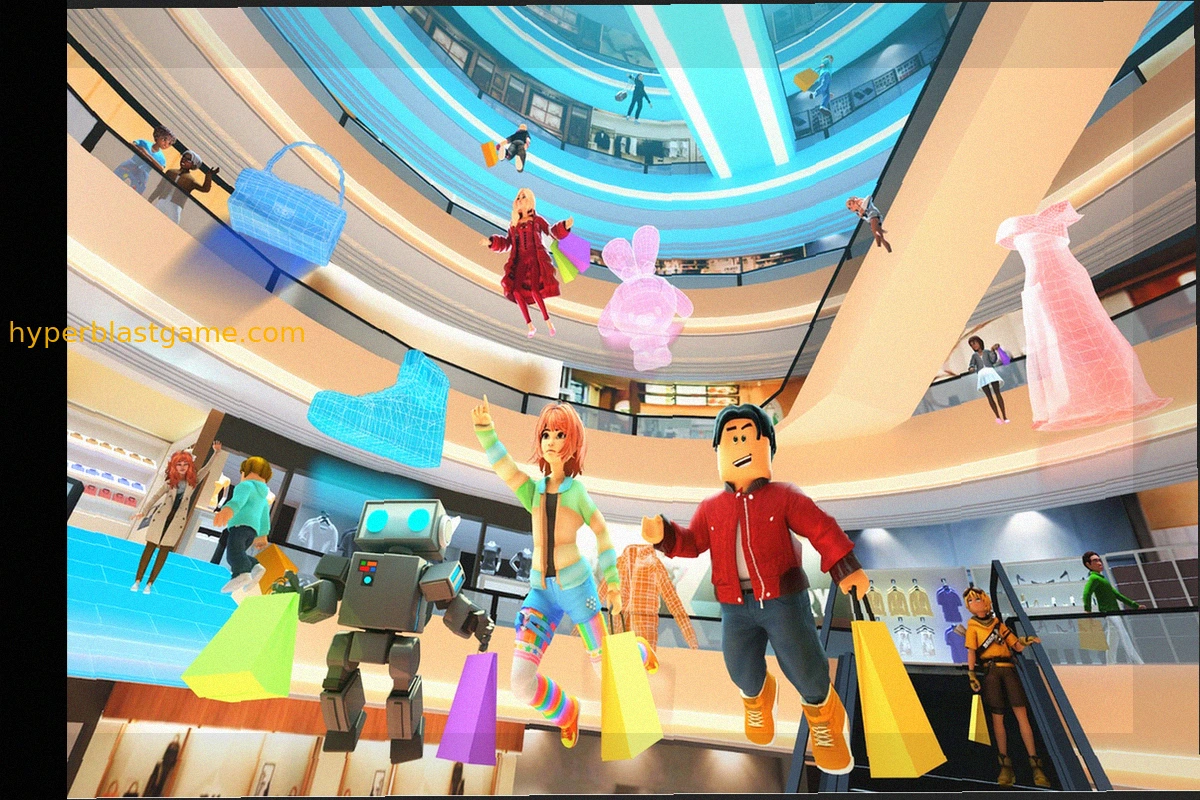
US Senate Investigates Roblox: Child Safety Under Scrutiny
The US Senate's Crime and Counterterrorism Subcommittee has initiated an investigation into Roblox, expressing concerns that the platform may be prioritizing revenue and user engagement over the safety of children. Senators Josh Hawley and Dick Durbin, in a letter to Roblox CE

Three Epic Veterans Are Building an AI-Powered Game Engine to Break the Industry's Doom Cycle
In the current gaming landscape, Unity and Unreal Engine have long held a dominant position, powering approximately 70% of games released on Steam in 2025. While Godot has experienced notable growth and some major companies continue to utilize proprietary engines like Capcom's RE Engi