One Piece Season 2: A Flawless Adaptation Threatened by Netflix's Slow Pace
The second season of Netflix's live-action series 'One Piece' premiered on March 10th, proving to be one of the finest adaptations of the legendary manga. This article explores how the continuation built upon the first season's success and the potential challenges Netflix might face moving forward.
A Masterful Anime Adaptation
Live-action anime adaptations from Netflix have often been met with ridicule. However, in 2023, 'One Piece' changed the narrative entirely. Both critics and audiences warmly embraced the project; at the time of writing, the first season boasts an 86% 'fresh' rating from critics and 95% from the audience on Rotten Tomatoes. Even devoted fans expressed their delight.
The secret lies in the creators' approach to adapting the story. The live-action plot doesn't strictly adhere to the manga's script but rather invents its own narrative twists while retaining the original's core essence. For instance, Vice-Admiral Garp (Vincent Regan) was introduced and developed in the very first season, which covers less than a hundred manga chapters, whereas his character wasn't extensively explored in the comics until chapter 430.
The characters have also garnered significant praise. Through excellent casting, the on-screen portrayals don't deviate from the original but rather ground them in reality. Viewers trying to find canonical inconsistencies would likely struggle, as Eiichiro Oda, the manga's author, has long clarified the ethnic backgrounds of his characters. The show's creators diligently adhere to these guidelines, with Oda himself overseeing the production.
Another strong point is the balanced graphics and design. Taken out of context, some visuals might appear awkward, almost as if cosplayers were reenacting scenes from their favorite anime. However, this perfectly captures the essence of the source material.
'One Piece' has always walked a fine line between silliness and tragedy. The main characters consistently have dramatic backstories and face life-threatening situations, allowing 'The Grand Line' to evoke a spectrum of emotions and prompt deep reflection.
Yet, all of this was consistently delivered with humor, at times even excessive for the manga, especially in recent chapters following revelations about the protagonist. The quirky designs of characters, locations, and objects have always been integral to this work—consider the snail-phones, for instance.
Translating such whimsical elements into a serious live-action format is challenging, which is why the show's creators wisely chose not to. A stern approach would have only made it worse. However, it's worth noting that this particular formula might not suit most other adaptations.
The second season seamlessly picks up where the first left off. It introduces several new characters and expands the plot's scope. While it's only beginning to delve into the mysteries of 'The Grand Line,' the progression from the first season is distinctly noticeable.
As before, the casting remains strong. Captain Smoker, Tashigi, Miss Wednesday, and Miss All Sunday deserve special mention.
Callum Kerr as Smoker doesn't appear as stern and imposing as his manga counterpart, yet he effectively conveys the contrast between a good-hearted man and a strict commander.
Tashigi's portrayal is somewhat more contentious. Julia Rehwald doesn't bear a strong resemblance to the character and frequently makes peculiar expressions. However, she effectively captures the character's awkwardness and vulnerability, especially in contrast to Zoro (Mackenyu Arata). Notably, the series features Tashigi single-handedly defeating Mr. Eleven in a scene, which occurred off-screen in the original.
Charithra Chandran plays Miss Wednesday. Initially, there were questions regarding her casting due to her skin tone not closely matching the character. I, too, was skeptical, even though she does align with the canon, albeit loosely. However, during viewing, all doubts vanished. The actress immersed herself so splendidly in the role that her emotions resonated deeply.
Miss All Sunday is brought to life by Lera Abova, an actress originally from Altai Krai who moved to Germany as a child. Here, the series creators remained faithful to the author's vision: according to Oda, the character has Russian roots.
Her portrayal perfectly captures the character's mysterious and unpredictable nature. Miss All Sunday plays her own game, and if you're unfamiliar with the original, you'll have no idea what she's thinking or what her goals are. It's a shame she had limited screen time, but Lera Abova truly steals every scene she's in.
The graphics in the second season have significantly improved, clearly benefiting from an increased budget following the first season's success. And while some shots might still appear absurd at first glance, I reiterate: that's entirely intentional!
There's almost no new original music in the second season, and what carried over from the first sounds unremarkable. However, some re-arranged anime compositions fit the tone well, effectively setting the mood and building anticipation for grand adventures, even if one might wish for something more memorable.
Season 2 in Detail
Let's delve into the episodes.
The first episode transports viewers to Loguetown. I'd liken it to the first season's second episode set in Orange Town due to their structural similarities. Both episodes trim unnecessary elements from the original, with Buggy the Clown (Jeff Ward) and his antics shining brightly.
The series' Loguetown introduces many new plot points, with two characters making early appearances long before their manga debut. While one was later retconned into these events in the source, the other's inclusion is questionable, potentially undermining their future character arc.
Looking ahead, the second season is abundant with hooks for future events. This includes Sanji's (Taz Skylar) past, albeit without full context, a teaser for Fish-Man Island's story, and a mention of Elbaf—the giants' homeland, whose arc hasn't even begun in the anime and only exists in the manga. It's clear the series is setting its own pace, which seems like a sound creative choice.
However, the episode isn't without its issues. The show explicitly answers how Luffy (Iñaki Godoy) was saved from Captain Smoker. Manga and anime fans still debate whether it was a mystical coincidence or a character's power. The ambiguity in the original perfectly hinted at the protagonist's chosen status, but the series clearly depicts what happened.
Moreover, logic occasionally falters. For example, if the protagonist was handcuffed with Seastone cuffs, nullifying his powers, how did he survive a lightning strike? Previously, this was explained by his rubber body.
Some characters in the episode appear notably weak. The new green-haired character could have benefited from better makeup, and Alvida (Ilia Isorelýs Paulino) should have been recast, as the character undergoes a significant physical transformation in the story.
The second episode focuses on Reverse Mountain. I appreciated the changes to Luffy's actions. Though he initially tried to fight Laboon, the hero ultimately persuaded the whale to release his friends through a different approach. This is perfectly in character for Luffy, who respects others' dreams, genuinely empathizes, and has loved music since childhood.
Incidentally, the enchanting rendition of 'Binks' Sake' was a delightful surprise, even though it wasn't sung in Japanese.
Characters in the adaptation often behave differently from the manga but consistently remain true to their core, simply revealing new facets of their personalities. Again, the series doesn't slavishly follow the original but innovates based on the source material. However, logic occasionally falters here too. It's curious that Crocus (Clive Russell) didn't conceive of Luffy's eventual solution himself.
The third episode is Whiskey Peak. This installment focuses on Zoro and his elegant dispatching of opponents one by one, all while keeping a tally.
The fight choreography is outstanding. The green-haired swordsman deftly navigates the environment, showcasing superb action direction. In my opinion, this is the best fight scene of the entire season. However, the depiction of blood is odd: it appears on Zoro's blades but is absent when strikes are landed, creating a certain dissonance.
The inclusion of Dracule Mihawk (Steven Ward) appearing as an illusion to Roronoa, motivating him, is an excellent narrative choice. He's a colorful character with striking design and convincing acting, further deepening the image of the Straw Hat Pirates' swordsman.
Mr. Nine (Daniel Lasker) is one of the best casting decisions. The actor fully embodied the character, and the design is brilliantly conveyed. However, Miss Monday (Chi Mhende) was a misstep: the actress's physique frankly doesn't match the character's.
It's a pity that Zoro and Luffy's fight was cut from the plot. In the manga, it was not only comedic but also showcased their immense strength. Incidentally, the protagonist's abilities have been noticeably toned down in the series.
The adaptation features less humor, though references remain. The running gag about Zoro getting lost, which will become an integral part of his character, is particularly enjoyable.
The fourth and fifth episodes take us to Little Garden Island.
The giants here raise some questions. While they fit their original portrayal well, the narrative around them feels too rushed. If it were merely an introduction to the characters, it might be understandable. However, their easy trust in the protagonists during a complex situation diminishes crucial conflict, making events feel unnatural.
Mr. Three turned out to be quite amusing. His role was played by David Dastmalchian, known to audiences from the Marvel and DC cinematic universes. The portrayal of such an eccentric character perfectly aligns with the actor's usual repertoire of bringing quirky personalities to the screen.
Other Baroque Works agents also shine. Mr. Five (Kamrus Johnson) is amusing. Miss Goldenweek (Sofia Anne Caruso) is even more developed in the series than in the original. And Miss Valentine (Jazara Jaslyn) is delightfully annoying to watch.
This arc also sees the nascent rivalry between Zoro and Sanji. The relationships among all crew members are portrayed with great warmth, and each such moment enhances their chemistry. It's easy to believe that they are not just a club with shared interests, but a true family.
Unfortunately, Usopp's (Jacob Romero Gibson) storyline felt somewhat rushed. He dramatically rescues his friends, but the scene itself raises several logical questions. This is likely due to the absence of Karoo, the duck, who is a crucial character in this manga arc.
The remaining episodes are dedicated to the events on Drum Island, and this stands out as the strongest segment of the entire series.
The project's visual aspects truly shine here: exceptional CGI almost on par with Hollywood blockbusters; Tony Tony Chopper (Mikaela Hoover) is incredibly adorable, even in his combat form (which in the series is based on a yeti-like appearance); magnificent Devil Fruit effects seamlessly integrated into the environment; and character designs that closely adhere to the source material—especially for Chopper, Kureha (Kathy Sagal), Dalton (Ty Keogh), and Doctor Hiruluk (Mark Harelik).
The dramatic narrative is equally compelling. The story of the blue-nosed reindeer is profoundly moving, evoking genuine sympathy (it's no wonder that at the time of publication, the episode detailing his past scored 9.6 out of 10 on IMDb). Combined with strong graphics, design, and a reimagined soundtrack, Drum Island leaves an impression of a sweet and touching fairy tale.
However, the final showdown was re-envisioned. While Luffy single-handedly defeated Wapol (Rob Colletti) in the original, here his friends assist him. This change only serves to benefit the narrative, further emphasizing the main characters' unity.
Too Slow, Netflix!
Despite its splendor, this adaptation suffers from one major drawback: its production timeline. The 'One Piece' live-action was announced in 2020, but filming only began in 2022 due to the COVID-19 pandemic. This means that creating two seasons, covering 154 manga chapters (out of over 1170 released to date), took a full four years! It's daunting to imagine how long it will take to adapt the entire source material, which is still ongoing.
Indeed, the creators employ clever tactics: accelerating the pace, introducing 'Chekhov's guns' much earlier, and simplifying narratives and character personalities. So far, they've managed to maintain quality without significant losses, although one can always find points to criticize.
The project has already been renewed for a third season, with production underway. At the current pace, a premiere is unlikely before 2027. Most likely, the continuation will entirely cover the Alabasta Island arc.
However, this pace remains insufficient, as actors don't stop aging. Emily Rudd, who plays Nami, turned 33 this year, yet her character is only 17 during the events depicted. If production doesn't accelerate, the team might have to seriously consider recasting in a few seasons.
Diagnosis
The second season of 'One Piece' not only maintained the high bar set by its predecessor but often elevated it. It's packed with engaging events that never compromise on quality.
The series largely echoes the anime, evident in its character designs, sets, and scene direction. In motion, everything appears natural and visually pleasing. The Drum Island arc, in particular, was exceptionally well-executed and is unlikely to leave any viewer indifferent.
The characters resemble their original counterparts but behave slightly differently. In some instances, their actions are simplified, while in others, new facets of their personalities are revealed, which feels entirely appropriate (such as when Sanji shares details of his childhood with Nami).
Among the drawbacks, one might note occasional narrative abruptness, sometimes questionable designs for minor characters, logical inconsistencies, and a reduction in humor. The creators have significantly simplified many story elements and introduced numerous plot hooks for the future. Whether they can balance all this without creating a multitude of plot holes in the script remains an open question.
Nevertheless, these shortcomings don't prevent the series from achieving its primary goal: immersing viewers in its whimsical world, captivating them with its mysterious story, and delighting them with main characters who share excellent chemistry. The adaptation's chief problem continues to be its slow production pace: there's a vast amount of content ahead, and time is not on the actors' side.
In summary: the season can be confidently recommended to both long-time fans of the franchise and new viewers.
Fresh materials — Gaming News
No More Robots' Nine-Year Journey to Releasing Their First Self-Developed IP: "This Sounds So Naive and Stupid, But Somehow It's Working"
It has been nine years since Mike Rose founded the indie game publisher No More Robots. The company has achieved considerable success, partly thanks to its back catalog, which includes the popular bike-riding game Descenders, the inaugural release under the No More Robots banner and a
Blizzard Workers Ratify First Union Contract with Microsoft
Blizzard Entertainment, now under the ownership of Microsoft, has successfully negotiated and ratified its inaugural union contract. This landmark agreement was approved by a workforce vote encompassing just under 1,900 staff members. The newly established contract introduces s
Lego Digital Play Acquires Mobile Studio Offroad Games
Lego Digital Play has officially acquired Offroad Games, a mobile development studio based in the UK. Offroad Games, established by a group of former Space Ape Games employees, revealed the acquisition in a statement on LinkedIn, describing it as a "tremendously exciting new
Arm Unveils Mobile-First AI Reconstruction Technology, Distinct from DLSS 5's 'Black Box' Approach
Arm, the British semiconductor and software design firm, has announced its latest advancements in AI computing at the Arm Everywhere China event in Shanghai. The company aims to establish a comprehensive AI-native computing ecosystem with its new AI-native compute platform CSS for Mob
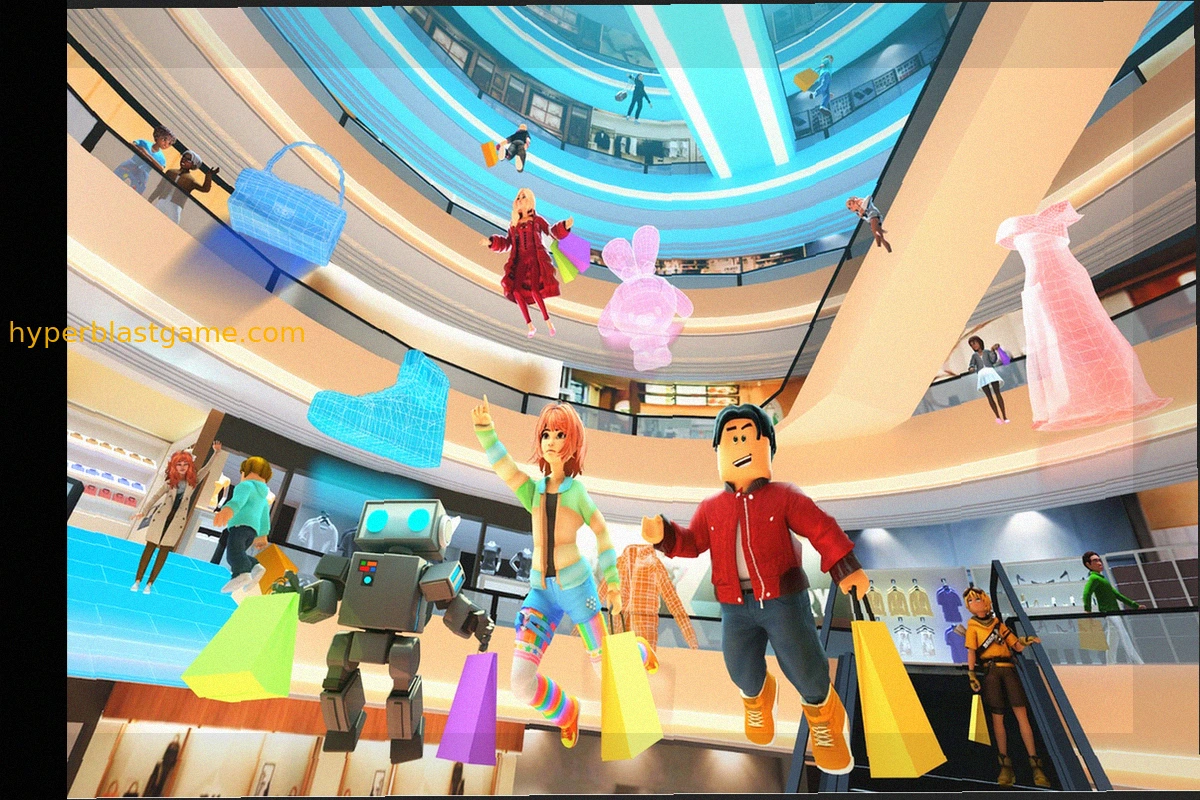
US Senate Investigates Roblox: Child Safety Under Scrutiny
The US Senate's Crime and Counterterrorism Subcommittee has initiated an investigation into Roblox, expressing concerns that the platform may be prioritizing revenue and user engagement over the safety of children. Senators Josh Hawley and Dick Durbin, in a letter to Roblox CE
Three Epic Veterans Are Building an AI-Powered Game Engine to Break the Industry's Doom Cycle
In the current gaming landscape, Unity and Unreal Engine have long held a dominant position, powering approximately 70% of games released on Steam in 2025. While Godot has experienced notable growth and some major companies continue to utilize proprietary engines like Capcom's RE Engi