

Released on March 5th, Planet of Lana 2, a 2D platformer from Wishfully studio, continues the story of the original but significantly changes its approach to narrative. This article explores how the game lost its core mystery, a defining characteristic of its predecessor, and offers an analysis of how gameplay advancements might compensate for this narrative shift.
The first Planet of Lana, released in 2023, captivated players with its minimalist storytelling. It followed a girl named Lana on her quest to save her sister Ila and other tribe members from an unknown threat. The game deliberately used a fictional language without subtitles, prompting players to interpret events, character motivations, and the world’s condition solely through environmental clues, ancient frescoes, and emotional expressions. This ambiguity encouraged players to form their own theories about the world, be it a post-apocalyptic setting, an alien invasion, or an AI rebellion, fostering a deep sense of enigma and personal connection to the unfolding narrative.
However, the sequel, Planet of Lana II, released three years later, immediately dispelled this ambiguity. Its prologue explicitly retells the original’s plot in an understandable language, stripping away the unique charm of its predecessor. While the game reverts to the fictional language afterwards, the core conflict in the second part feels less profound without the previous mystery. This diminishes the game’s unique quality, making it less distinct among other well-made titles. Flashbacks further deepen the lore and reveal character motivations, even explaining previous actions, suggesting that a continuation was perhaps always planned.
The story of Planet of Lana 2 attempts to weave together multiple threads: the rescue of another companion, ecological themes, lore expansion, and even revenge, all within a similar 5-6 hour playtime. Yet, the narrative often feels disjointed, with the protagonist constantly switching between short, self-contained tasks. This creates an impression of a series of side missions interspersed with lore fragments, rather than a cohesive overarching adventure. The emotional impact is diminished, and despite moments striving for maturity, the plot often feels predictable, culminating in an abrupt cliffhanger that suggests a “to be continued” approach, akin to a video game series.
Despite these narrative shortcomings, the game occasionally succeeds in prompting philosophical reflection. It touches upon concepts like a utopia achieved at the cost of nature’s destruction, prompting players to question its true value and the inevitability of humanity repeating its mistakes.
A Step Forward in Gameplay
Where Planet of Lana 2 truly shines is its improved gameplay. Lana’s new abilities, including running and sliding, make traversal significantly more fluid and enjoyable. Chase sequences become dynamic and adrenaline-pumping, with precise controls allowing for swift maneuvers, though a misplaced jump or a delayed stop can still lead to frustrating restarts – thankfully, save points are abundant.
Mui, Lana’s feline-like companion, also sees significant enhancements. Players can now issue commands to Mui across the entire visible screen, not just in close proximity, utilizing a dedicated right stick. Mui gains two new abilities: temporarily disabling mechanical devices and mind-controlling specific creatures. Both are frequently integrated into the game’s puzzles.
The puzzles themselves maintain a similar level of difficulty to the first game – generally approachable but requiring keen observation. Some “logic puzzles” stand out, demanding more complex reasoning, such as combining musical formulas to achieve a specific melody. Solving these more intricate challenges offers a satisfying sense of accomplishment. The addition of an in-game journal for notes is a welcome quality-of-life improvement for puzzle-solving. The final boss battle is also an upgrade, featuring a two-phase encounter that, while not overly difficult, is more engaging than the original’s quick-time event.
Visual Splendor and Soundscape
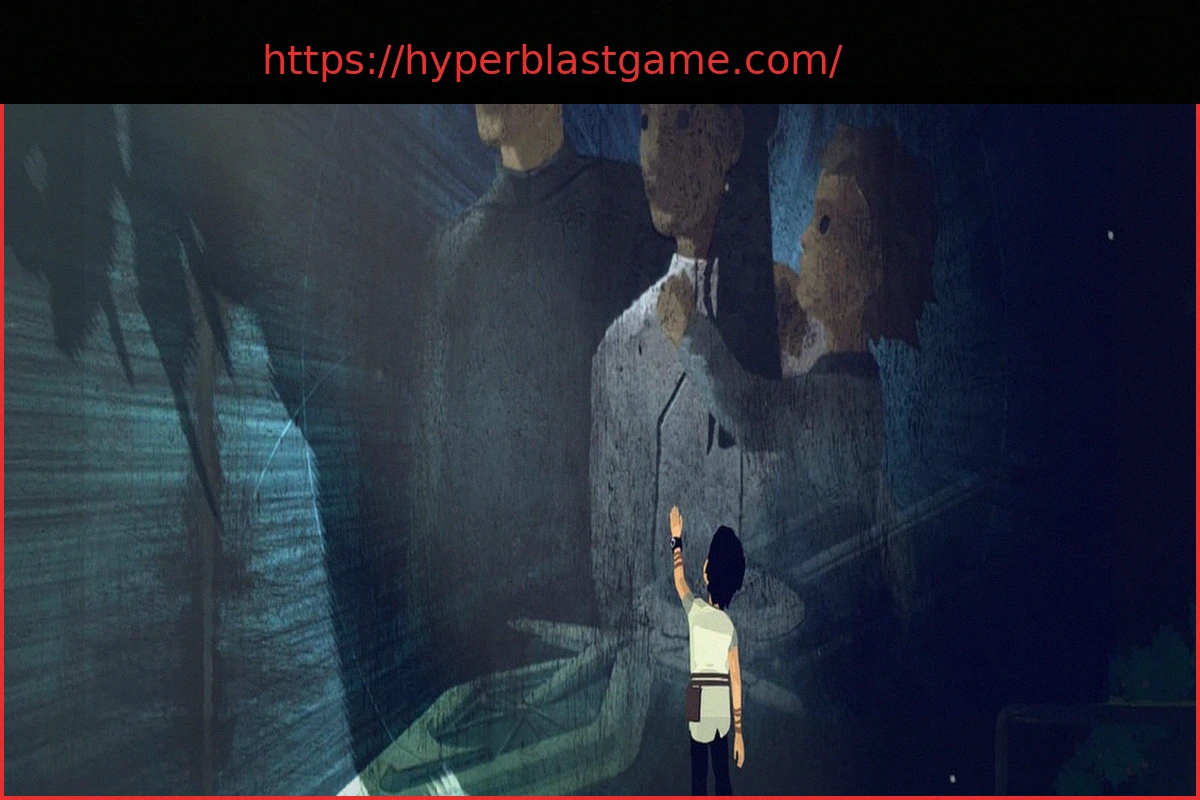
Beyond the narrative, the original Planet of Lana was celebrated for its breathtaking visuals and evocative music. The sequel largely retains this stunning aesthetic, with a slightly sharper picture. Its visual style can be described as “Studio Ghibli on a minimalist scale,” blending hand-drawn watercolor art with cinematic effects and subtle animations.
The visual style remains captivating. Exploring the game felt like wandering through a museum, moving from one masterfully crafted painting to the next as the biomes shifted. This feeling is intensified in the sequel due to an expanded variety of locations: snowy mountains, lush forests, and extensive underwater environments. These aquatic levels are a significant addition, featuring new mechanics and unique adversaries that demand strategic thinking. However, while the ambient music is still good and immerses the player, it lacks the memorable compositions that defined the first game, such as the poignant “Horizons.”
Nevertheless, the sound design remains exceptional, deeply connecting players to the world. The rustling of a living forest, the howl of wind in snowy peaks, the hum of murky depths, and the unsettling clang of artificial machinery all contribute to an immersive auditory experience. This attention to sound can even overshadow the plot, allowing players to simply “breathe” and enjoy the virtual planet.
Optimisation for Planet of Lana 2 is commendable. Unlike the occasional frame rate drops and “slow-motion” effects experienced in the first game, the sequel ran smoothly without any technical issues.
Verdict
Planet of Lana 2 serves primarily to expand the lore and provide context for the events of the first game, offering some philosophical insights along the way. However, its main narrative lacks originality, presenting a conventional conflict, a fragmented sense of adventure, and an abrupt, unsatisfying ending. The game’s primary flaw lies in its perceived lack of necessity; the original’s story felt complete, and its defining ambiguity has been replaced by a more straightforward plot.
This project can be recommended primarily to dedicated fans of the first game who are prepared for a simplified narrative approach. Despite its storytelling weaknesses, the enhanced gameplay and diverse, beautifully rendered environments still offer a compelling experience, allowing players to further appreciate the visual and audio artistry of the “Planet of Lana” world.