

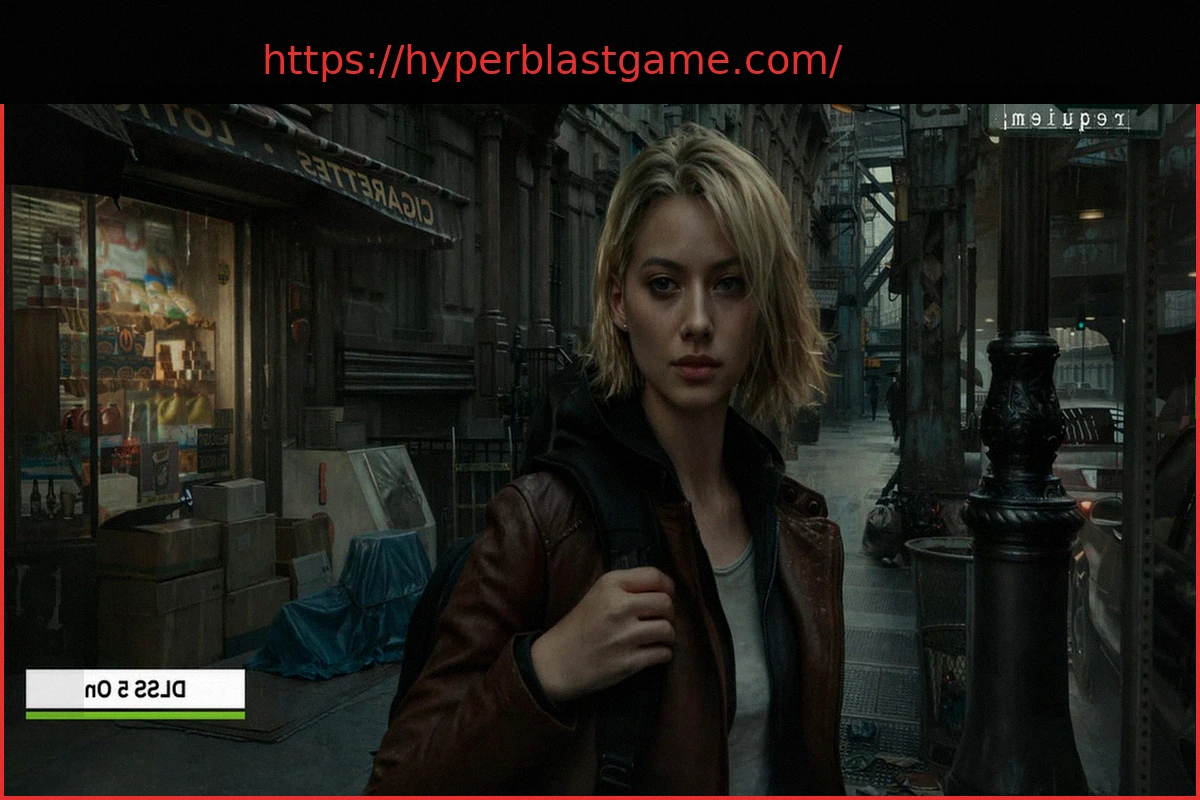
NVIDIA touts a “breakthrough in computer graphics,” yet gamers are already labeling it “neuro-slop”! We dive into whether DLSS 5 is truly revolutionary or merely a visually stunning demo destined to clash with reality. Our investigation covers demo reels, developer and gamer feedback, and the technical intricacies to assess the credibility of NVIDIA’s marketing claims.
NVIDIA’s latest presentation reasserted its technological leadership in integrating neural networks into 3D rendering. DLSS 5 goes beyond merely boosting frame rates—a feature we’ve seen before. Now, the neural network dynamically generates “photorealistic” lighting and surfaces. The company hails this as a genuine “Breakthrough,” mirroring the presentation title: “NVIDIA DLSS 5 Delivers AI-Powered Breakthrough In Visual Fidelity For Games.” NVIDIA considers this advancement the most significant leap in computer graphics since the 2018 debut of ray tracing (RTX).
Breakthrough or Overblown Hype?
Despite these ambitious declarations, the RTX technology itself, while showing promise, hasn’t become a truly disruptive force in the gaming industry. We previously explored this topic.
Widespread adoption of ray tracing continues to be hampered by three key factors: the high cost of high-performance RTX-enabled graphics cards, the lack of robust implementation from competitors (primarily AMD), and a limited number of games—even among AAA titles—that genuinely showcase a significant graphical leap. This situation persists more than seven years after its initial reveal.
Therefore, despite the dramatic language and impressive video showcases, NVIDIA’s lofty statements warrant a significant degree of skepticism.
It’s also pertinent to recall that in January 2025, NVIDIA introduced an updated version of its ACE technology—a “second iteration” of a project first announced in 2023. This newer version was intended to enable developers to create fully autonomous in-game characters, operating “based on a suite of generative AI models responsible for perception, cognitive functions, actions, and rendering.”
We saw demonstrations featuring an AI-controlled ally in PUBG (PUBG Ally), playable characters in inZOI, and the world’s first AI boss in MIR5. Over a year has passed since that presentation. Have you witnessed widespread integration of NVIDIA ACE into games? Are you playing with an AI ally in PUBG or battling AI bosses yet? The answer is no.
While these technologies hold considerable promise, developers must still master their implementation. This presents challenges, further complicated by “efficient” managers who believe AI can readily replace human developers.
Moreover, amidst ongoing hardware shortages—particularly for graphics cards and RAM—driven by the AI boom and the fierce competition for data center computing power, the mention of “artificial intelligence” now often evokes irritation rather than excitement among many gamers.
Combine this with growing dissatisfaction over AI’s use in game development—from asset generation to dialogues and voice acting—and you have fertile ground for a skeptical reception of any “neuro-innovations.” In this climate, even genuinely useful technologies risk being overshadowed by justified distrust and, at times, unwarranted backlash.
So, let’s delve deeper: what exactly is this technology, how does it function, and is it genuinely a breakthrough?
How the Technology Operates
For those following AI advancements, NVIDIA’s latest offering should not be entirely unexpected. Last year, in an article discussing NVIDIA ACE, we remarked:
…AI, perhaps in the future, will be capable of rendering the virtual world so convincing that the boundary between reality and simulation becomes almost imperceptible. Or vice-versa. Imagine a hypothetical DLSS X that not only enhances resolution on the fly but also renders the image precisely as you desire. Want Doom in a realistic style? Here you go.
Fundamentally, this describes the core ambition of DLSS 5.
In simpler terms, the neural network makes images “more realistic” in real-time by correcting lighting and textures. This process is akin to uploading a photograph to an AI and instructing it to fix imperfections and adjust illumination. Theoretically, the algorithm could apply any filter—for instance, stylizing the image to resemble anime. In such a case, the original input would be reinterpreted and re-rendered in an anime aesthetic. However, NVIDIA has, for now, exclusively demonstrated “realism” filters.
NVIDIA’s website elaborates on the technology’s workings:
The artificial intelligence model undergoes end-to-end training to comprehend complex scene semantics, including characters, hair, fabric, and translucent skin, as well as lighting conditions such as frontal, side, or ambient light – all derived from single-frame analysis. DLSS 5 then leverages its extensive knowledge to generate visually precise images that incorporate intricate elements like subsurface scattering on skin, subtle fabric sheens, and the interaction of light with hair material, all while maintaining the original scene’s structure and semantics.
Interestingly, DOOM wasn’t among the initial “showcase” games. It’s plausible that a realistic “gore” shooter featuring dismembered, bloodied internals (even of monsters) might not have been the ideal presentation choice. Nevertheless, NVIDIA’s partners did include Bethesda, the publisher of DOOM, alongside CAPCOM, Hotta Studio, NetEase, NCSOFT, S-GAME, Tencent, Ubisoft, and Warner Bros. Games.
The demonstration videos showcased examples from Resident Evil Requiem, Hogwarts Legacy, Starfield, and other titles. These videos illustrated the activation of DLSS 5 and the subsequent visual transformation applied by the neural network.
Gamer reactions were immediate and, predictably, polarized. Enthusiastic comments included “Wow, this is truly amazing!”, while skeptical remarks questioned, “Did you see the video? It’s the uncanny valley, not beauty!” and “Looks like neuro-slop, honestly.”
The top comment beneath a Digital Foundry video quipped: “I thought this was an April Fool’s joke, but it’s still March.”
A Closer Look
Whether this is “neuro-slop” or the dawn of a new graphical era remains for you to decide, but several technical aspects warrant closer examination.
Firstly, the presentation predominantly featured static scenes. Characters stood still, observing the player through the screen, with only minor hair movement. There was a notable absence of intense on-screen action. Arguably, the sole truly dynamic segment was in the EA Sports FC demo, where a goal-scorer ran toward the camera to celebrate. However, this running sequence was shown with DLSS 5 deactivated, while the “celebration”—with the player already on the ground in a close-up—had the technology enabled. This suggests that DLSS 5 might not perform as seamlessly in dynamic scenarios as NVIDIA intends.
Secondly, the handling of light and contrast is more nuanced than initially apparent. In Digital Foundry’s comprehensive video, enabling DLSS 5 in Starfield significantly alters the image, introducing more contrasted lighting. Does this enhance realism? Both yes and no.
To their credit, Digital Foundry experts expressed impression, noting that the neural network “does a fantastic job of enhancing detail,” effectively transforming a game with “flat” graphics into something resembling ray tracing. However, even they conceded that the technology isn’t flawless. In processed images, effects dependent on frame geometry occasionally “break.” Digital Foundry observed that the neural network “doesn’t understand all light characteristics” and remains reliant on the foundational render.
In the real world, during a bright sunny day, the contrast between shadowed and illuminated areas can indeed be high. Yet, the human eye doesn’t function like a camera. When we focus on bright areas, our pupils constrict, causing us to lose detail in shaded regions; conversely, when looking into shadows, our pupils dilate, “pulling out” details from darkness but sacrificing them in bright light.
The demo, however, presents a contradiction: the original image’s contrast was artificially elevated, resulting in detail loss precisely where the human eye would naturally expect to preserve it. The neural network attempts to mimic “natural” contrast but does so blindly, lacking an understanding of the player’s focal point. Consequently, bright areas can become overexposed, and dark areas might dissolve into an indistinct “black mess.”
The brain interprets such lighting as “unnatural.” In natural environments, detail degradation occurs selectively, guided by the point of focus. Here, the algorithm simultaneously “reduces” details across the entire frame. This dynamic contributes to the “plastic” effect: the image appears overly processed and, paradoxically, less informative.
This issue fundamentally cannot be resolved without player eye-tracking, which would allow for dynamic adaptation of contrast and detail based on the focal point, or without a more adaptable base render.
Currently, the technology attempts to optimize the entire screen simultaneously. The “uncanny valley” effect in graphics is therefore a logical outcome of the conflict between algorithmic “imitation” and biological perception. The endeavor to create an overly “perfect” image renders it subconsciously alien.
Thirdly, character faces are particularly noticeable. While they do appear more realistic, this is perceived in varied ways.
While Starfield’s transformation is arguably an improvement (one might critique Bethesda’s dated engine and the artists/designers who made characters “unattractive” to avoid offense), the result for Resident Evil Requiem cannot be deemed good—the neural network’s interpretation is rather idiosyncratic.
And once more, the “uncanny valley” effect emerges. Motion capture (mocap) in games is an expensive undertaking, and facial animation is even more complex, even when supported by the game engine. What if the engine is like Bethesda’s? Developers often lack the resources to produce mocap and facial animation on par with Hollywood studios.
However, when we encounter a character rendered in a more conventional graphical style, their less-than-perfect animation is often accepted naturally. This is largely a gaming convention the brain adapts to. But when a character visually resembles a human yet moves and speaks like a “robot,” it evokes an involuntary sense of unease. DLSS 5, by enhancing the photorealism of skin textures, merely accentuates this dissonance: the more realistic the outer shell, the more pronounced the unnaturalness of the movements.
This problem also remains fundamentally unresolved, at least with current mocap technologies. As Albert Zhiltsov, a lead developer for “War of the Worlds: Siberia,” explained in an interview:
“Theatrical art, unlike cinema, exaggerates emotions—because from the eleventh row, subtle facial expressions are barely visible. What we call ‘overacting’ is, in fact, a necessity; otherwise, the performance simply won’t resonate with the audience. While this is a problem in cinema (and film directors probably ‘scold’ theater actors for it), for mocap, it’s the opposite—it’s super. Because you are only providing your body. You have sensors. So, if you are ‘hit,’ the movement must be sweeping, without cinematic subtlety. Everything needs to be slightly exaggerated. The same applies to facial expressions.”
Consequently, what works for the aesthetics of traditional rendering doesn’t translate effectively to realism. The exaggerated facial expressions essential for game performance shatter the illusion of life when combined with a photorealistic image. True realism demands cinematic technologies and a nuance in acting currently beyond the reach of mainstream game development. DLSS 5 merely amplifies the visual fidelity without altering the underlying animation, pushing us deeper into the “uncanny valley.”
Furthermore, merely altering the lighting does not inherently make the surrounding environment more realistic. It’s beneficial if designers and artists have meticulously developed its content, providing the neural network with rich data. More frequently, however, environments are deliberately simplified or stylized. Primary rendering resources are typically allocated to central characters. While DLSS 5 enhances their appearance, the scene itself often remains conventional. This only exacerbates the visual dissonance: a hyperrealistic protagonist against a “cardboard” world appears even more incongruous.
Is It All Bad?
For NVIDIA, as a technological leader, showcasing such a technology is an undeniable triumph and another opportunity to declare an AI breakthrough. However, for game development companies, the picture is less clear.
For instance, on the social media platform X, Bethesda responded to a Digital Foundry video demonstrating Starfield gameplay with DLSS 5 enabled (incidentally, the video wasn’t a direct PC recording but filmed off a monitor screen with a camera. One wonders why?).
Here’s what Bethesda representatives stated:
“Thank you for your interest and analysis of the new DLSS 5-based lighting. This is a very early demonstration, and our teams will continue to refine the lighting and final effects to achieve a visual style that we believe best suits each game. The final decision will remain with our artists, and for players, this feature will be entirely optional.”
One must admit, this statement conveys significantly less enthusiasm than NVIDIA’s own promotional materials. It’s likely that player reactions diverged from the company’s expectations.
Nevertheless, the technology itself cannot be dismissed as “bad.” It truly is a pioneering solution that, in the long term, could help achieve desired photorealism or enable players to apply their preferred “filters” to games.
There are at least two potential application scenarios for this technology.
For new projects, rendering and lighting will need to be meticulously configured to prepare the image for subsequent neural network enhancement. This constitutes a separate development effort, and it’s not guaranteed that AI will achieve satisfactory quality with minimal intervention—it will likely demand additional fine-tuning.
For older projects, the technology could theoretically be relevant. A neural network is indeed capable of improving image quality. Yet, there are still complexities. Animations, including facial ones, in older games are even less natural compared to modern titles. Moreover, their lighting is configured differently. The only viable approach might be to tune the neural network not “for realism” but for a general image enhancement that preserves the original artistic style.
However, NVIDIA previously introduced RTX Remix for older projects. And what was the outcome? We didn’t see a deluge of retro-game remixes with enhanced graphics. While these are distinct technologies, the underlying principle is similar: a “magic button” for graphical improvement. If the more focused RTX Remix didn’t spark a remix boom, why should we anticipate a revolution from DLSS 5?
No, DLSS 5 is not a “magic button.” Like any other technology, DLSS 5 requires expertise to wield effectively. “Out of the box,” it won’t perform as many developers might desire. However, in skilled hands and with a judicious approach, it genuinely holds the potential for a breakthrough.
Nevertheless, several factors could easily impede this “breakthrough.”
AI filters come at a performance cost. How effectively will DLSS 5 run on budget graphics cards? This question remains unanswered.
Furthermore, the current list of projects supporting DLSS 5 is not particularly extensive. And whether it will expand is also uncertain. Will it follow the path of RTX: a technology exists, showcased well in a few flagship projects, while the majority of games find it unutilized?
Another point contributing to skepticism is that nearly all modern gaming consoles utilize AMD chips. The only current “hardware” compatible with DLSS is the Nintendo Switch 2.
This implies that in multi-platform projects, developers primarily prioritize the capabilities of popular consoles. DLSS, being a proprietary NVIDIA technology, is simply unavailable on PlayStation and Xbox. Consequently, its support in cross-platform titles often becomes an “optional” addition for the PC version, if a studio has the necessary resources.
The result is a paradox: a technology hailed by NVIDIA as “groundbreaking” effectively remains exclusive to a relatively niche audience of owners of the latest GeForce 50 series graphics cards, predominantly the higher-end models.
Steam statistics are telling. Only 23.6% of users play on GeForce 50 series cards, with 9.12% using GeForce RTX 5070 and 10.65% on RTX 5060 and RTX 5060 Ti.
AMD, conversely, offers FSR—an open-source solution compatible with any hardware. However, it currently lacks an equivalent to DLSS 5 that performs neural network-powered lighting and surface generation.
This creates a self-perpetuating cycle: consoles do not incentivize the widespread adoption of “neuro-rendering,” and the absence of broad developer support relegates the technology to a niche status. Thus, while NVIDIA presents impressive demos on high-performance PC configurations, the broader gaming industry progresses at a different pace.
Analysis
The technology is, without a doubt, remarkable. The real-time capability to “enhance” lighting, textures, and scene details using AI represents a significant stride into a future that once seemed purely speculative. The core concept itself is commendable: if properly harnessed, it could unlock new possibilities within the gaming industry.
However, for now, it functions more as a spectacular gimmick than a readily deployable tool for mass adoption. NVIDIA’s demonstrations, while visually compelling, raise more questions than they answer.
The true answers to these questions will come not from press releases, but from actual games. In the autumn of 2026, when the announced projects finally receive full DLSS 5 support, we will have the opportunity to assess the technology not in controlled demo environments, but under the rigors of real gameplay.
Until then, a healthy degree of skepticism is warranted. Not because the technology is inherently “bad,” but because the history of the gaming industry, and NVIDIA’s technologies in particular, is replete with instances where a proclaimed “revolution” in words materialized as merely an “option for enthusiasts” in practice.